
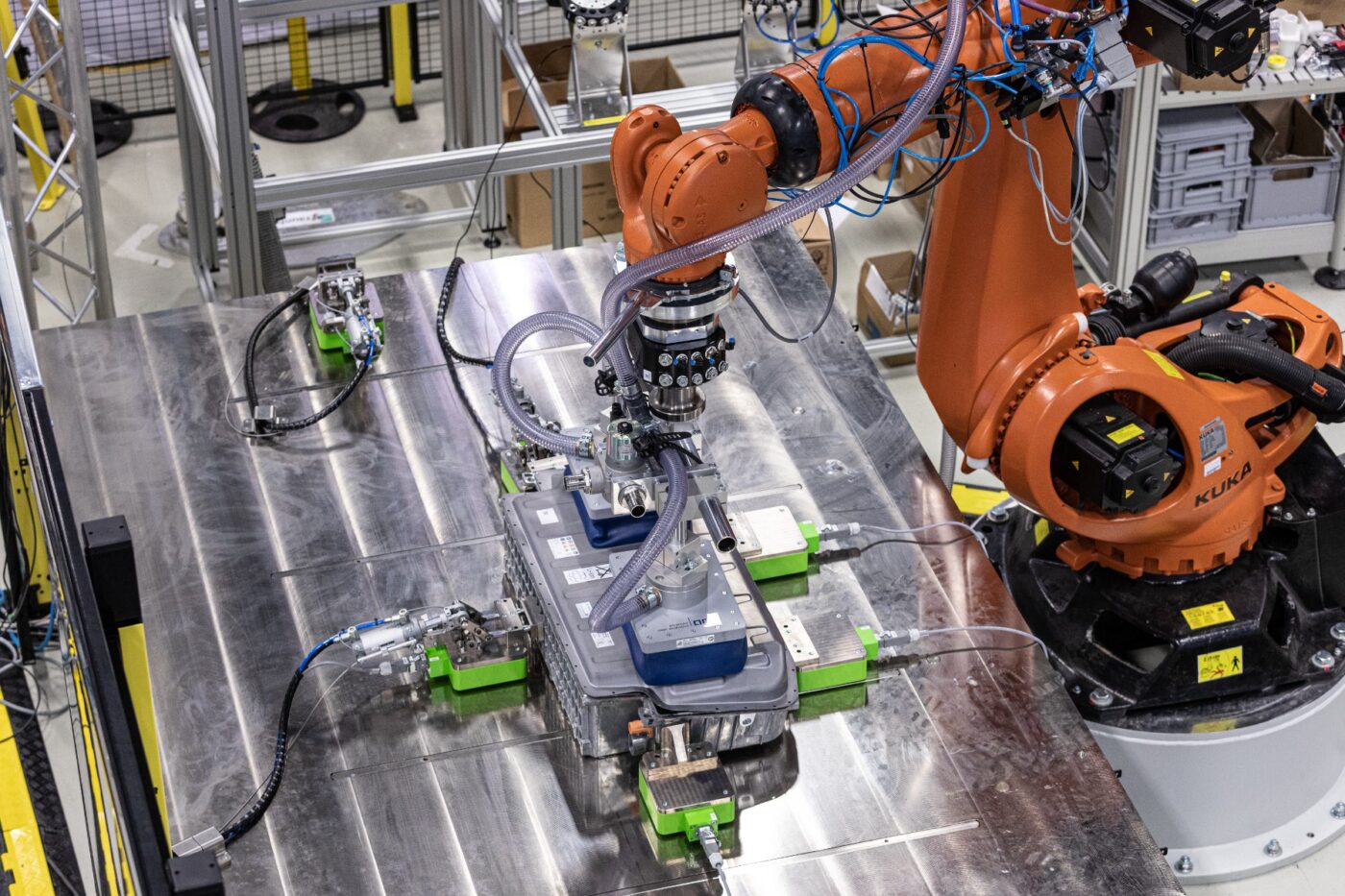
Researchers led by Fraunhofer IPA have launched a new project, “Difference,” aimed at improving the recyclability of next-generation battery systems that use Cell-to-Pack (CTP) technology, the institute said.
The project focuses on battery designs in which cells are integrated directly into the battery pack without intermediate modules, a configuration increasingly used to reduce weight, lower component counts and improve energy density. While this approach can enhance vehicle range and efficiency, it also introduces significant challenges for disassembly and recycling.
The initiative is funded by the German Federal Ministry for Research, Technology and Space under the B@ts battery research programme and seeks to address the technical barriers posed by highly integrated battery structures. In particular, the replacement of mechanical fasteners with adhesives and foam materials complicates separation processes and limits material recovery.
According to the project team, these bonding materials make conventional disassembly methods labour-intensive or reliant on thermomechanical processes, reducing efficiency and potentially conflicting with targets set by the European Battery Regulation for recovering critical materials such as lithium, nickel, cobalt and copper.
Another challenge identified is the lack of repairability in Cell-to-Pack systems. Because individual cells cannot easily be replaced, a failure in a single component often requires the replacement of the entire battery pack, limiting opportunities for second-life applications and increasing lifecycle costs.
To address these issues, the Difference project is focusing on several research areas, including the development of laser-based techniques for separating structural components and bonded materials, as well as the implementation of automated, robot-guided disassembly systems. The project also includes an evaluation of the environmental and economic performance of the proposed processes.
The goal is to create a modular, automated disassembly system with multiple stations that can handle highly integrated battery packs, enabling both efficient recycling and potential repair or remanufacturing pathways.
Alongside Fraunhofer IPA, the consortium includes Trier University of Applied Sciences, recycling company PreZero, automation specialist Kautenburger and TRUMPF, which contributes expertise in laser and system technologies.
The project underscores ongoing efforts within Europe to adapt recycling processes to evolving battery designs, as manufacturers increasingly adopt Cell-to-Pack architectures in electric vehicles.