
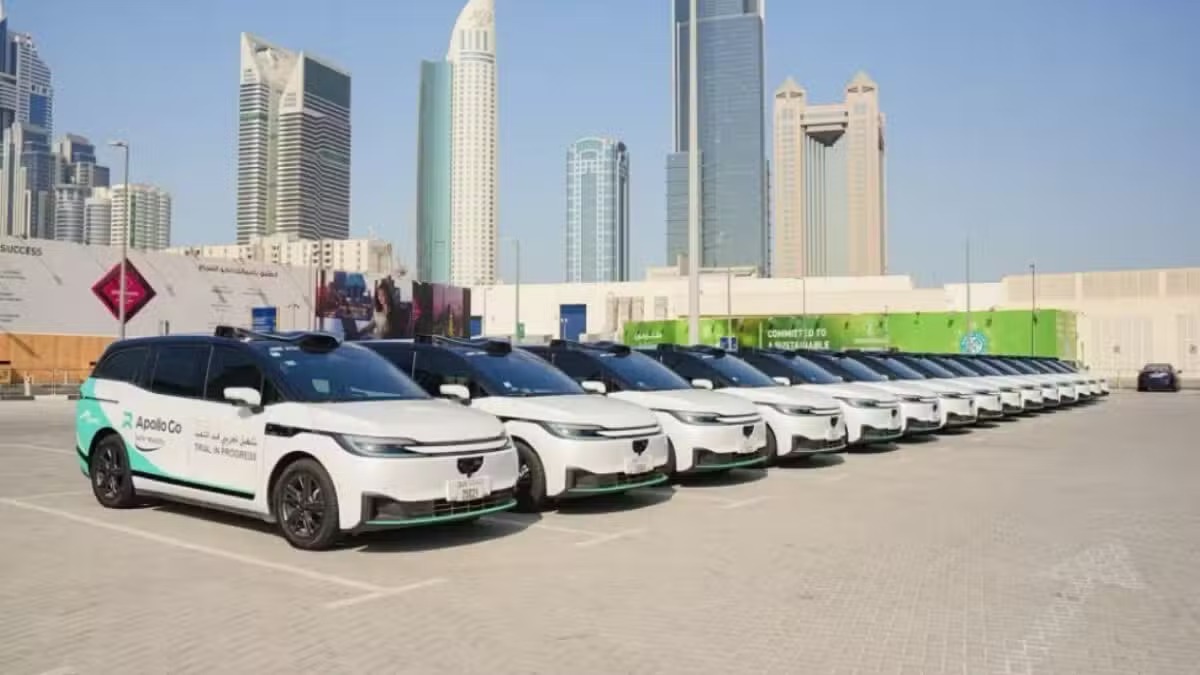
Chinese technology company Baidu has launched fully driverless commercial operations of its Apollo Go ride-hailing platform in Dubai, marking a significant step in its expansion into the Middle East.
Starting March 30, members of the public in Dubai can access the service through the Apollo Go app, the company said. The rollout follows a temporary suspension earlier in the month due to regional conflict affecting operations in the United Arab Emirates.
The deployment is being carried out under the guidance of the Roads and Transport Authority (RTA), with robotaxi services introduced in phases for commercial use. Baidu said Apollo Go is currently the only fully integrated platform offering driverless services in Dubai and is building what it described as the city’s largest fleet of its kind.
As part of its expansion strategy, Apollo Go has signed an exclusive agreement with Dubai Taxi Company (DTC) to accelerate the rollout of autonomous driving services through technology deployment. The company is also pursuing partnerships to broaden user access.
In collaboration with Uber Technologies, Apollo Go plans to allow users to hail robotaxis via the Uber app at designated locations, including in the Jumeirah district. The partnership was announced last month, with services expected to be gradually integrated into Uber’s platform.
The launch comes amid increased competition, with Chinese autonomous driving firm WeRide also announcing fully driverless robotaxi operations in Dubai in partnership with Uber.
Operations had been temporarily halted earlier this month after missile strikes linked to escalating tensions in the Middle East affected parts of the UAE, including the Jumeirah area where pilot services are being deployed. The resumption of services signals a return to commercial activity despite ongoing geopolitical risks.
Apollo Go currently operates in 26 cities worldwide and has completed more than 20 million autonomous ride orders. According to Baidu’s latest financial disclosures, the platform provided 3.4 million fully driverless rides in the fourth quarter of 2025, representing an increase of more than 200% compared with the same period a year earlier.