
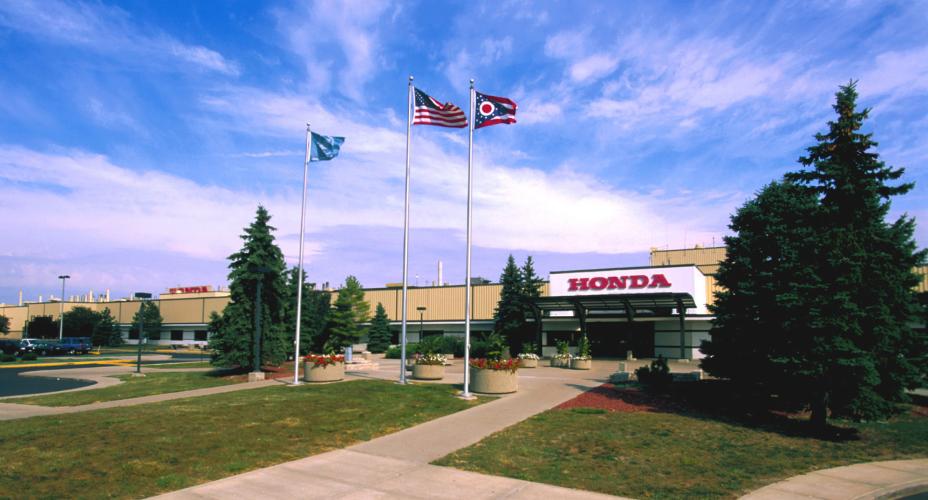
Honda Motor said seven of its manufacturing plants in the United States have received the 2025 ENERGY STAR certification for Outstanding Energy Efficiency from the U.S. Environmental Protection Agency.
The recognition highlights energy efficiency improvements across Honda’s manufacturing operations as the company works to reduce energy consumption and greenhouse gas emissions as part of its broader decarbonization strategy.
See also: Honda, DriveOhio Pilot Shows AI Can Detect Road Defects With High Accuracy
Facilities receiving the certification for 2025 include the Marysville and East Liberty auto plants in Ohio, which earned the designation for the 20th consecutive year. The Indiana Auto Plant received the award for the 14th year in a row, while the Anna Engine Plant in Ohio earned its eighth certification.
Additional awards went to the engine plant at Honda’s Alabama Auto Plant, as well as the Honda Transmission Plant in Ohio and the Honda Transmission Plant in Georgia, each recognized for their ongoing efficiency efforts.
“The ability of Honda to earn U.S. EPA Energy Star certification is based on the continuous efforts of our associates in reducing energy use at our production facilities in America,” said Jeff Waid, Environmental Department Manager at Honda Motor.
See also: Honda to End Fuel Cell Production at GM Joint Venture by 2026
“In addition to energy efficiency, we are very proud of our commitment to minimize waste and water use as part of our comprehensive approach toward reducing environmental impact,” he added.
The certification program evaluates industrial facilities based on energy performance relative to similar plants nationwide, recognizing those in the top 25% of energy efficiency based on energy use per unit produced.
Honda said the recognitions reflect progress under its Green Factory initiative, launched in 2021 to reduce environmental impacts across manufacturing operations. The program includes projects to improve energy efficiency, reduce water consumption, and minimize waste.
See also: Honda to Debut Redesigned H Mark on Next-Generation EVs and Hybrids From 2027
Recent initiatives include repairing compressed air leaks, installing solar walkways, upgrading cooling towers, modifying paint ovens to reduce natural gas usage, and implementing systems to recover waste heat.
Honda has also introduced electrification technologies across its plants, including electric boilers, electric arc furnaces, electric regenerative thermal oxidizers, electric forklifts, and EV charging infrastructure.
In addition, the company said more than 80% of the electricity used across its North American manufacturing operations is now covered by long-term virtual power purchase agreements for renewable wind and solar energy.
The ENERGY STAR program was introduced by the EPA in 1992 as a voluntary partnership aimed at reducing greenhouse gas emissions through improved energy efficiency.