
Baidu said its autonomous ride-hailing service Apollo Go reached a weekly peak of more than 300,000 orders in the fourth quarter of 2025, as the company announced its entry into the South Korean market.
According to Baidu’s latest earnings disclosure, Apollo Go completed 3.4 million fully driverless trips in the fourth quarter, representing year-on-year growth of more than 200%. By February 2026, cumulative global rides had surpassed 20 million.
See also: Baidu, Uber and Dubai RTA Launch Apollo Go Autonomous Ride-Hailing Service
The company said its autonomous fleet has logged more than 300 million kilometres of driving, including 190 million kilometres in fully driverless mode. Baidu added that airbags deploy on average once every 12 million kilometres, citing internal safety metrics.
Apollo Go has now officially launched operations in South Korea, beginning in the Seoul metropolitan area. The move marks the platform’s first expansion into an Asian market outside the Chinese mainland and Hong Kong.
See also: Baidu’s Apollo Go, K2 Launch Driverless Ride-Hailing Service in Abu Dhabi
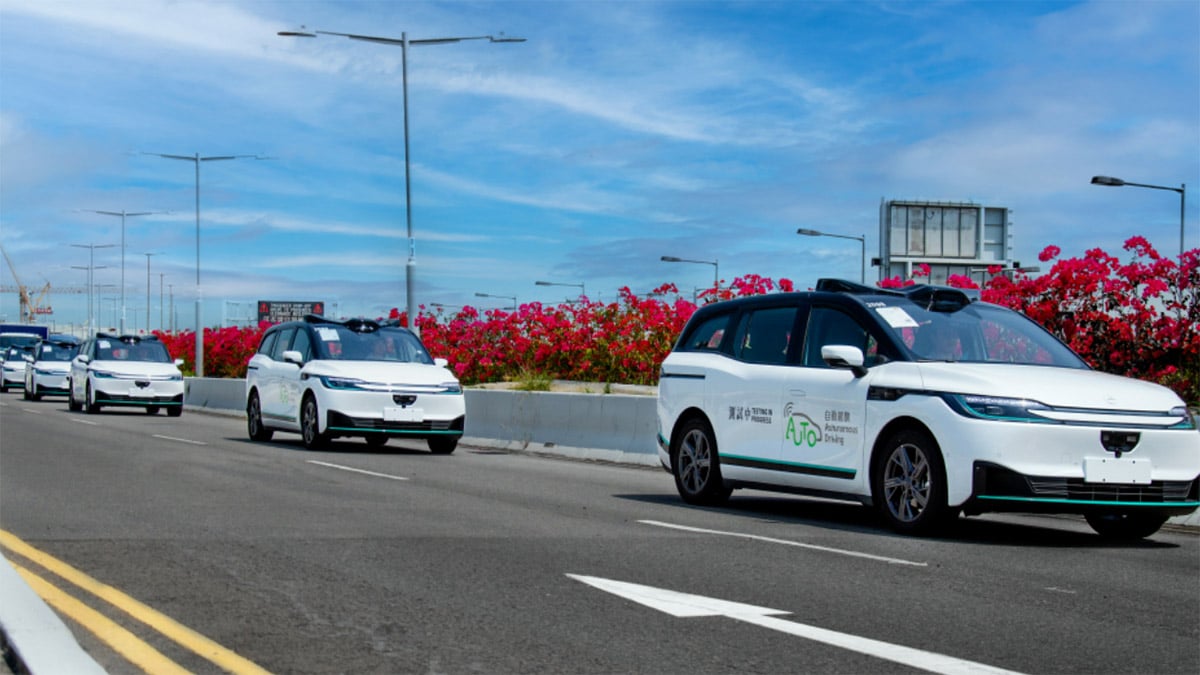
In Hong Kong, Apollo Go has expanded its testing scope, including cross-district trials. The city represents the service’s first right-hand-drive market and has granted approval for designated passenger testing on public roads.
Baidu is also accelerating overseas partnerships. Earlier this month, the company announced a collaboration with Uber to introduce Apollo Go vehicles on Uber’s platform in Dubai. In Abu Dhabi, Apollo Go has partnered with AutoGo to deploy fully driverless services.
See also: Baidu’s Apollo Go Expands Robotaxi Operations to Around 20 Chinese Cities
In Europe, Baidu is working with Uber and Lyft on pilot programmes, with plans to begin autonomous vehicle trials in London in the first half of 2026. The company has also initiated testing in Switzerland’s canton of St. Gallen in cooperation with PostBus.
With operations spanning 26 cities globally, Baidu is positioning Apollo Go as a key player in the international autonomous mobility market.