
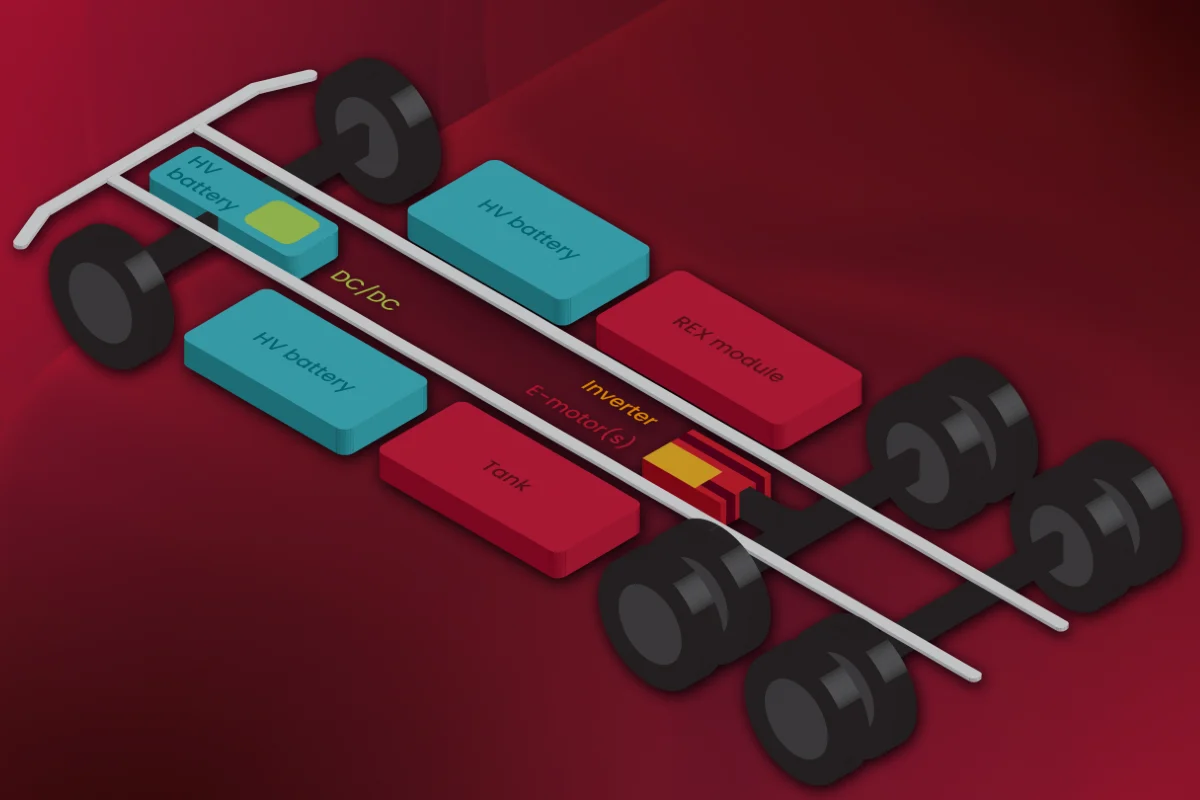
German engineering firm FEV Group said trucks equipped with range-extender electric drivetrains could reduce total cost of ownership (TCO) by up to 33% compared with conventional diesel vehicles, based on internal analysis of European operating conditions.
The study examined electrified heavy-duty vehicles using a “realistic European usage profile,” including overnight depot charging at industrial electricity prices of about €0.19 per kilowatt-hour. According to FEV, cost advantages could be even greater in regions with lower electricity prices.
See also: FEV and Ceer Sign Agreement to Support Saudi Electric Vehicle Development
“Depending on the driving cycle, through trucks with range extender architecture (REEV/Hybrid BEV) the total cost of ownership (TCO) can be reduced by up to 33 per cent compared to conventional diesel trucks – while also significantly reducing CO₂ emissions,” the company said. Even in long-haul scenarios considered least favourable, TCO could still fall by about 14%, it added.
Extended Range Electric Vehicles (EREVs) use electric motors to drive the wheels at all times. When the battery is depleted, a small combustion engine generates electricity to maintain operation, rather than directly powering the drivetrain. This architecture differs from plug-in hybrids, where the engine can also drive the wheels.
See also: FEV Expands Battery Cell Testing Capabilities with New Laboratory in Aachen
FEV said EREV trucks typically require smaller batteries than fully electric long-haul vehicles — for example, around 280 kWh compared with roughly 560 kWh for battery-electric trucks designed for similar duties. The smaller battery can reduce vehicle weight and enable overnight charging using standard depot infrastructure, potentially avoiding the need for megawatt-level public chargers.
The company also cited operational flexibility, as the on-board generator reduces dependence on high-power charging networks. However, range-extender systems still rely on fossil fuel and may deliver lower peak performance when the battery charge is low because the generator is designed primarily for steady power output.
FEV said it is developing demonstrator vehicles to validate the findings in real-world conditions, focusing on long-distance transport where battery-electric solutions face limitations in range and payload.
“Our analysis clearly shows that the range extender makes electric trucks immediately economically and ecologically viable – without waiting for the widespread expansion of high-performance charging infrastructure,” said Dr. Norbert W. Alt, chief operating officer of FEV Group.
Interest in the technology is growing among commercial vehicle manufacturers. Companies including Scania and logistics group DHL have been testing heavy trucks equipped with onboard generators to extend range, with early trials indicating that such vehicles can operate predominantly in electric mode.
See also: Purdue Tests Wireless Charging for Electric Trucks at Highway Speeds
Despite the potential advantages identified by FEV, range-extender trucks remain largely absent from the market, as manufacturers continue to evaluate competing zero-emission technologies such as battery-electric and hydrogen fuel-cell systems.