
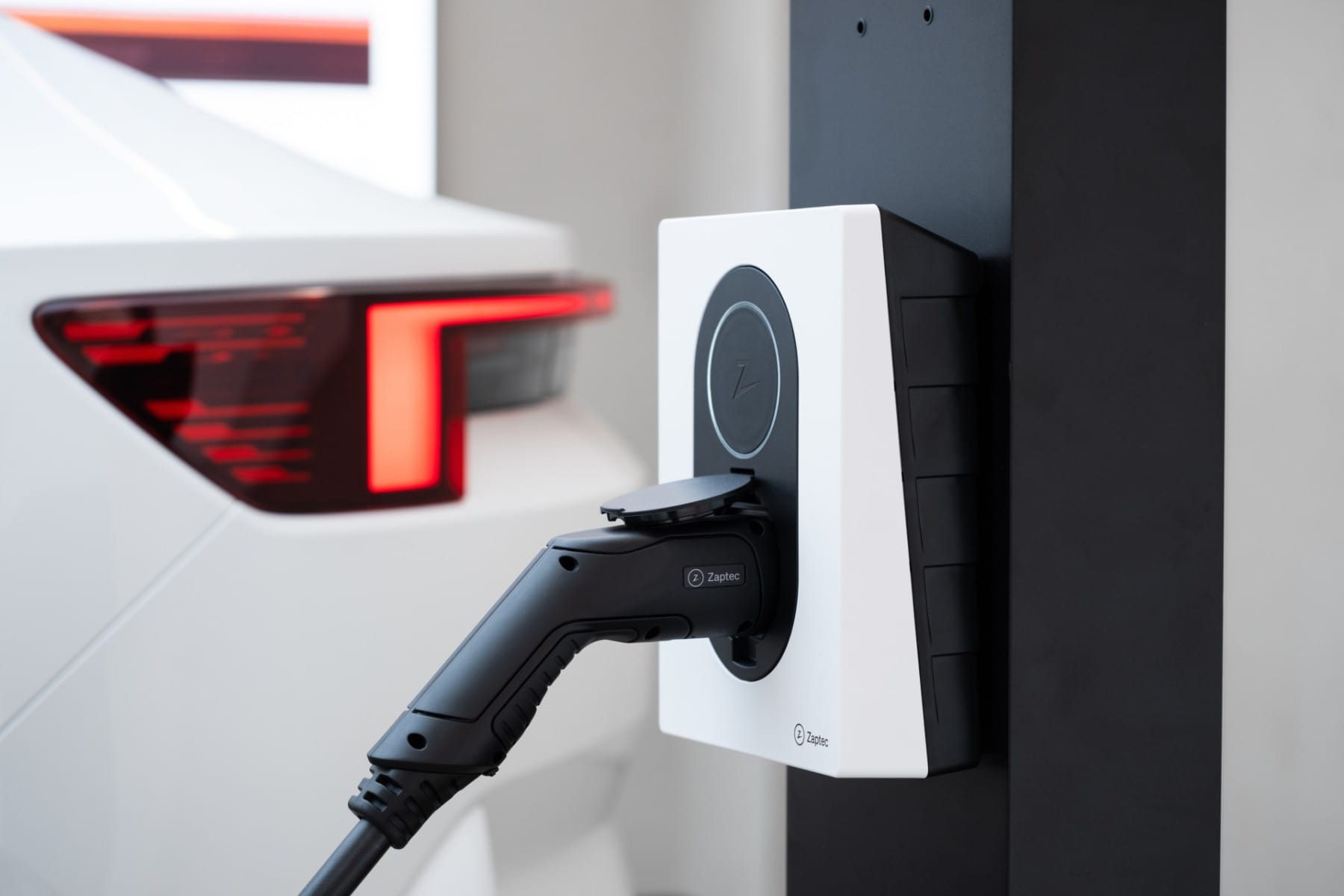
Polestar said it is expanding its Grid Rewards program to Germany and France, allowing electric vehicle owners to reduce electricity costs through smart home charging coordinated with the power grid.
The program operates in partnership with Octopus Energy and builds on the company’s Polestar Energy app, which has been available in several European markets for over a year. The app allows drivers to set departure times and desired battery levels, after which charging is scheduled automatically to minimise costs while meeting usage needs.
See also: Polestar Announces Major Product Expansion With Four New Electric Models by 2028
With Grid Rewards, customers can receive additional savings by allowing charging to be adjusted to support grid stability. In Germany, Polestar drivers using the Polestar Energy app together with an Intelligent Octopus energy contract could cut home charging costs by up to 50% per session and save as much as €300 per year, the company said.
Unlike conventional smart charging that focuses primarily on off-peak electricity pricing, the grid-supportive approach aims to balance demand across the network. Charging can be shifted or paused during peak periods, while excess electricity supply can be used to charge vehicles. The system aggregates multiple vehicles into a coordinated pool, enabling simultaneous charging or load reductions as needed.
See also: Polestar Plans Expanded Focus on High-Performance EVs and BST Sub-Brand
Polestar said the platform could eventually support bidirectional charging, allowing energy stored in vehicle batteries to be fed back to homes or the public grid. However, this capability is not currently available in the European offering, partly due to regulatory constraints. In California, the company introduced a Vehicle-to-Home feature in late 2025 that allows electricity from the vehicle battery to power a household during outages.
Separately, Polestar has introduced a vehicle-controlled smart charging function for the Polestar 2 and Polestar 4 models. Previously, a compatible wallbox was required, but the new system enables the vehicle itself to manage charging schedules when connected to a home charger, based on electricity prices, household demand and grid conditions.