
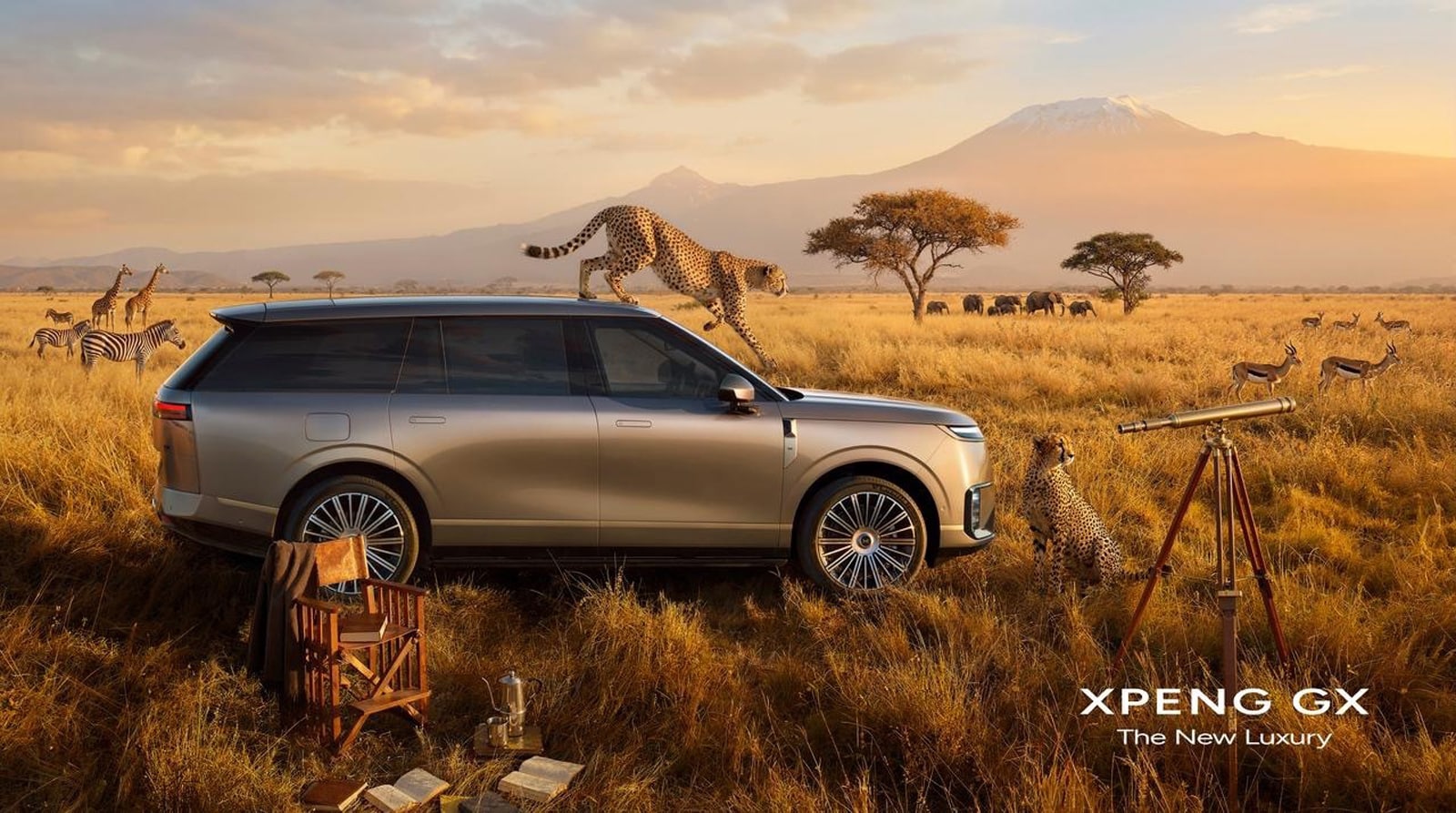
Xpeng is testing Level 4 autonomous driving capabilities on its yet-to-be-released GX flagship sport utility vehicle, Chinese media outlet Cailian reported on Friday, citing observations of on-road trials in the company’s home city.
According to the report, a camouflaged Xpeng vehicle marked with “L4 Autonomous Driving Test” and “Caution” signage was seen undergoing testing on public roads in Guangzhou, where the automaker is headquartered. Xpeng has not publicly commented on the testing activity.
See also: Xpeng Elevates AI Leadership, Reshapes Organization to Sharpen Intelligence Focus
Cailian said the GX will be equipped with four of Xpeng’s in-house developed Turing AI chips, delivering a combined effective computing power of around 3,000 trillion operations per second (TOPS), a level intended to support Level 4 autonomous driving under certain conditions.
Xpeng first referenced the GX, a large six-seat SUV positioned as its flagship model, on Feb. 5, when it released three official images. The vehicle is built on the company’s new SEPA (Smart Electric Platform Architecture) 3.0, which integrates a physical AI vehicle architecture and supports technologies such as steer-by-wire and rear-wheel steering, according to founder, chairman and chief executive He Xiaopeng.
See also: Xpeng Opens China Pre-Sales for 2026 X9 Battery-Electric MPV
While detailed specifications for the GX have not yet been disclosed, the model is expected to feature Xpeng’s proprietary Turing AI chip, which the company unveiled in June 2025. Each chip provides about 700 TOPS of computing power and has already been deployed across several Xpeng models to support advanced driver assistance and cockpit functions.
Local media reports suggest the GX will be priced between 400,000 yuan ($57,630) and 500,000 yuan, placing it at the upper end of Xpeng’s current product range.
See also: Xpeng Joins Rivals With Seven-Year Low-Interest EV Financing in China
Xpeng is widely regarded as one of China’s more advanced electric vehicle makers in smart driving technology and is also pursuing fully autonomous mobility services. The company has said it plans to launch three robotaxi models in 2026 and begin trial operations, using vehicles equipped with four Turing AI chips and powered by its second-generation VLA (Vision-Language-Action) model designed to adapt to different global traffic environments.