
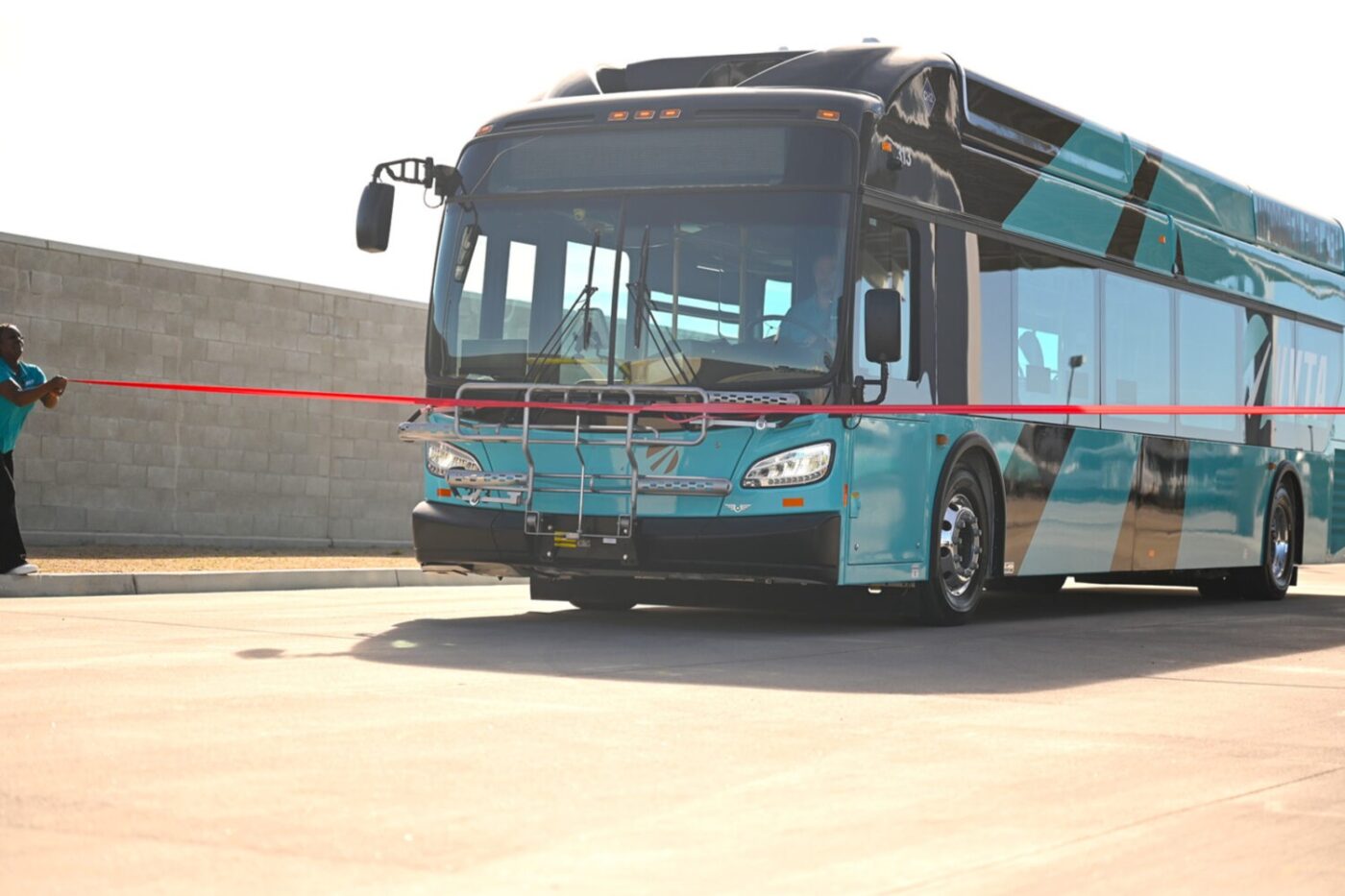
The Victor Valley Transit Authority (VVTA) has introduced 13 hydrogen fuel cell buses alongside an interim hydrogen fueling station in California’s High Desert, marking its latest step in expanding zero-emission public transport, the agency said.
The vehicles and fueling infrastructure were unveiled during a public event attended by local, regional and state officials as well as industry partners. The hydrogen initiative builds on VVTA’s earlier clean transport efforts, which include decades of operating buses powered by renewable natural gas and the introduction of battery-electric buses in 2019.
See also: Pasadena Approves Purchase Of 17 Hydrogen Buses To Advance Zero-Emission Fleet
“Transitioning to hydrogen fuel cell technology is a natural next step, one that aligns with our operational needs, our desert environment, and our long-term vision for a more sustainable future,” said Dustin Strandberg, chief maintenance officer at VVTA.
While VVTA did not formally identify the bus model, images released by the agency indicate the vehicles are New Flyer Xcelsior Charge FC buses. According to New Flyer, the hydrogen-powered model can travel up to 370 miles on a single refueling and carry more than 80 passengers, including seated and standing riders and two wheelchair positions. The fuel cell system is supplied by Ballard Power Systems.
See also: CaetanoBus Unveils New-Generation Electric and Hydrogen Buses with CATL and CRRC Drivetrains
The interim fueling station will support initial operations of the hydrogen fleet while VVTA continues planning permanent infrastructure. The authority said the project has been supported through funding and cooperation from federal, state and regional agencies, as well as vehicle, technology and operations partners.
“This is an exciting and important day for our agency and our region,” said James Noble, chair of the VVTA board of directors. “What we are celebrating today represents years of collaboration, planning, and partnership.”
See also: Iveco Bus Secures Orders for Hydrogen Buses from Two French Municipalities
VVTA Chief Executive Nancie Goff said the deployment reflects broader goals beyond fleet expansion. “By introducing 13 hydrogen fuel cell buses and an interim fueling station, VVTA is advancing zero-emission transit, cleaner air, and a more sustainable future,” she said.
Alongside the launch, VVTA also introduced a new visual identity, formally adopting the VVTA acronym in place of “Victor Valley Transit.” The agency said the rebranding is intended to strengthen regional recognition and reflect its investment in forward-looking mobility technologies.