
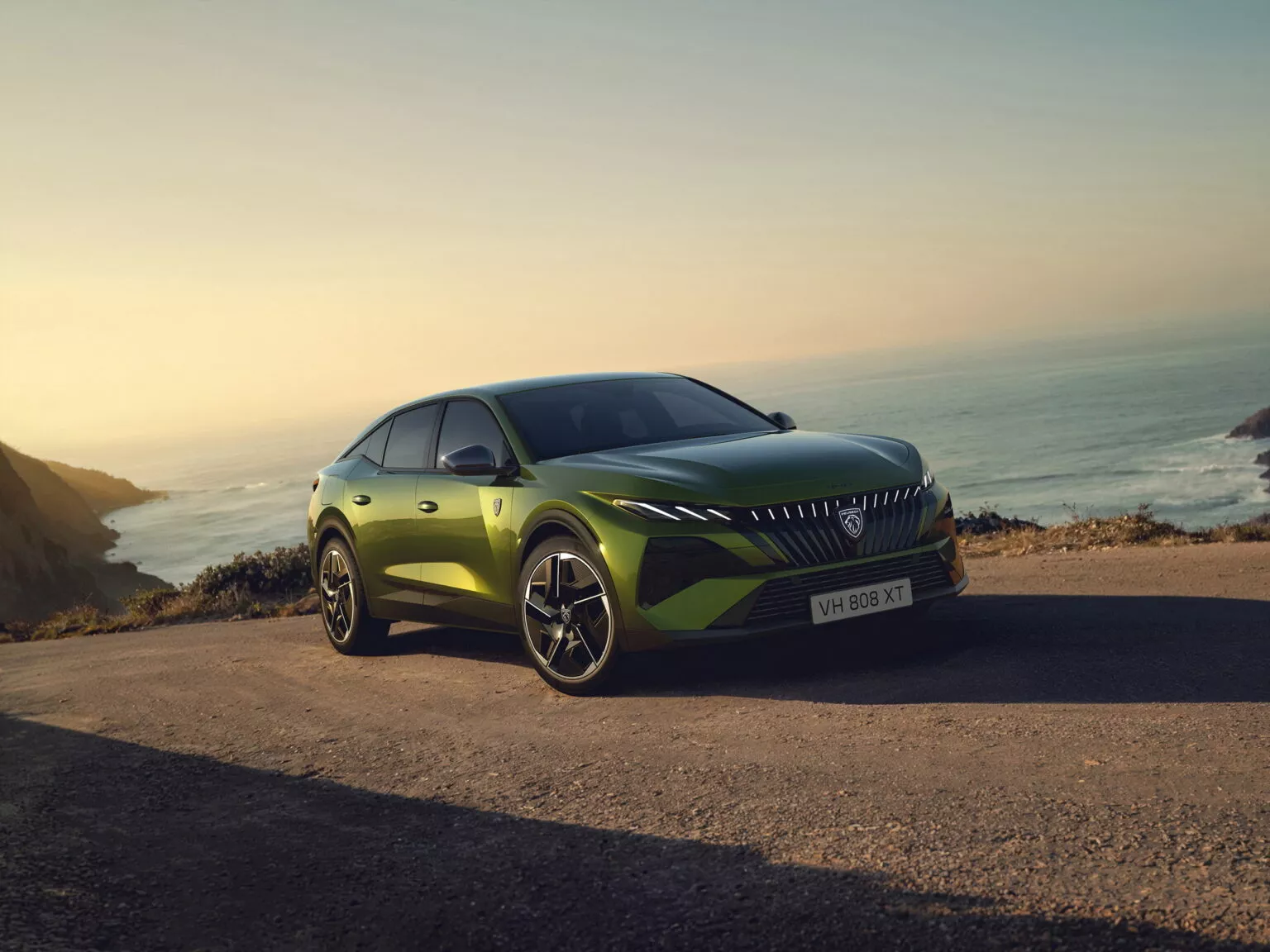
Peugeot has unveiled a refreshed version of its 408 fastback crossover at the Brussels Motor Show 2026, introducing a sharper exterior design and a series of incremental technology updates while retaining its existing electrified powertrain options.
The most visible changes are found at the front, where the 408 adopts a revised lighting signature featuring split units. The upper section incorporates Peugeot’s three-claw motif, serving as daytime running lights and animated turn indicators, while the main headlights are positioned lower and integrated into gloss black trim to reduce their visual prominence. A redesigned grille gives the model a more pronounced appearance, with higher-end versions featuring an illuminated Peugeot lion emblem that conceals a radar sensor behind it.
See also: Peugeot’s Polygon Concept Hints at Future e-208 Design and Drive-by-Wire Features
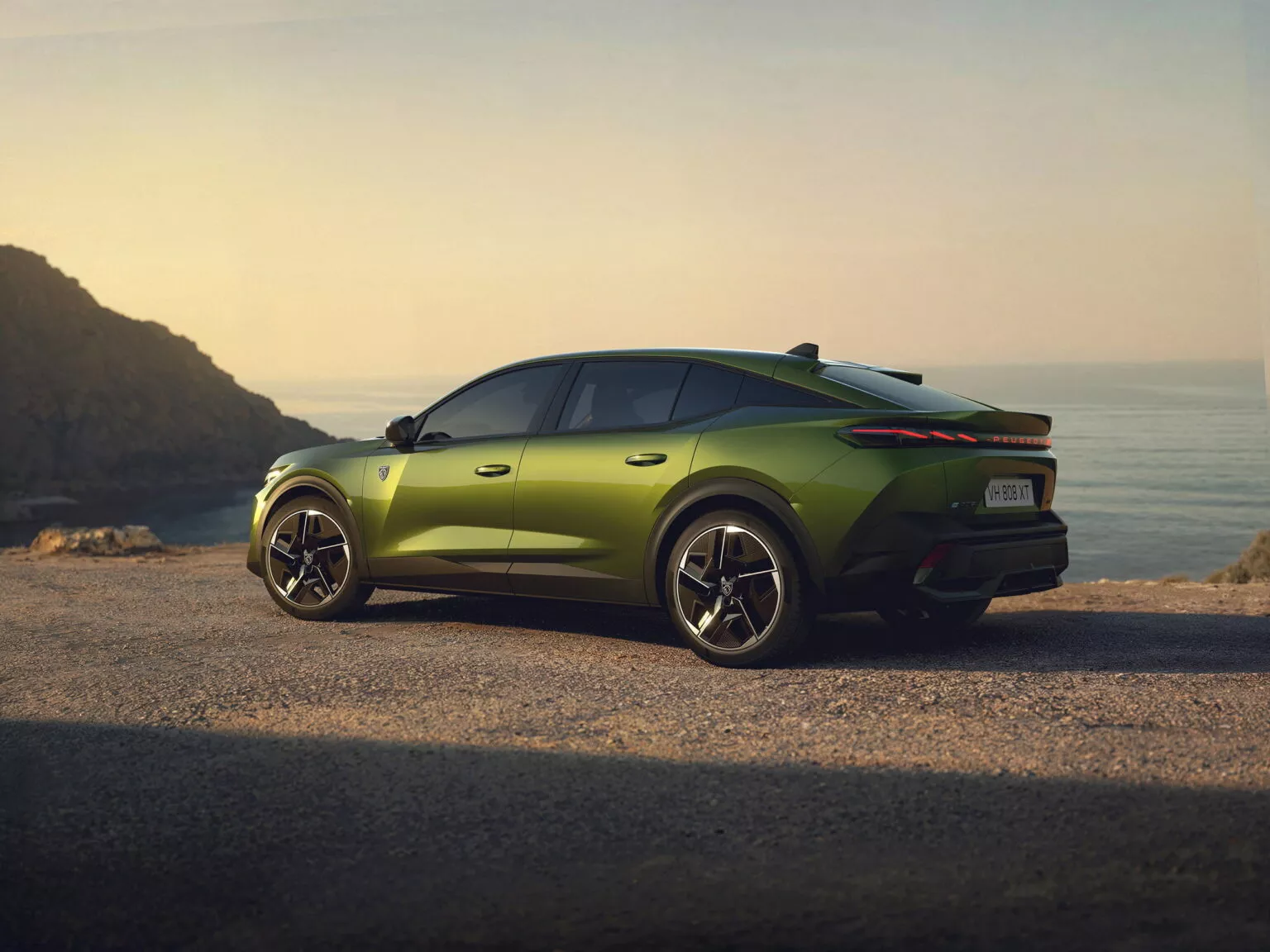
Further exterior updates include a new front bumper and a revised central air intake that replaces the previous honeycomb pattern with horizontal elements. At the rear, the familiar Peugeot badge has been replaced by illuminated “Peugeot” lettering, marking a first for the brand, alongside updated taillights and gloss black accents. The refreshed 408 also gains new wheel designs ranging from 17 to 20 inches and an updated color palette, including a new Flare Green finish that shifts in tone depending on lighting conditions.
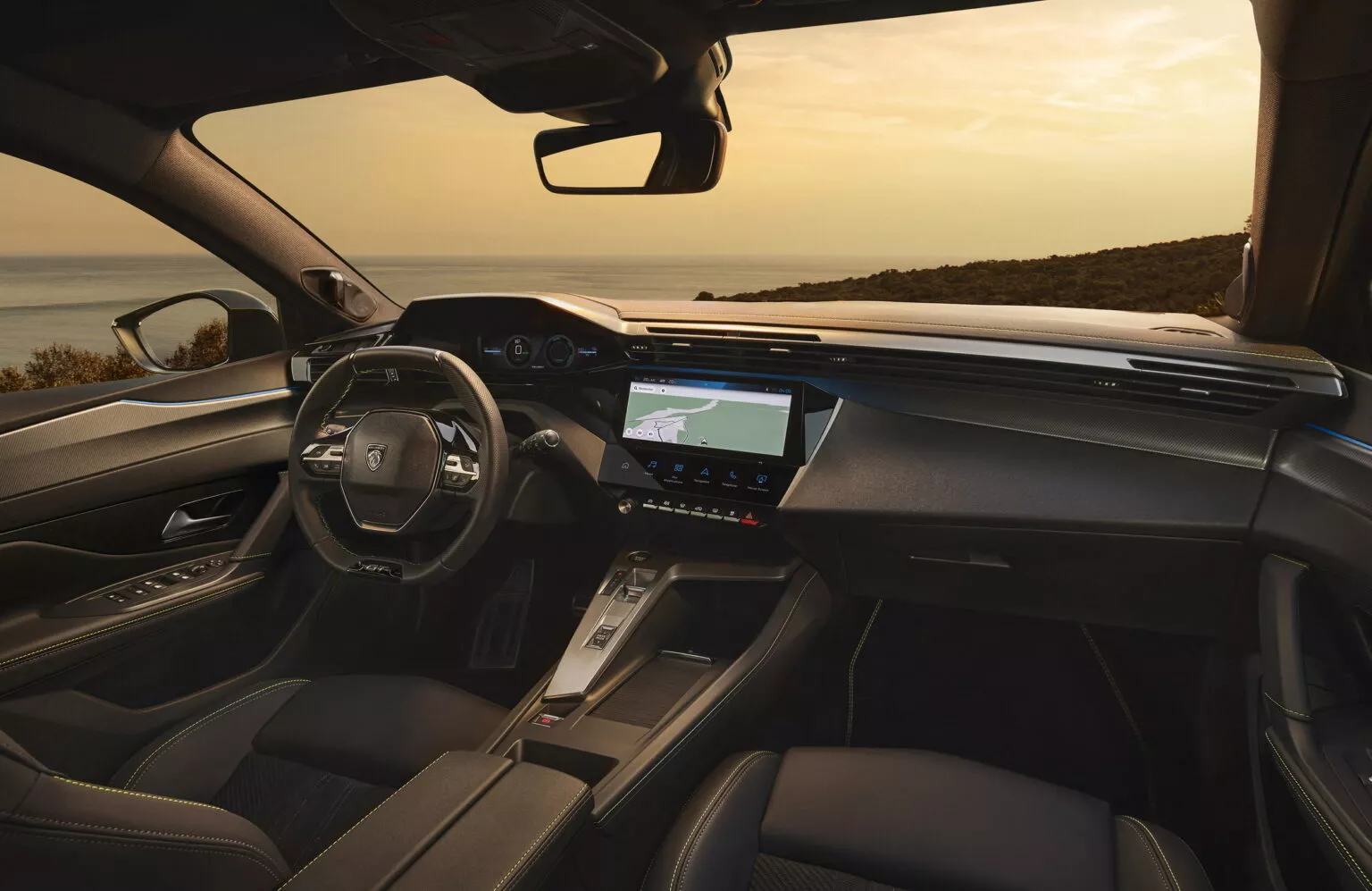
Interior changes are more subtle. Peugeot has updated trim materials and upholstery options, while introducing a new 10-inch digital instrument cluster with revised graphics. This is paired with the existing 10-inch infotainment system, maintaining continuity with the outgoing model.
See also: Peugeot Reveals Updated E-308 And E-308 SW With Larger Battery And New Features
The all-electric E-408 continues with the same powertrain, featuring a 58.2 kWh nickel manganese cobalt battery and an electric motor producing 210 horsepower and 343 Nm of torque. Peugeot lists a WLTP combined driving range of up to 456 km. New EV-related features include manual and automatic battery pre-conditioning to improve charging performance in cold conditions, Plug & Charge functionality, and a Vehicle-to-Load system capable of supplying up to 3.5 kW of external power. An 80% charge limit option for AC charging has also been added to support battery longevity.
For buyers seeking alternatives to a full battery-electric setup, Peugeot will continue to offer a plug-in hybrid variant combining a petrol engine and electric motor for a total system output of 237 horsepower and an electric-only range of up to 85 km. A conventional hybrid option is also available, delivering 143 horsepower and a WLTP combined fuel consumption of 5.0 litres per 100 km.