
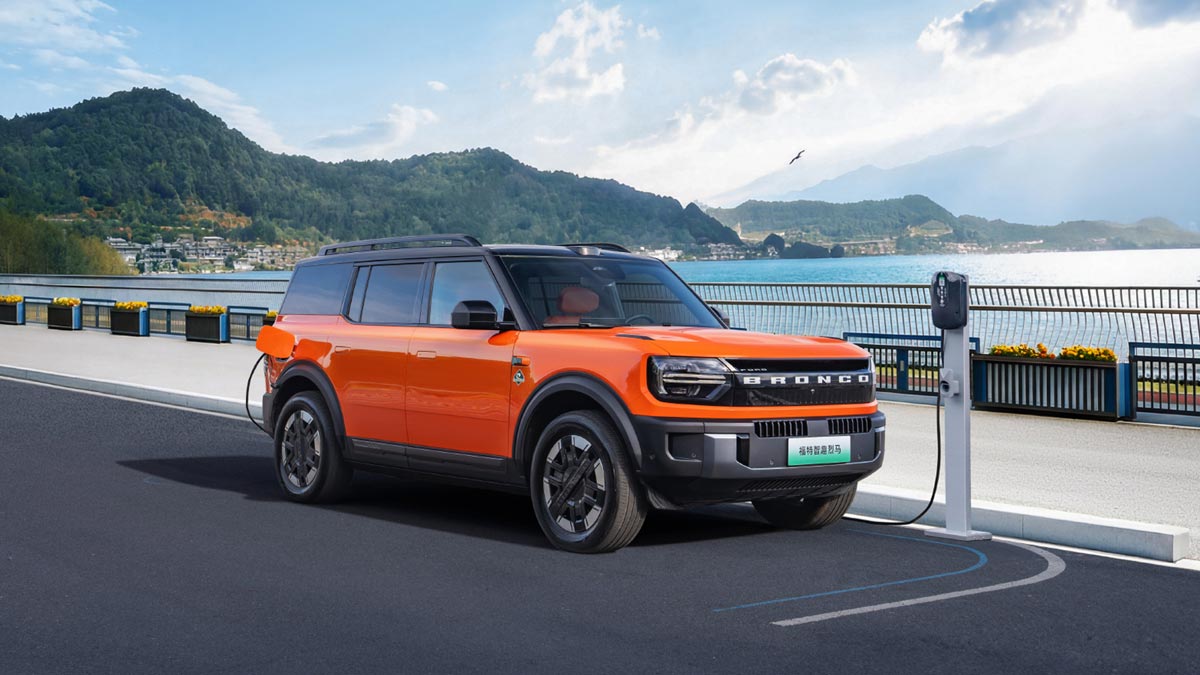
Ford Motor has officially launched its new electric Bronco in China, intensifying efforts to regain momentum in the world’s largest electric vehicle market as competition from domestic brands continues to accelerate.
The automaker introduced the electric Bronco in China on Tuesday with a starting price of 229,800 yuan ($32,640), offering both extended-range electric vehicle (EREV) and battery electric vehicle (BEV) variants. Pricing is in line with earlier pre-sales figures, while Ford is also offering limited-time incentives, including trade-in subsidies of up to 12,000 yuan and cash incentives of 1,600 yuan.
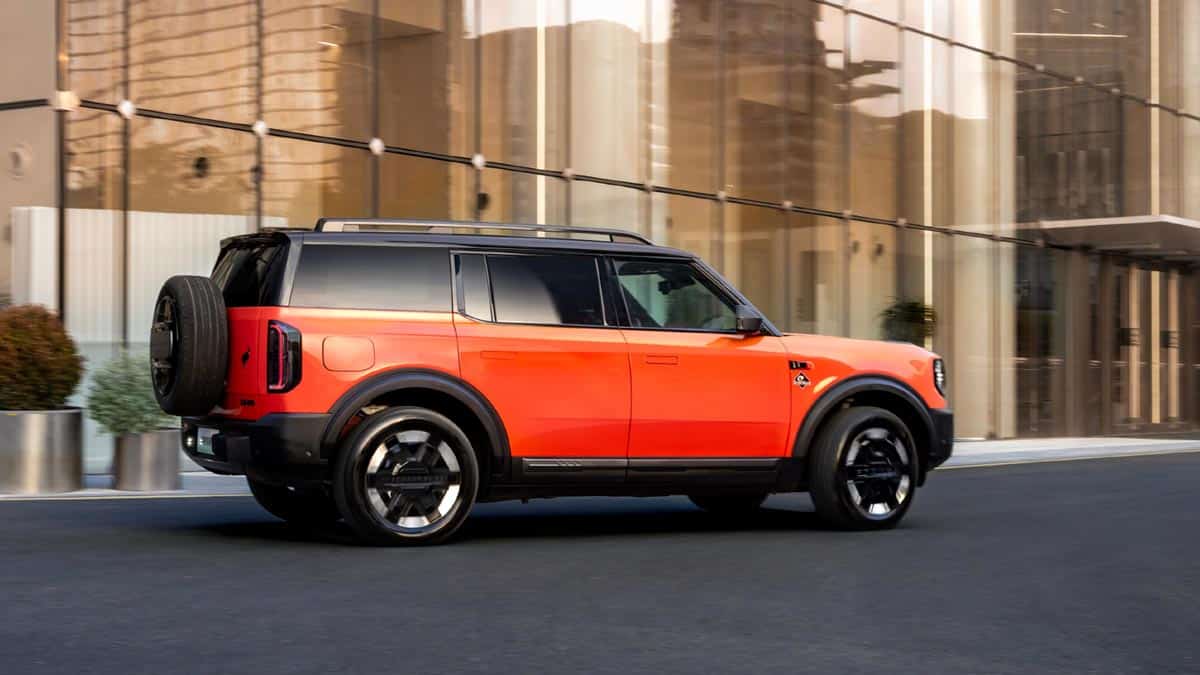
The electric Bronco is offered in five variants, comprising three EREV models and two BEV versions. The EREV lineup is priced at 229,800 yuan, 249,800 yuan and 272,800 yuan, while the BEV variants start at 259,800 yuan and rise to 282,800 yuan.
The model measures 5,025 mm in length, 1,960 mm in width and 1,825 mm in height, with a wheelbase of 2,950 mm, positioning it in the large SUV segment.
The EREV versions use a 1.5-litre turbocharged engine as a range extender, delivering a maximum output of 110 kilowatts. They are equipped with dual electric motors, with the front motor producing 130 kW and the rear motor 180 kW, enabling acceleration from zero to 100 km/h in 5.8 seconds. Energy is supplied by a 43.7 kWh lithium iron phosphate battery, offering a CLTC-rated electric range of 220 kilometres. With a full fuel tank and charged battery, the combined driving range reaches 1,220 kilometres.
The BEV variants feature a dual-motor setup with a 130 kW front motor and a 202 kW rear motor, allowing acceleration from zero to 100 km/h in 5.3 seconds. The fully electric version is fitted with a 105.4 kWh lithium iron phosphate battery, delivering a CLTC-rated range of 650 kilometres.

In China, the electric Bronco will compete with domestic electrified off-road-style SUVs, including the Tank 300 Hi4-T and Tank 400 Hi4-T from Great Wall Motor, as well as the Bao 5 from BYD’s Fang Cheng Bao brand.
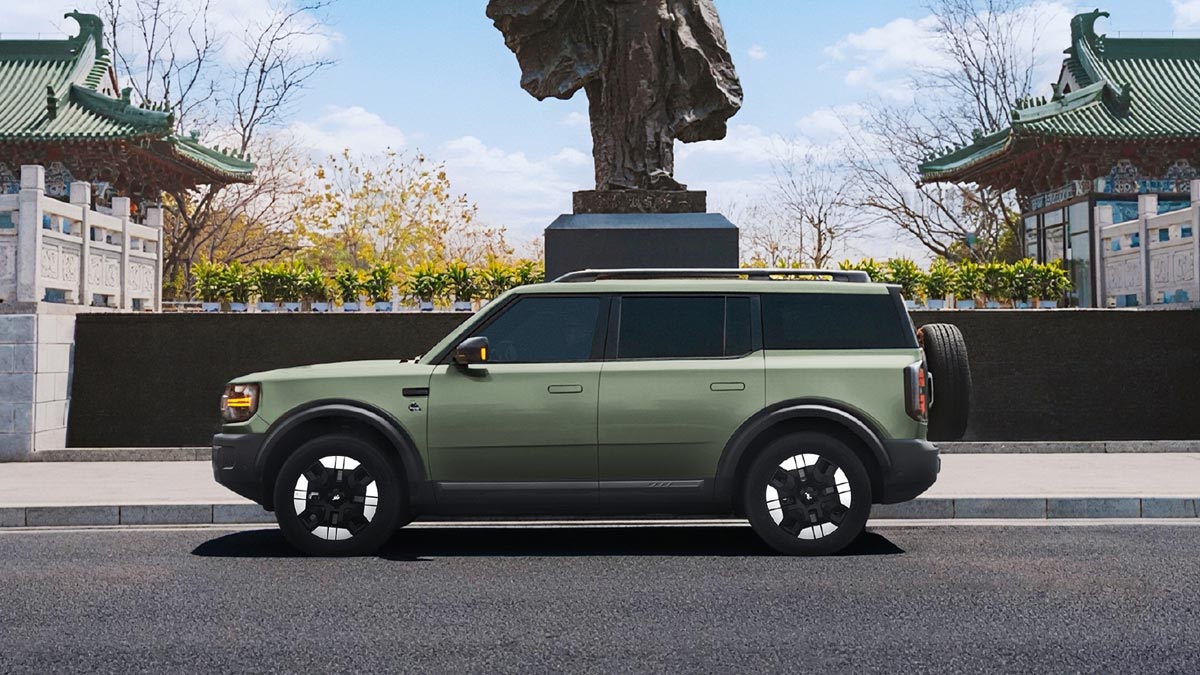
Unlike its main rivals, which use traditional body-on-frame construction aimed at off-road performance, the electric Bronco adopts a unibody design. Ford said the approach prioritises urban driving and everyday usability, reflecting a different positioning in China’s increasingly crowded electrified SUV market.