
Battery-electric van registrations in Britain rose sharply in November, defying a broader downturn in the light commercial vehicle (LCV) market, though industry data shows adoption still lags well behind government-mandated targets.
Registrations of battery-electric vans climbed 25.3% year on year to 2,909 units in November, giving the segment a 12.3% market share — its highest monthly level so far in 2025 — according to data from the Society of Motor Manufacturers and Traders (SMMT). Over the same period, total LCV registrations fell 22.2% to 23,570 vehicles.
For the first 11 months of the year, battery-electric van volumes rose 44.7% to 27,159 units. Despite the growth, electric vans accounted for just 9.4% of total registrations year-to-date, well below the government’s zero-emission vehicle mandate of 16% for the segment.
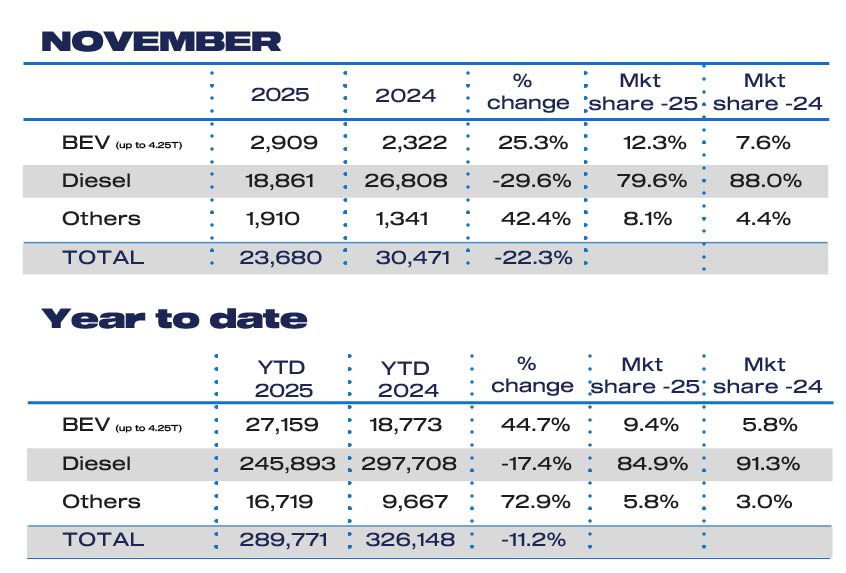
The overall UK van market continued to contract amid weak economic conditions. Year-to-date registrations across all powertrains were down 11.4% compared with 2024, with every major segment in decline. Large vans, which make up nearly 70% of total volumes, recorded a 19.7% drop.
The SMMT said manufacturers now offer more than 40 battery-electric van models in the UK, but several barriers continue to slow wider adoption. These include higher upfront vehicle costs, long lead times for depot grid connections and a shortage of public charging infrastructure suitable for commercial vehicles.
“Lacklustre light commercial vehicle uptake highlights weak economic confidence, and slower fleet renewal means slower decarbonisation,” said SMMT Chief Executive Mike Hawes. “While it is encouraging that zero emission van uptake is rising, the pace of change severely lags government ambition, and every lever must be pulled to support demand and protect industry investment.”
Government measures such as the extended Plug-in Van Grant, the new Depot Charging Scheme and proposed planning reforms are expected to support the transition. However, the industry has repeatedly warned that delays in implementation risk undermining fleet investment plans and the UK’s broader net-zero transport goals.