
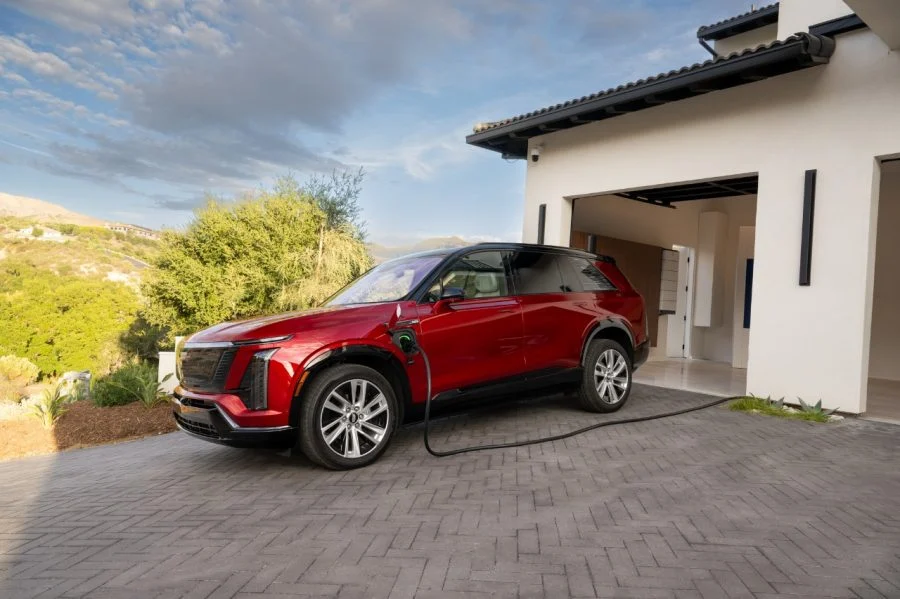
General Motors has introduced a vehicle-to-home energy platform that enables Cadillac electric vehicles to supply backup power during outages, expanding the automaker’s presence in the home energy management sector.
The GM Energy Home System, demonstrated at a residence in Calabasas, California, uses bidirectional charging technology integrated across Cadillac’s six-model EV portfolio.
The system allows properly equipped homes to draw electricity from a vehicle’s battery during grid failures. GM said the setup is compatible with new and existing residential infrastructure and can work alongside third-party solar installations. The demonstration provided real estate professionals with an overview of how the system can operate in both new construction and retrofit scenarios.
Cadillac’s vehicle-to-home capability is supported across all six of its current EV models—the Lyriq, Escalade IQ, Vistiq, Celestiq and Optiq. GM said its PowerBank stationary battery can supply around 24 hours of home power based on average residential consumption, while still allowing vehicle operation during extended outages. “The technology enables Cadillac EVs to provide backup power through bidirectional charging,” the company noted in its system overview.
Cadillac reported continued momentum in its EV portfolio, securing the top luxury EV brand position in the third quarter of 2024. The Lyriq has surpassed 50,000 cumulative sales since launch, and the Escalade IQ was named MotorTrend’s 2026 SUV of the Year. The brand has posted 13 consecutive quarters of year-over-year sales growth.
GM Energy is also advancing pilot programs with Pacific Gas & Electric to test vehicle-to-grid applications, including demand response and grid balancing using aggregated EV batteries.
Rising consumer interest in home energy resilience, as indicated by Zillow’s 2025 trends analysis, has driven higher engagement with home listings featuring battery storage and solar capabilities.
Developers are increasingly planning electrical infrastructure to accommodate energy management systems during initial construction to reduce future retrofit costs.