
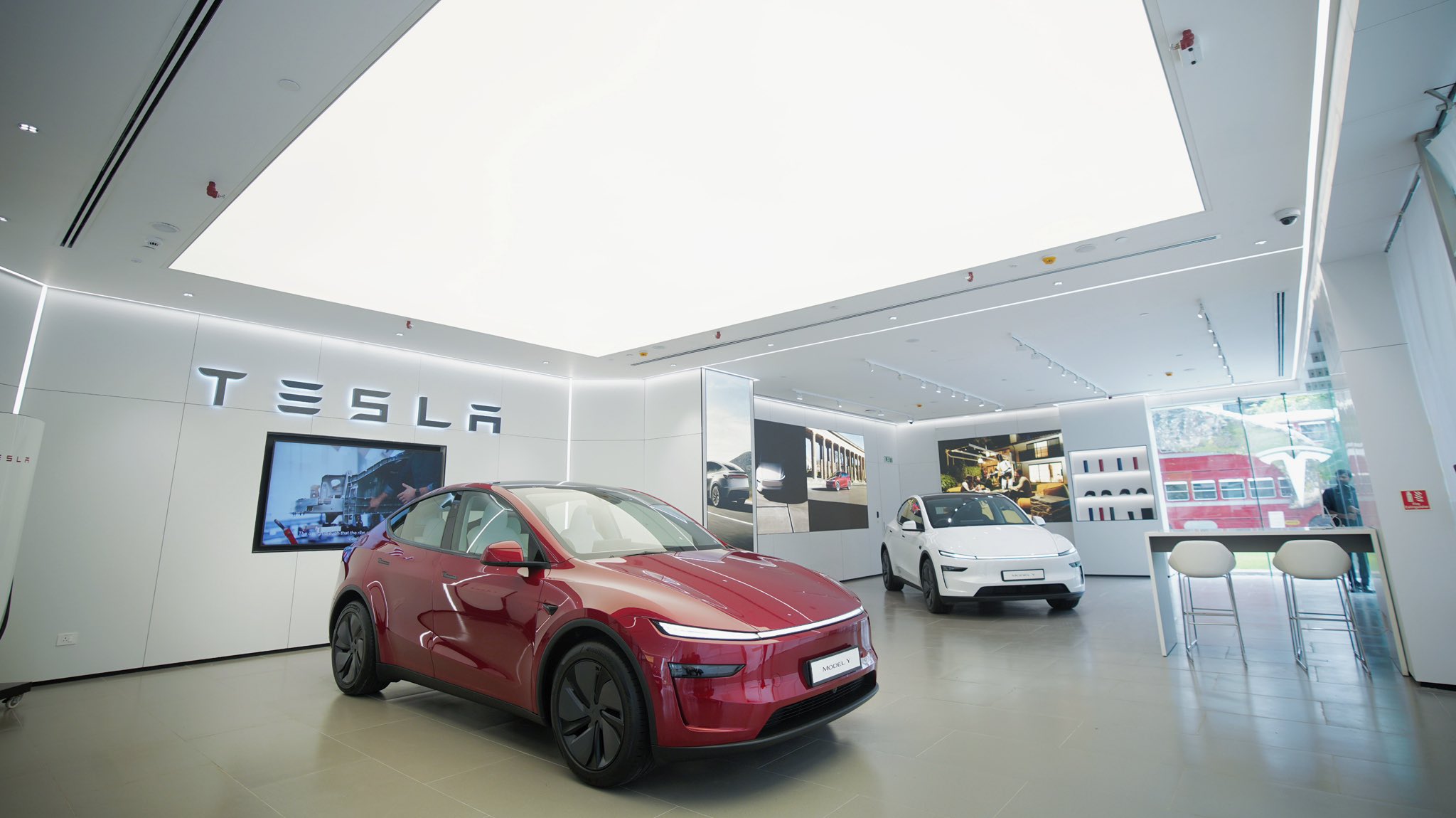
Tesla’s highly anticipated entry into India has started slowly, as steep import duties and premium pricing dampen early demand for its vehicles. The company’s Model Y, its first offering in the country, has struggled to gain traction among India’s cost-conscious car buyers.
Since launching its first showrooms in Mumbai and New Delhi in mid-2025, Tesla has delivered just over 100 vehicles. October sales slipped to 40 units, down 37.5% from 64 deliveries in September. Tesla had initially targeted 2,500 deliveries in 2025 but now expects to sell between 350 and 500 vehicles by year-end.
See also: Tesla Appoints Sharad Agarwal as India CEO to Strengthen Local Operations
India’s high import tax regime poses the biggest hurdle. Fully built vehicles imported from abroad face duties of up to 100%, effectively doubling the cost of Tesla’s Model Y, which is shipped from the company’s Shanghai Gigafactory. The model’s starting price of around ₹60 lakh (US$70,000) makes it nearly three times more expensive than the average electric vehicle sold in India, typically priced at about ₹22 lakh.
The pricing places Tesla in the luxury EV niche, a segment that saw fewer than 3,000 sales in the first half of 2025. While rivals like Mercedes-Benz and BMW also compete in this category, Tesla’s reliance on imports has made its price gap even more pronounced against locally manufactured electric cars.
See also: Tesla Upgrades Model Y Range in India Without Price Increase
Infrastructure challenges further weigh on Tesla’s progress. Public charging availability outside major cities remains limited, and the company’s Supercharger network currently covers only Mumbai and Delhi. Tesla plans to open a third experience center in South India in 2026 and expand its charging infrastructure, but widespread accessibility remains a challenge.
Despite modest initial sales, Tesla views India as a long-term opportunity rather than an immediate growth driver. The company is focusing on brand visibility and cultivating a base of early adopters while awaiting potential policy changes that could make local assembly or lower import tariffs more feasible. For now, Tesla’s entry into India marks a cautious beginning in one of the world’s fastest-growing EV markets.