
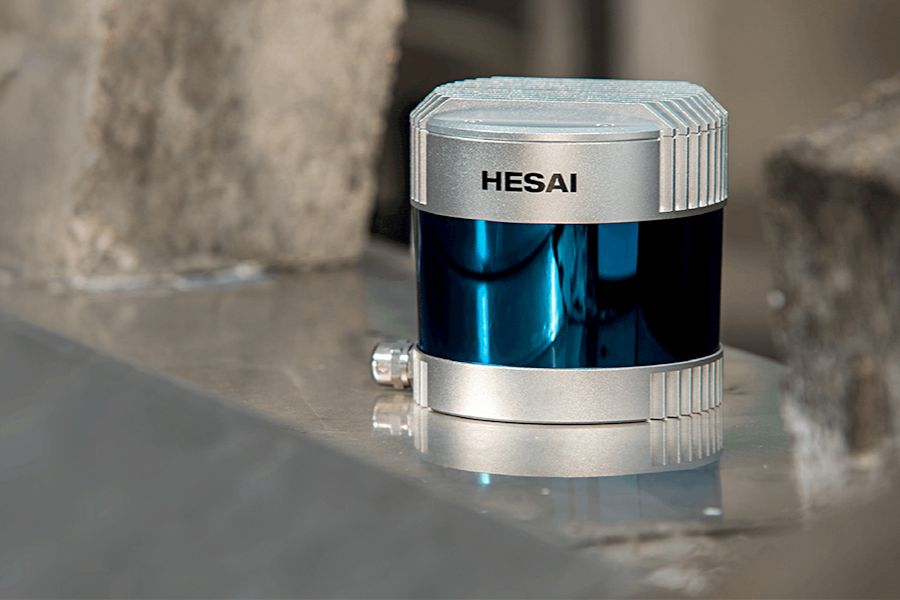
Seyond Holdings, a LiDAR supplier for Nio, is facing a patent infringement lawsuit from rival Hesai Group, potentially complicating its upcoming Hong Kong listing. The case was filed on October 28 with the Ningbo Intermediate People’s Court in Zhejiang province, according to a report by local media outlet Yicai.
The lawsuit focuses on Seyond’s Robin E1X LiDAR, unveiled at CES 2025, and Hesai’s AT series products, the source said. Seyond’s flagship Falcon LiDAR is already deployed across all Nio main-brand models. The Falcon uses a hybrid solid-state 2D scanning solution with a 1,550-nanometer wavelength, providing a maximum detection range of 500 meters, while the smaller Robin E1X has a standard range of 200 meters and a maximum range of 250 meters.
See also: LiDAR Maker Seyond Expands Customer Base With Major Chinese Auto Group Deal
Earlier this year, Seyond announced a partnership with an unnamed leading Chinese automotive group to exclusively supply its 905-nanometer Robin E1X to multiple brands under the group. Hesai’s main offerings include the AT series, such as the AT 128, with automotive clients including Li Auto (NASDAQ: LI).
The legal dispute comes as Seyond prepares for its Hong Kong Stock Exchange listing through a merger with SPAC TechStar Acquisition Corporation, following approval from the China Securities Regulatory Commission (CSRC) earlier this month. The company plans to issue up to 190.24 million ordinary shares, according to an October 14 announcement on the CSRC website.
See also: Hesai Secures $40 Million LiDAR Order from US Robotaxi Firm
Hesai is one of China’s largest LiDAR manufacturers, with 514,189 units installed from January to August, representing a 32.8 percent market share, according to Gasgoo data. Huawei led the market with 643,826 units (41.1 percent), followed by RoboSense with 305,171 units (19.5 percent). Seyond ranked fourth with 104,700 units (6.7 percent) installed during the period.
The lawsuit introduces a potential hurdle for Seyond as it seeks to expand its presence in the competitive automotive LiDAR market, where Hesai and Huawei dominate in terms of volume and market share.