
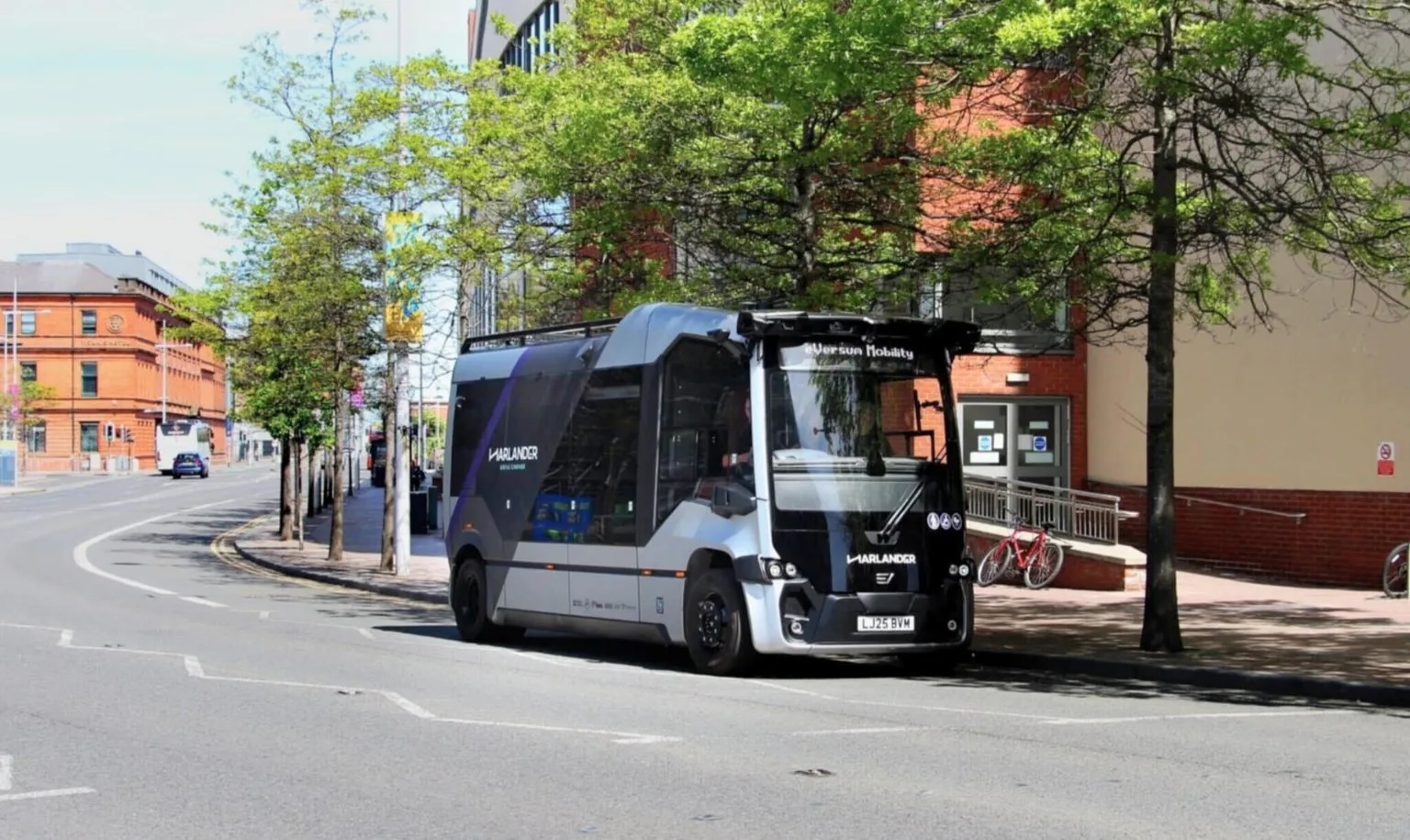
Northern Ireland introduced its first autonomous passenger shuttle with the launch of the Harlander service in Belfast’s Titanic Quarter, marking a milestone in the region’s adoption of connected and automated mobility technology. The self-driving shuttle, powered by Oxa’s autonomous driving software, is being deployed on a one-mile loop to connect Belfast’s railway station with a nearby innovation hub. Officials said the initiative aims to showcase how autonomous systems can enhance safety, sustainability, and connectivity in urban transportation.
The Harlander shuttle operates using Oxa Driver, a software platform that integrates inputs from cameras, radar, and lidar sensors to create a 360-degree view of the surroundings. The technology leverages artificial intelligence to interpret real-time data, predict changes in traffic conditions, and improve performance through continuous learning. To ensure safety during its initial rollout, a human safety operator is present on board each vehicle while the system undergoes public testing in a controlled operating environment.
Developed through collaboration between Oxa and eVersum, the project marks the first commercial integration of Oxa Driver software with eVersum’s eShuttle electric vehicles, which can transport up to eight passengers. The trial demonstrates the feasibility of autonomous shuttle fleets in closed or semi-closed settings such as airports, industrial parks, and corporate campuses. Industry partners including BT, Horiba MIRA, Angoka, and Zenzic contributed to the project, with financial and strategic backing from Innovate UK and the Centre for Connected & Autonomous Vehicles (CCAV).
The launch forms part of the UK government’s Advanced Manufacturing Sector Plan, which aims to position the country as a global leader in autonomous mobility solutions. With the Titanic Quarter attracting more than 3.6 million visitors annually—a figure forecast to rise above 5.6 million by 2035—the Harlander shuttle is designed to relieve pressure on existing transport infrastructure while reducing private car dependency. Future expansions may include applications in logistics at Belfast Harbour, such as automating goods movement within container terminals and industrial sites to enhance efficiency.