
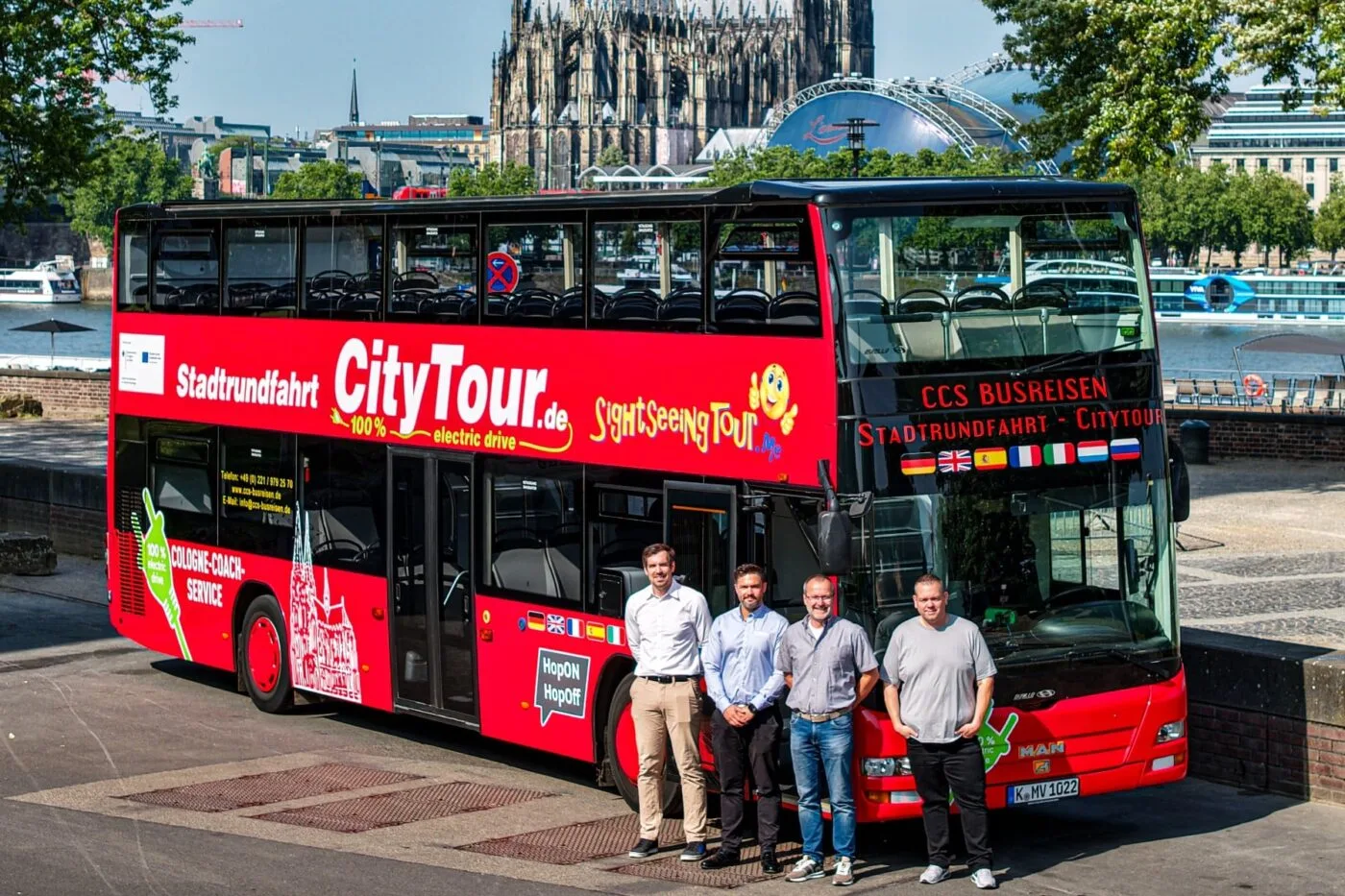
German tour operator Willms Touristik has converted 18 MAN double-decker sightseeing buses, built between 1988 and 2019, from diesel to electric power in a move it described as a cost-effective alternative to buying new vehicles.
The company said the buses, which entered service this spring in Cologne and other German cities, were retrofitted with DANA TM4 SUMO HP motors producing 145 kW and paired with an Allison six-speed T280R automatic gearbox adapted for electric use. Six lithium iron phosphate battery packs provide a range of around 200 kilometres, enough for daily city tours.
“Take-off is smooth, manoeuvrability is excellent and there’s no jolting. I also expect lower wear and maintenance needs,” operator Sascha Willms said. He added that the gearbox solution helped increase range and reduce charging stops.
The conversion, carried out by Danish specialist Banke ApS and DGS Diesel- und Getriebeservice, required only minimal seat removal to fit the batteries. The buses now operate more quietly, reducing noise by up to ten decibels, and improve air quality in urban areas. “Drivers used to be asked why such smelly diesels were still running in the city. Thankfully, that’s over now,” Willms said.
Willms Touristik argued that retrofitting offered a practical financial path. “Sightseeing buses are typically in service two to three times longer than city buses. Even our classics from 1988 and 1990 still have years left. Retrofitting is far cheaper than replacement,” Willms said.
The project received €6.5 million in subsidies from the Federal Ministry of Transport under its programme promoting alternative-drive buses, covering 80% of costs. Willms Touristik invested €2.2 million for charging infrastructure, training and other expenses. “It may sound like a lot, but we didn’t need to buy new buses and now operate a modernised fleet for years to come,” Willms added.
Federal officials relaunched the support scheme under CDU transport minister Patrick Schnieder after budget turbulence had stalled funding. The programme, which runs until the end of 2025, remains “subject to parliamentary approval” of the federal budget later this year. Eligible applicants include transport operators, with funding covering up to 80% of additional investment for both new and converted electric buses.
Source: Electrive