
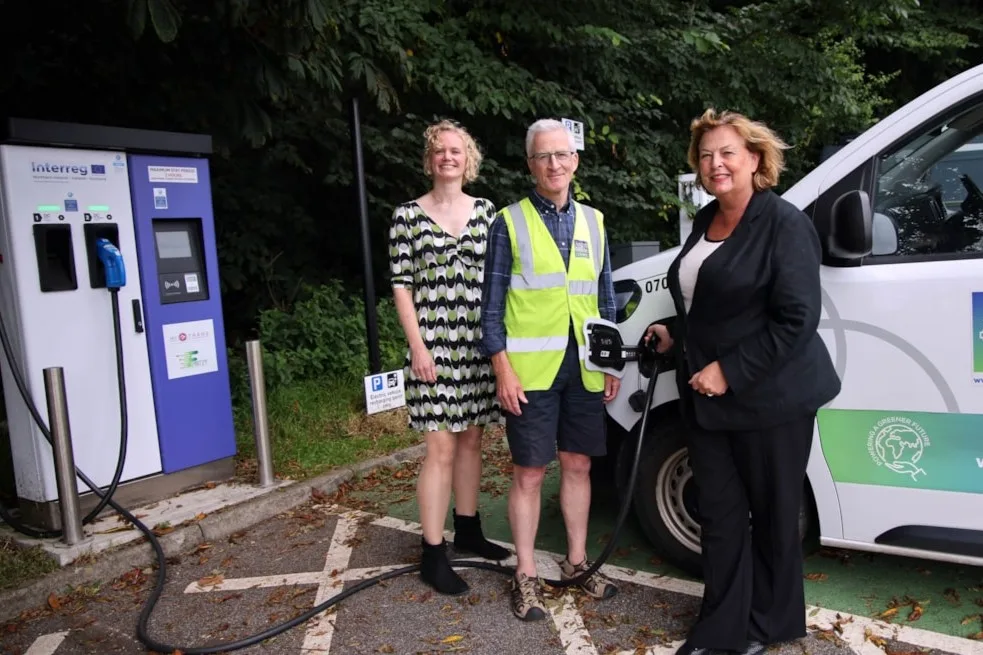
HITRANS has received more than £3 million in funding to expand public electric vehicle (EV) charging infrastructure across north-west Scotland, including Argyll and Bute, Orkney, Shetland and the Western Isles. The initiative targets rural and island communities with limited access to EV facilities.
The latest award comes from the £30 million Electric Vehicle Infrastructure Fund (EVIF), which seeks to combine public support with private sector investment, particularly in less commercially viable areas. The project is part of a wider plan to deliver 24,000 additional public charge points by 2030, with much of the rollout expected to be led by private operators.
“In addition to the public funding from EVIF, we anticipate the private sector investing at least an additional £30 million of its own capital, meaning public funding should be prioritised for those areas of Scotland less likely to benefit from stand-alone private sector investment,” Transport Secretary Fiona Hyslop said. “This includes rural and island communities like those which will be served by this north-west Scotland project led by HITRANS.”
HITRANS Partnership Director Ranald Robertson said the multi-year funding will allow the network to expand sustainably while making use of local renewable energy. “Collaborating across the region to share our resources and challenges has highlighted some unique opportunities that we are keen to explore in parallel, such as the abundant renewable energy generation in the area,” he said.
Councillor John Armour, Argyll and Bute Council’s Policy Lead for Roads, Transport and Amenity Services, said the council has identified more than 80 potential new charging sites. With 37 chargers already in place, the funding will be used to prioritise sites, assess costs, and implement a phased expansion.
The Scottish Government said it has invested more than £65 million in public EV charging since 2011, creating one of the UK’s largest networks, with over 7,000 publicly accessible points. The government met its initial target of 6,000 points in October 2024, two years ahead of schedule.