
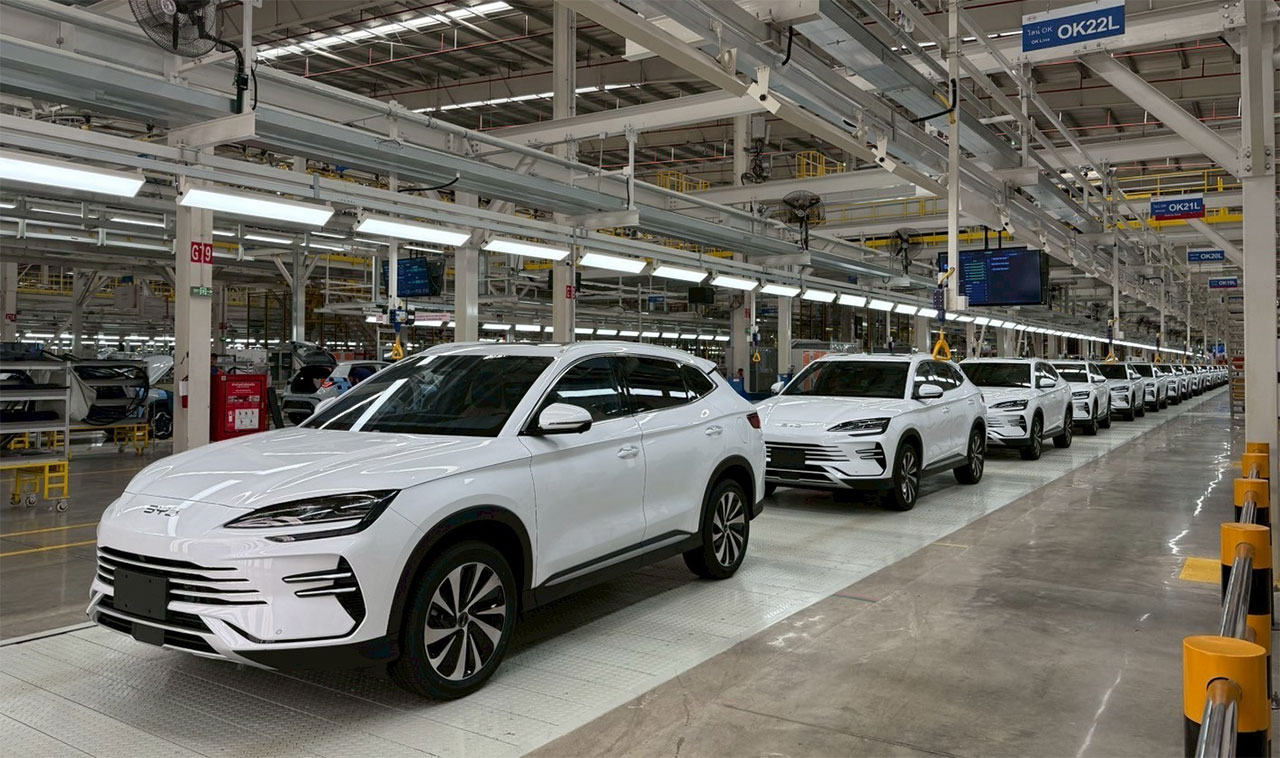
Thailand has revised its electric vehicle (EV) incentive policy to allow carmakers greater flexibility in meeting local production requirements, aiming to boost exports amid weak domestic demand and increasing competition from Chinese automakers, Reuters reported on Wednesday.
Under the changes, exports of domestically produced EVs will now count toward production quotas, which previously only included locally registered vehicles. The adjustment is part of the country’s broader 2022 EV incentive package, which offered duty-free imports on the condition that carmakers match imports with local production by 2024, and ramp up to 1.5 units produced for every imported unit by 2025.
“The revisions approved today will allow greater flexibility and help Thailand, which is already the leader in the region’s automotive manufacturing industry, to become a key EV production base,” said Narit Therdsteerasukdi, secretary-general of Thailand’s Board of Investment.
Thailand, Southeast Asia’s second-largest economy, serves as a major auto production and export hub for global brands like Toyota and Honda. In the EV segment, Chinese manufacturers such as BYD and Great Wall Motors currently account for more than 70% of sales in the local market.
The revised policy is expected to increase EV exports to around 12,500 units in 2025 and 52,000 in 2026, the Board said. Thailand shipped its first batch of 660 EVs in April.