
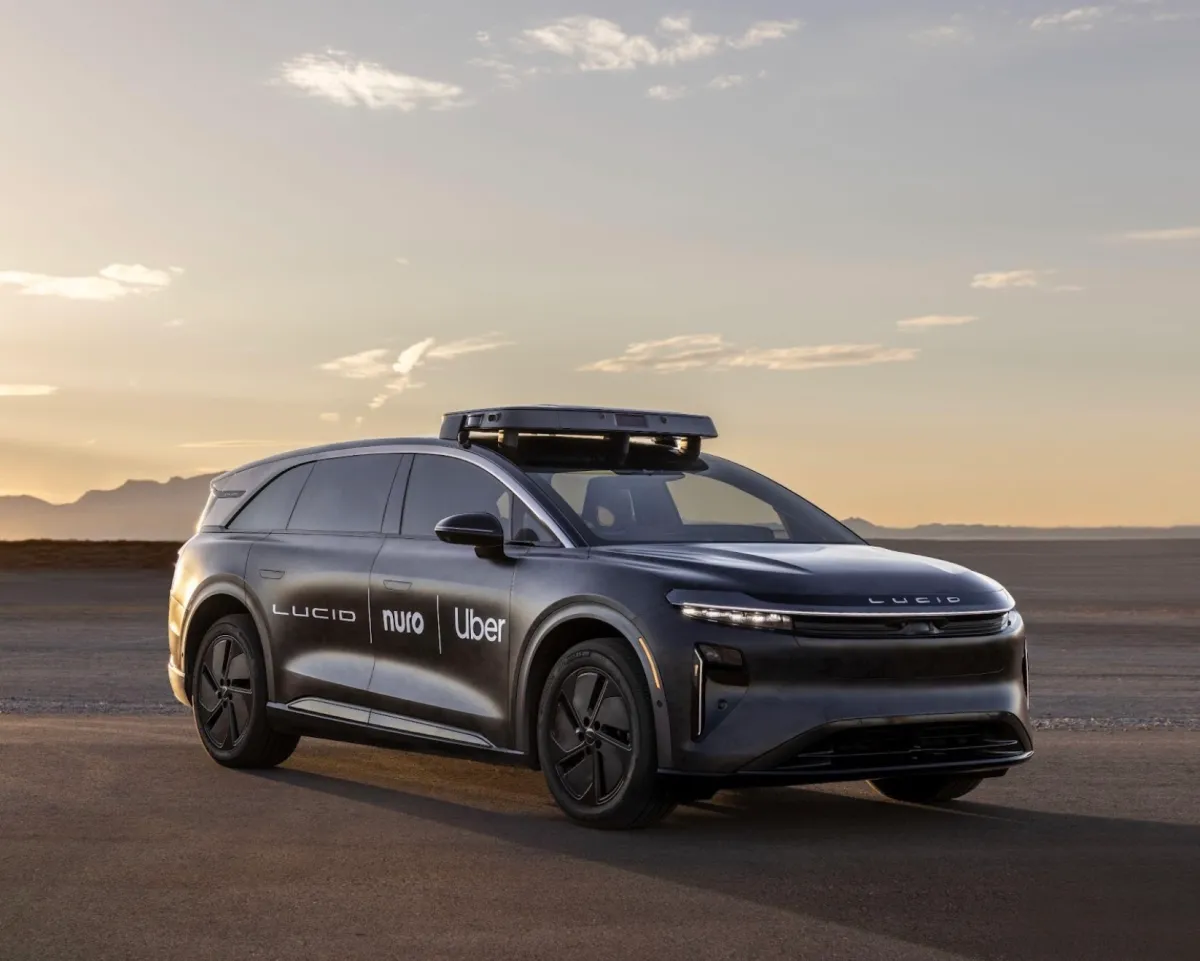
Uber is making a significant move into the autonomous vehicle market with major investments in electric vehicle manufacturer Lucid and AV technology startup Nuro, aiming to launch a premium robotaxi service in the United States. Announced Thursday, the deal includes a $300 million investment in Lucid and a commitment to purchase at least 20,000 Gravity SUVs over the next six years. These vehicles will be equipped with Nuro’s self-driving system and operated by Uber or third-party fleet partners.
Production of the modified Gravity SUVs is expected to begin in late 2026, according to a regulatory filing. Uber is also investing an undisclosed “multi-hundred-million dollar” amount in Nuro. A person familiar with the agreement noted that the Nuro investment exceeds the Lucid one.
Nuro co-founder and president Dave Ferguson said the partnership was a year in the making and highlighted the depth of Uber’s commitment. “I think that’s probably a reflection of how meaty it is,” Ferguson told TechCrunch. “Uber was looking to make a very large commitment to a robotaxi program, and spent time with almost every AV company to find the most suitable partner.”
Ferguson said Lucid’s Gravity SUV already meets the high technical demands needed for autonomous integration. “The vehicles are already equipped with the kind of hardware redundancies required for a Level 3 automated driving system,” he explained, adding that this made integrating Nuro’s system “almost a delight.”
The Nuro-equipped vehicles will target Level 4 autonomy, meaning they can operate without human intervention in specific environments. The companies have already tested a prototype on a closed track at Nuro’s Las Vegas proving grounds.
Uber has spent the past two years expanding its AV partnerships. In 2024, it announced deals with May Mobility, Volkswagen, and Chinese developers including Momenta, WeRide, and Baidu. Its current U.S. collaboration with Waymo has already launched services in cities like Austin and Atlanta.
For Nuro, the agreement is a major endorsement of its new strategy. After initially focusing on low-speed delivery robots, the startup shifted in 2023 to licensing its autonomous tech. “We were thrilled that, at the end of all that, we were the partner that was chosen,” Ferguson said of the Uber deal, noting it validates their new direction and extends their financial runway.