
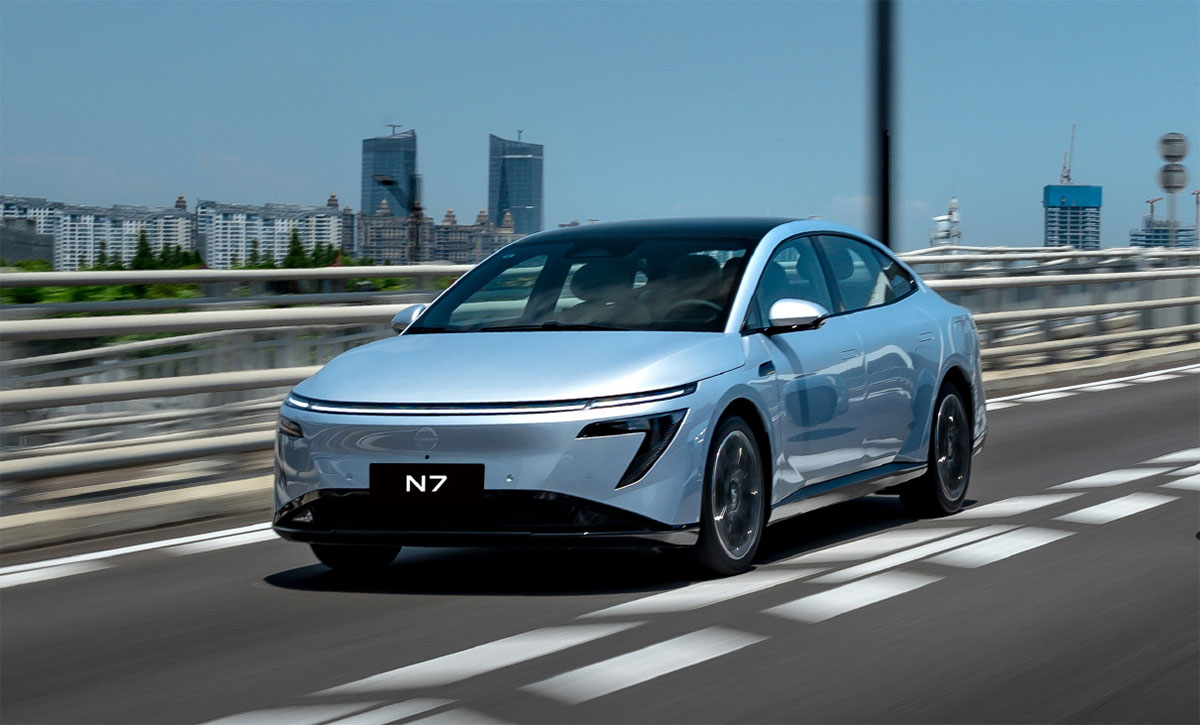
Nissan Motor plans to begin exporting electric vehicles from its Chinese plants to Southeast Asia, the Middle East, and other global markets starting in 2026, as part of an ambitious turnaround strategy aimed at restoring profitability. The company’s first export model will be the N7 electric sedan, developed in partnership with Dongfeng and unveiled at Auto Shanghai in April.
The shift toward using Chinese production capacity for international markets follows Nissan’s announcement of a ¥500 billion (€3 billion) cost-reduction initiative under a sweeping reorganisation strategy named ‘Re:Nissan.’ The plan includes cutting 20,000 jobs and closing seven of its 17 global vehicle plants by the 2027 fiscal year. These changes are expected to impact around 15% of the company’s workforce, including 9,000 layoffs already announced in 2024.
According to CarNewsChina, the N7’s export will be facilitated by a new joint venture between Dongfeng Motor and NCIC, a Nissan subsidiary, with a capital investment of one billion yuan (€119 million). Dongfeng will hold a 40% stake, while Nissan retains 60%. The N7 is based on Dongfeng’s 007 platform and integrates AI software from Chinese developers, requiring future modifications for compliance in overseas markets due to restrictions on Chinese-made AI technologies.
“To facilitate exports, Nissan will need to modify the software specifications due to restrictions on Chinese-made AI products in some countries,” CarNewsChina reported. In response, Nissan has increased investment in IAT Automobile Technology, a local software developer.
The carmaker’s Chinese strategy includes a ¥10 billion (€1.2 billion) investment through 2026 to support new electric and plug-in hybrid launches, including its first electric pickup later this year. While expanding in China, Nissan is downsizing in other regions. Several eMobility projects—including an LFP battery plant in Japan and future model planning for North America—have been cancelled.
New CEO Ivan Espinosa, who succeeded Makoto Uchida in April, is overseeing the restructuring. The company is aiming to return to profitability by the 2026 fiscal year. “With ‘Re:Nissan’, we are focused on regaining financial stability and improving global competitiveness through streamlined operations,” Nissan stated when announcing the new roadmap.
Despite the cuts, Nissan’s Sunderland plant in the UK is expected to remain operational. The site continues to receive investment for electric vehicle and battery production alongside its former battery subsidiary AESC, reinforcing the company’s EV ambitions in Europe.
The decision to export Chinese-built EVs is seen as an attempt to better utilize existing production capacity and leverage Nissan’s service network abroad. At the same time, it may serve as a stepping stone to attract future partnerships after the collapse of the Renault-Nissan alliance and failed merger talks with Honda. Reports this week suggest renewed discussions with Foxconn in Japan, indicating that Nissan may be exploring new avenues for cooperation.