
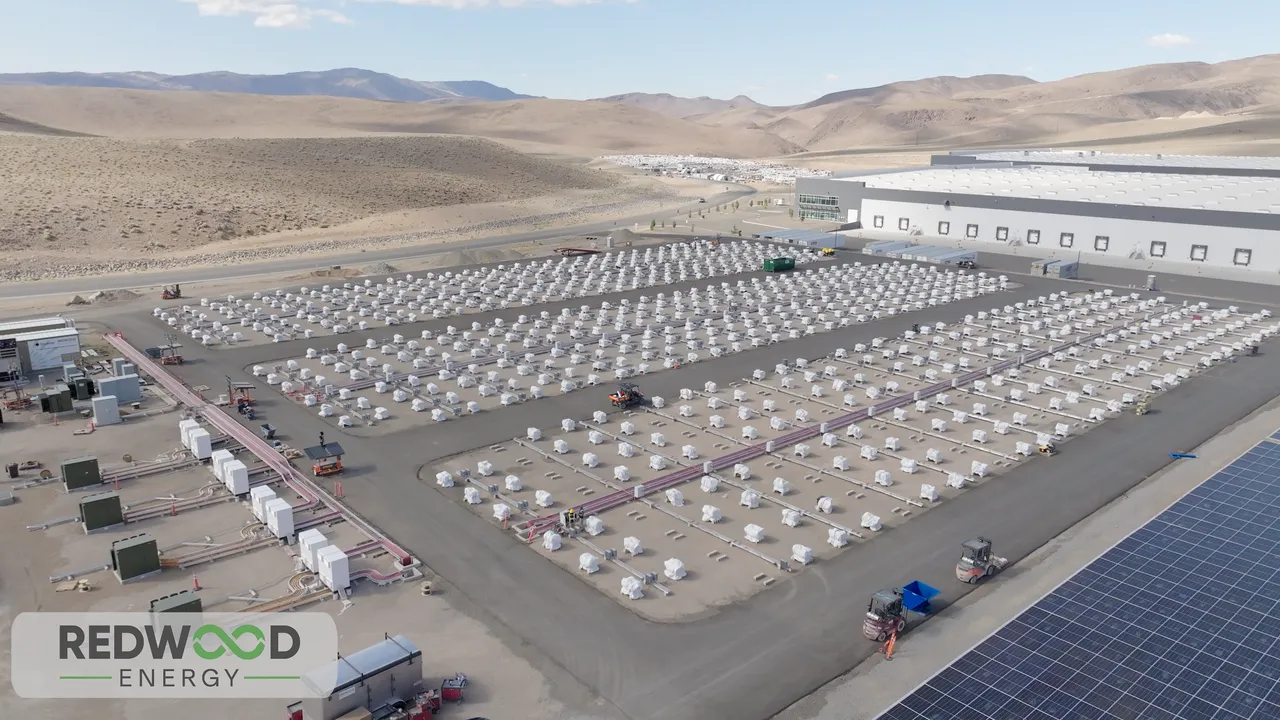
Redwood Materials has unveiled a new business unit, Redwood Energy, focused on converting used electric vehicle batteries into cost-effective, large-scale energy storage systems. The company, founded by Tesla co-founder JB Straubel, aims to extract residual value from EV batteries before recycling, providing a scalable solution for growing grid demands.
The new venture recently deployed its first major project—a 12 MW, 63 MWh microgrid built entirely from second-life EV batteries. The system is currently powering a modular data center operated by Crusoe AI and is reported to operate at a lower cost compared to conventional storage technologies.
Redwood Energy’s strategy involves identifying EV battery packs that retain substantial usable capacity—often more than 50%—even after being retired from vehicles. These batteries are tested and integrated into modular storage units capable of supporting solar, wind, or grid-based power systems. Once the batteries reach the end of their usable life, they are routed into Redwood’s closed-loop recycling process to recover valuable materials like lithium, cobalt, and nickel.
With an estimated 100,000 EVs expected to be retired in the United States this year and electricity demand surging, Redwood sees an opportunity to fill the gap with second-life storage systems. The company currently has over 1 GWh of retired battery capacity in its deployment pipeline and plans to scale that figure to 5 GWh within the next year. Projects as large as 100 MW are also in the works, reflecting the growing potential of second-life energy storage.