
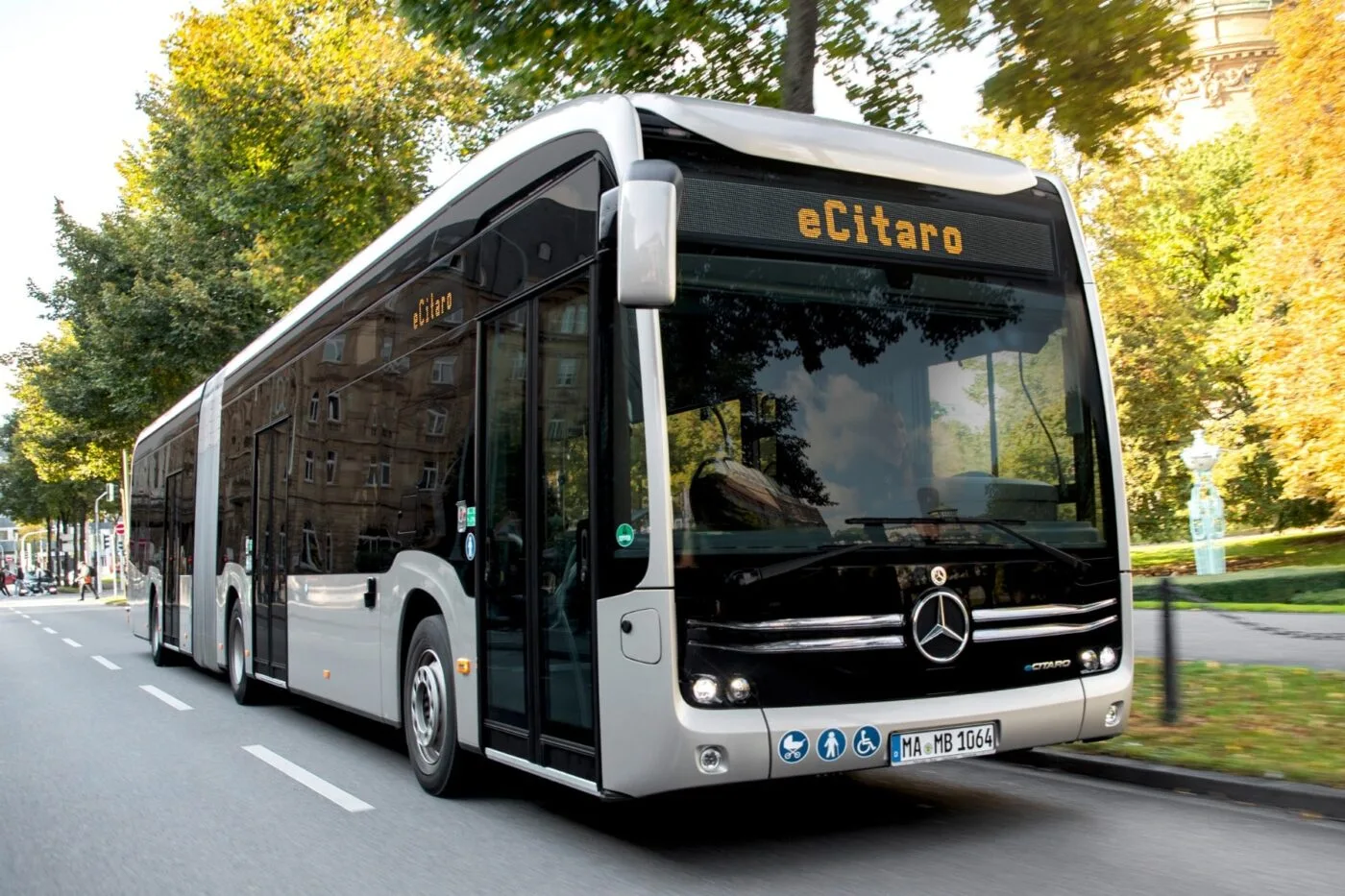
Daimler Buses has introduced a new hydrogen-only driving mode for its eCitaro G articulated electric buses, allowing the vehicles to operate exclusively on energy supplied by an onboard fuel cell without requiring external battery charging. Ten of these updated buses have been delivered to Stuttgart’s public transport operator, SSB.
The new “H2 mode” enables the fuel cell to directly power the electric drivetrain, unlike previous models where the fuel cell acted solely as a range extender to recharge the battery. Daimler Buses said the development improves energy efficiency and extends operational range for urban transit fleets.
See also: HEAG mobilo Expands Electric Bus Fleet with New Mercedes-Benz eCitaro Units
Each vehicle is equipped with four NMC3 battery packs providing 392 kWh of capacity and six roof-mounted hydrogen tanks holding 30 kilograms of compressed hydrogen. The fuel cell system delivers up to 40 kW, enough to maintain typical city speeds of 30–50 kph, although the battery is still used to support acceleration and energy recovery through regenerative braking.
“The new mode not only improves efficiency but also enhances performance in stop-start traffic and uphill routes,” Daimler Buses said, noting improvements in brake energy recovery in H2 mode.
The ten new buses were officially handed over to SSB Stuttgart, which plans to transition to a zero-emissions fleet in the city centre by 2027. Daimler Buses provided route evaluations to ensure the optimal deployment of the vehicles.
See also: Daimler Buses to Offer Battery Upgrades for Mercedes-Benz eCitaro, Extending Service Life
The eCitaro G buses offer a total capacity of up to 124 passengers, with 47 seated and 77 standing. Additional features include a surveillance system, driver-assistance functions such as Sideguard Assist and Traffic Sign Assist, a rear-view camera, manual ramp for accessibility, and two dedicated areas for wheelchairs or prams.