




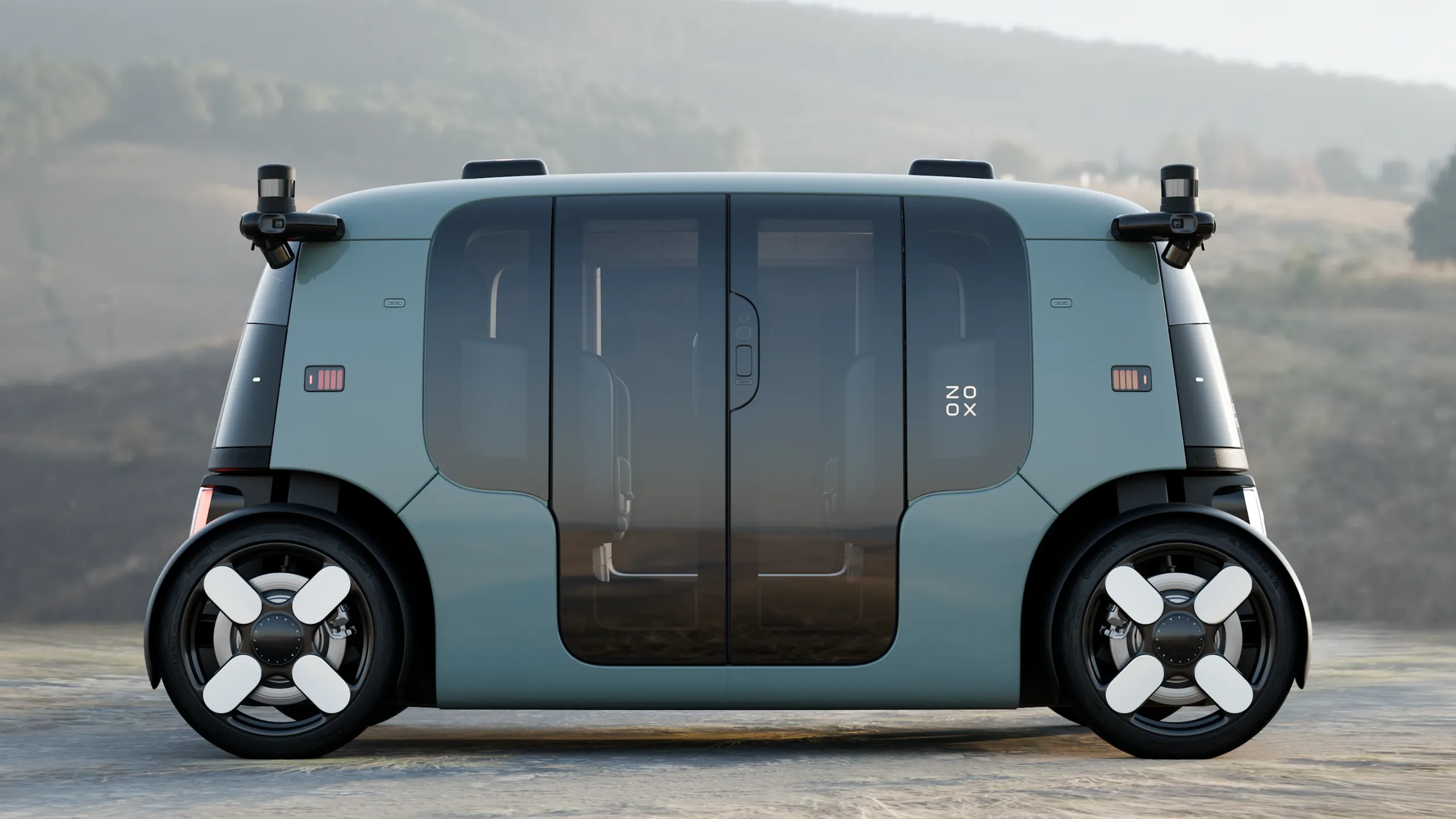
Zoox has unveiled a redesigned version of its purpose-built robotaxi, introducing updates to the vehicle’s interior, seating and exterior communication systems as it prepares the autonomous vehicle for large-scale production.
The company said the redesigned robotaxi reflects feedback gathered from approximately 500,000 riders during testing and early deployments. The updated model represents Zoox’s production-intent vehicle, which is scheduled to enter serial manufacturing later this year at its Hayward, California, facility.
Cabin Redesigned for Greater Comfort
The most visible changes are found inside the cabin, where Zoox has introduced a lighter color palette featuring monochrome aloe green seating paired with stone-gray flooring and trim.
According to the company, the simplified interior is intended to create a calmer environment while making personal items such as phones and bags easier to spot before passengers leave the vehicle.
The carriage-style, face-to-face seating layout remains unchanged, but both the seats and headrests have been redesigned with additional padding and improved ergonomic contours based on rider feedback.
Other interior enhancements include a brighter touchscreen display, larger cupholders for improved stability and a redesigned wireless charging pad featuring textured fluting to help secure mobile devices during trips.
Exterior Updated for Better Communication
Zoox also redesigned several exterior features to improve how passengers and nearby road users interact with the robotaxi.
The vehicle’s rotating bidirectional reflectors have been repositioned and refined to more clearly distinguish the front and rear of the vehicle.
A new speaker and microphone system has also been integrated into the doors, allowing two-way communication between passengers, Zoox support personnel and emergency responders when required.
Designed for Large-Scale Manufacturing
The redesigned robotaxi is expected to enter large-scale production at Zoox’s manufacturing facility in Hayward, California.
Subject to regulatory approvals, the company said production can scale to as many as 100 vehicles per week as it expands commercial autonomous ride-hailing services later this year.
Rider Feedback Shaped the New Design
Chris Stoffel, Director of Robot Industrial Design and Studio Engineering at Zoox, said the redesign focuses on creating a more comfortable and intuitive passenger experience.
“The updates we’ve made to this iteration of our purpose-built robotaxi continue to further distinguish the Zoox experience from anything else available today.”
He added:
“The simplicity of the elevated interior design does not demand a rider’s attention like so many of the features found in today’s passenger cars. Instead, riders can relax and enjoy the space as they are transported throughout the city.”
Zoox said the redesign is intended to improve usability without changing the vehicle’s core concept of a steering-wheel-free autonomous robotaxi built specifically for shared urban transportation.


