




U.S.-based autonomous drone delivery company Zipline said on Wednesday it will launch operations in Houston and Phoenix early this year, marking the next phase of its U.S. expansion following a $600 million funding round that values the company at $7.6 billion.
The company said the new capital will support expansion into at least four U.S. states in 2026. Investors participating in the round included Fidelity Management & Research Company, Baillie Gifford, Valor Equity Partners and Tiger Global, alongside existing backers.
Founded in 2014, Zipline has developed an end-to-end drone logistics ecosystem, including proprietary aircraft, launch and landing infrastructure, and logistics software. The company began commercial operations in 2016 delivering blood and medical supplies in Rwanda. It now operates in five African countries, several U.S. cities and Japan, delivering healthcare, food, retail and agricultural products.
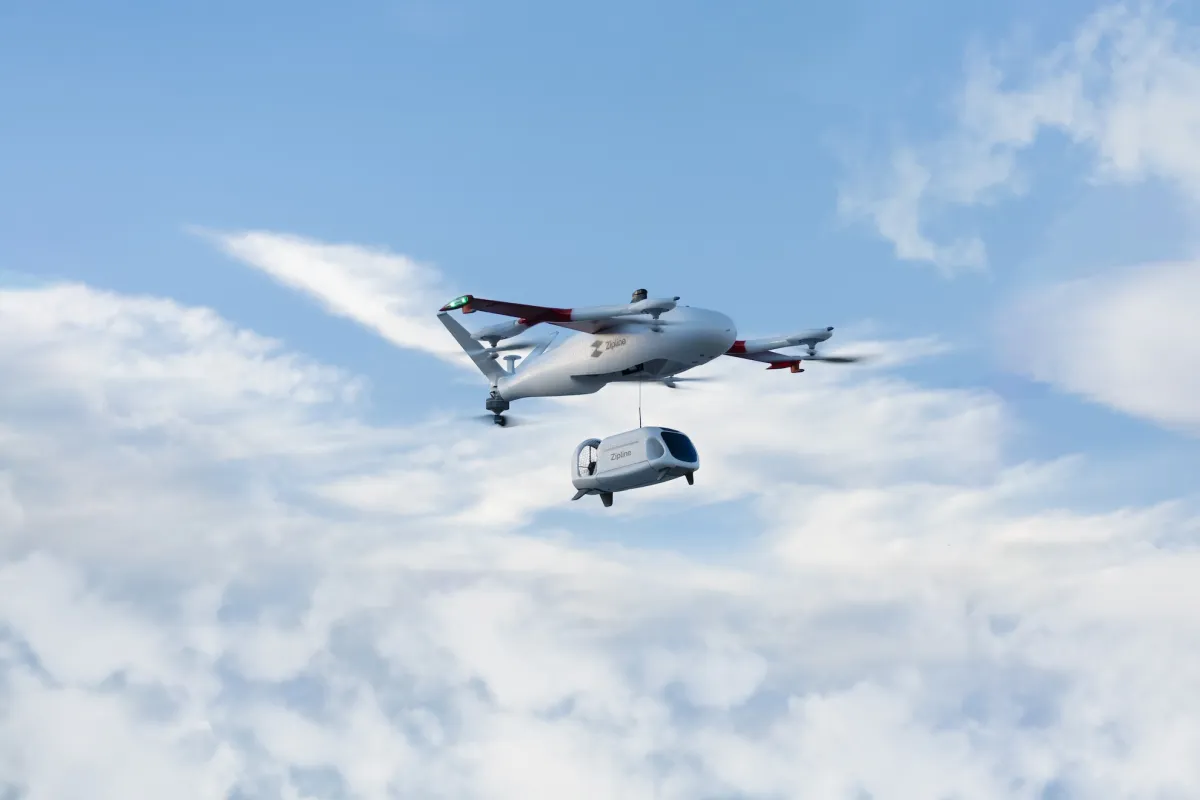
In the United States, Zipline last year launched a home delivery service that allows customers to order food and retail goods via an app. The service uses the company’s Platform 2 drones, which can carry up to eight pounds and operate within a roughly 10-mile radius. Zipline’s larger Platform 1 drones are used for long-range enterprise and government deliveries, with a round-trip range of up to 120 miles.
The Platform 2 service first rolled out in Pea Ridge, Arkansas, and the Dallas–Fort Worth area through partnerships with Walmart and more than a dozen restaurant brands. Zipline has also announced plans to launch in Seattle and works with partners including Panera, Chipotle, Crumbl, Blaze Pizza, Wendy’s and Little Caesars.
The geographic expansion has driven rapid growth in delivery volumes. Zipline said it completed about 1 million deliveries in 2024 and has now surpassed 2 million total deliveries. U.S. deliveries have grown by roughly 15% week over week for the past seven months, the company said.
Co-founder and chief executive Keller Cliffton said 2026 would mark a turning point for the industry. “When deliveries are faster, cleaner, safer, and cheaper, demand isn’t just high, it grows exponentially,” Cliffton said. He added that the rollout in Houston and Phoenix would be the starting point for broader national expansion.
Zipline faces competition from other drone delivery operators, including Flytrex, DroneUp, Amazon Prime Air and Wing, which has partnered with Walmart and plans to expand to an additional 150 stores by 2027.


