



Xpeng Aeroht, the flying car division of Chinese electric vehicle manufacturer Xpeng, has entered into a strategic partnership with Harbin Dongan Auto Engine to co-develop hybrid power systems as it prepares for the mass production of its modular flying car.
The agreement, signed on May 21, will see both companies jointly develop next-generation aerospace hybrid technology focused on improving energy efficiency, reducing weight, and lowering production costs. The collaboration is expected to enhance the core powertrain systems of Xpeng Aeroht’s next-generation flying vehicles, the companies announced.
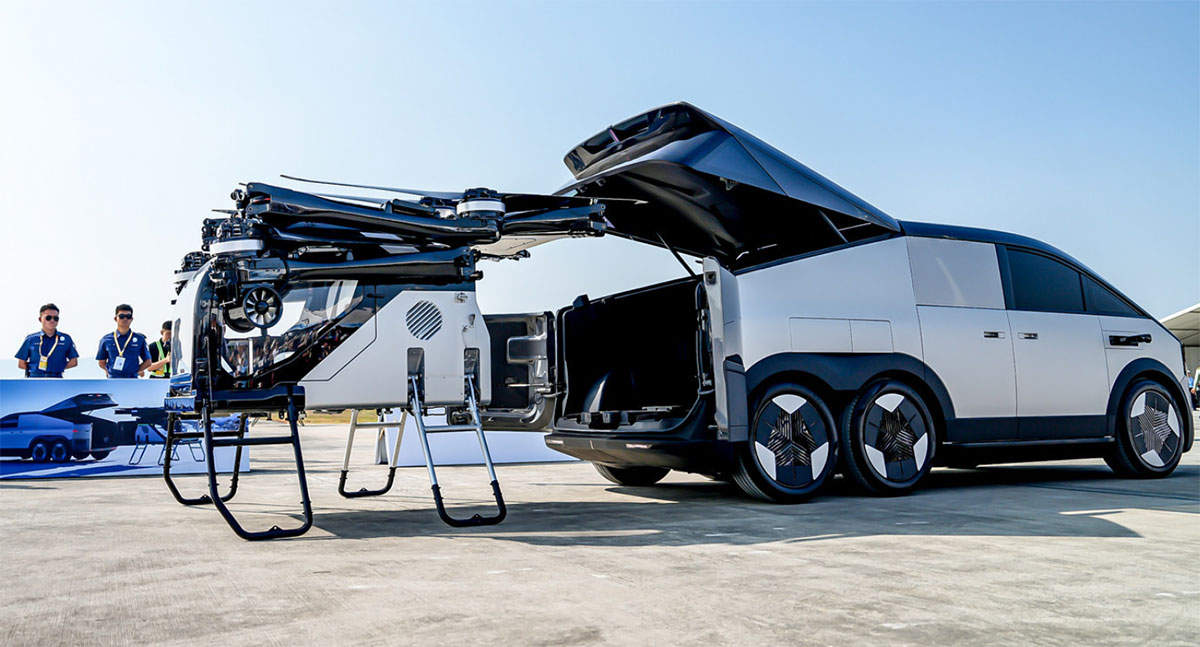
Xpeng Aeroht, a majority-owned subsidiary of Xpeng, began working with Dongan in July 2023, when the latter became the range-extender supplier for the mother vehicle of Aeroht’s modular flying car — also referred to as the “Land Aircraft Carrier.” The ground vehicle, which is capable of recharging the airborne component, reportedly has a range exceeding 1,000 kilometers under CLTC standards.
Xpeng has taken a two-pronged approach to flying vehicle development, focusing on both eVTOL (electric vertical takeoff and landing) models and modular flying cars. The modular model includes a detachable flying component and a parent ground vehicle designed to support and recharge the airborne unit.
Plans to mass-produce and deliver the modular flying car by 2026 were outlined by Aeroht president Zhao Deli, who in September 2024 said the vehicle would be priced below RMB 2 million ($276,800).
The company is also constructing a dedicated manufacturing base in Guangzhou, with a projected annual output of 10,000 units. Earlier this month, Xpeng Aeroht’s application for a Production Certificate for the flying body was accepted by the Civil Aviation Administration of China — a milestone indicating the start of regulatory review for its manufacturing process.


