



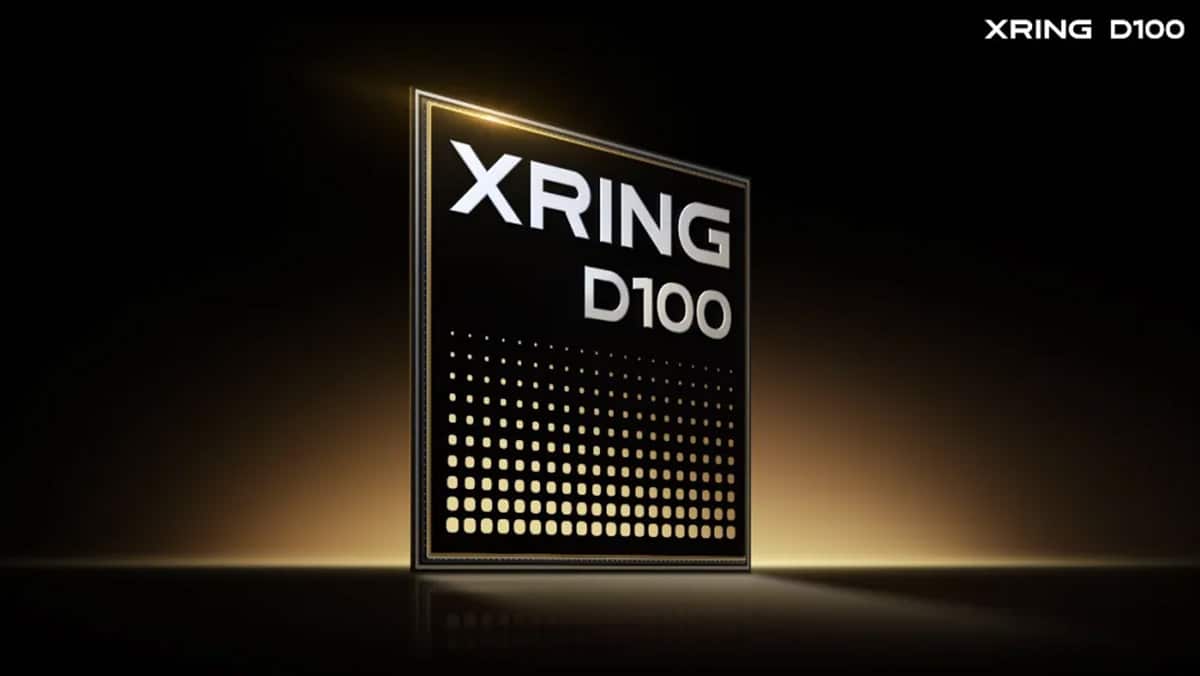
Xiaomi has unveiled the Xring D100, its first in-house smart-driving chip, expanding the Chinese technology company’s semiconductor development into automotive computing. Built on a 3-nanometre process, the chip has completed validation and is scheduled for commercial use in 2027.
The D100 is designed to support advanced artificial intelligence workloads for vehicle smart-driving systems, although Xiaomi has not yet disclosed its computing performance in TOPS, manufacturing partner or the first vehicle that will use the chip.
Xiaomi EV and AI Business Narrows Quarterly Loss as Deliveries Rise 28%
Xring D100 Targets Automotive AI Computing
The Xring D100 features a 20-core high-performance CPU and a 16-core neural processing unit (NPU). It supports up to 160 GB of unified memory and can run large language models with as many as 200 billion parameters locally, according to Xiaomi.
The company has not provided a specific timetable for integrating the chip into production vehicles.
Before its automotive deployment, Xiaomi has installed the D100 in an AI Cube Prototype desktop AI terminal. The prototype can run 120-billion- and 3-billion-parameter models locally and supports switching between fast and slow systems.
Xiaomi Develops Its Own Automotive Semiconductor
Xiaomi’s current EV lineup primarily uses Nvidia Thor chips for smart-driving functions, following earlier use of Nvidia Orin processors.
The D100 represents a move toward greater in-house control over the computing hardware supporting Xiaomi’s vehicle software and driver-assistance systems.
The chip was unveiled alongside the Xring O3 and Xring O100, with all three products having completed validation. The Xring O3 is a mobile system-on-chip that will debut in the Xiaomi 18 Fold, while the Xring O100 is an AI acceleration processor designed for large-model workloads and is also scheduled for commercial use in 2027.
Xiaomi Expands Chip Development
Xiaomi said it has invested more than 21 billion yuan ($3.1 billion) in semiconductor development since restarting its chip programme and has built a chip development team of nearly 3,000 specialists.
The company’s expansion into automotive AI chips places it among Chinese EV manufacturers developing proprietary computing hardware for smart-driving applications.
Nio uses its in-house 5-nm Shenji NX9031 chip in Nio and Onvo vehicles, with cumulative shipments exceeding 300,000 units. Nio has said the processor delivers more than 1,000 TOPS of computing power.
Li Auto’s 5-nm Mach M100 provides 1,280 TOPS per chip and has been deployed in models including the Li L9, Li L8 and Li L6.
Xpeng has also deployed its internally developed Turing chip in its own vehicles and some Volkswagen models in China.
BYD introduced its 4-nm Xuanji A3 smart-driving chip in May. The processor has entered mass production, while a three-chip configuration can deliver more than 2,100 TOPS of combined computing power.
3-Nm Process Sets D100 Apart
The D100 uses a 3-nm manufacturing process, which is more advanced than the 4-nm and 5-nm processes used by several competing Chinese automotive chips.
However, Xiaomi has not disclosed the D100’s TOPS rating, meaning its computing performance cannot yet be directly compared with competing processors on that basis.
The next stage for Xiaomi will be integrating the D100 into production vehicles and scaling commercial deployment from 2027.
Xiaomi’s latest financial results showed that its new initiatives, including EVs and AI, recorded an operating loss of 2.6 billion yuan in the second quarter. The company attributed the loss mainly to a lower share of SU7 Ultra deliveries, higher prices for core components and increased AI-related costs.