
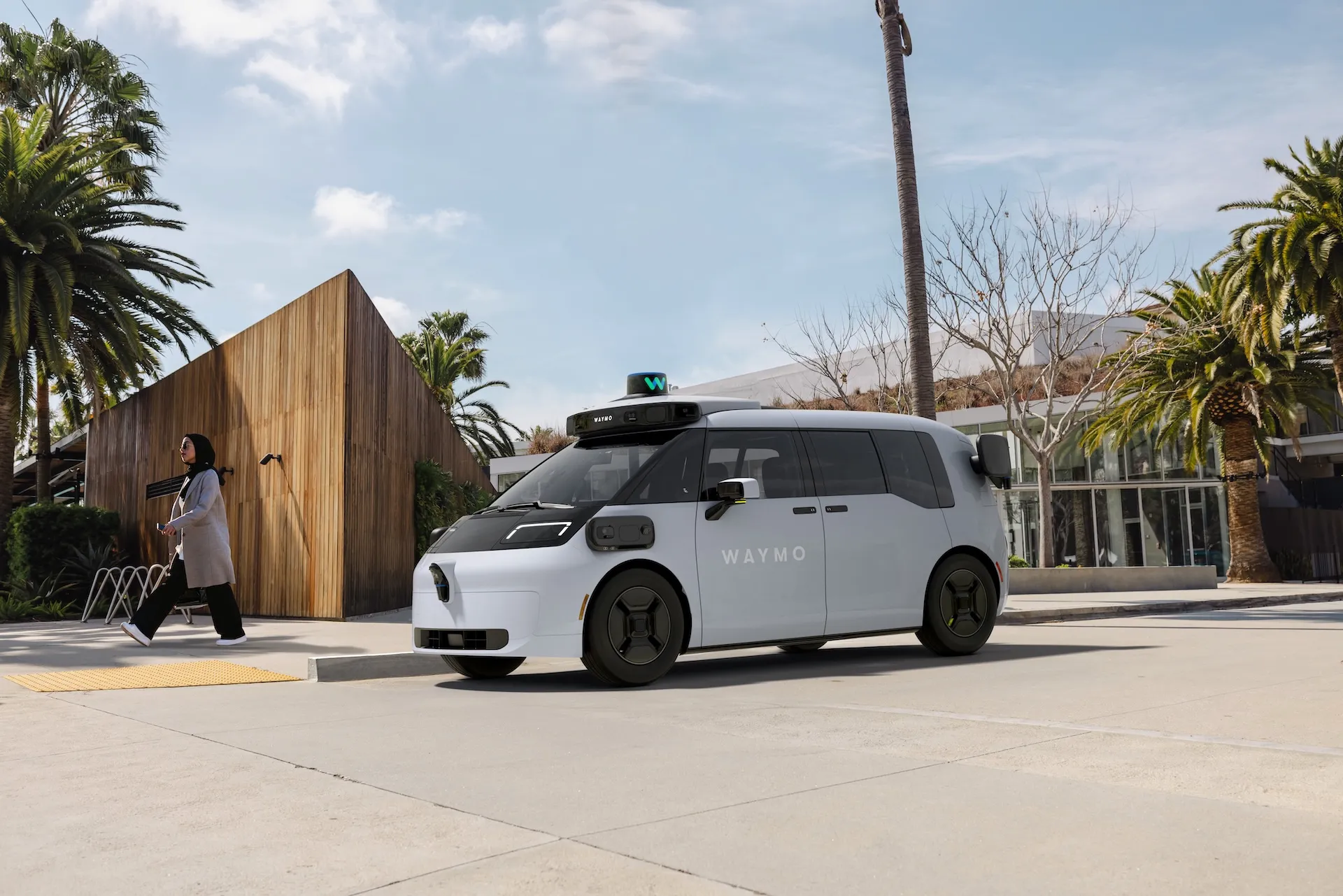
Waymo plans to begin offering free rides in its newly unveiled Ojai autonomous vehicle to selected riders in San Francisco, Phoenix and Los Angeles, marking the first public deployment of the company’s purpose-built robotaxi platform.
The Ojai is the first vehicle designed specifically for Waymo’s ride-hailing service and the first to feature the company’s sixth-generation Waymo Driver autonomous driving system.
According to Waymo, employees have already been using the vehicle in fully autonomous operations for several months as part of internal testing.
The rollout will initially be limited to select users before expanding more broadly over time.
Waymo said riders interested in early access can apply through its Trusted Tester program via the Waymo app.
The launch builds on a growing autonomous ride-hailing network that the company says has completed more than 20 million fully autonomous trips across at least 11 cities.
Unlike earlier Waymo vehicles, which were based on modified production cars, the Ojai was designed from the ground up for autonomous transportation.
The company said the vehicle incorporates features intended to improve passenger accessibility and comfort, including elevator-style doors, a low step-in height and a completely flat floor.
Inside, the cabin includes three large LED displays that allow passengers to control settings such as climate and audio functions.
Waymo compared the interior environment to a “living room on wheels” and said additional passenger-focused features are planned in future updates.
Accessibility was integrated into the vehicle’s design from the outset, according to the company.
The Ojai includes embedded Braille, compatibility with screen-reader technologies and a seat-mounted support handle designed to assist passengers entering and exiting the vehicle.
Waymo said these features were developed in consultation with riders and community organizations over several years.
The vehicle also serves as the debut platform for the sixth-generation Waymo Driver, the company’s latest autonomous driving hardware and software suite.
Waymo said the new system is designed to support operations in a wider range of environmental conditions, including snowier climates, potentially enabling expansion into additional markets.
The company described the technology as an evolution of its existing autonomous driving platform rather than a completely new architecture.
Waymo said the underlying autonomous system has already accumulated experience through millions of driverless trips conducted across its operational network.
The company plans a phased deployment strategy for the Ojai.
Following the initial rollout in San Francisco, Phoenix and Los Angeles, Waymo intends to expand access to additional cities including Denver, Las Vegas and San Diego before making the service more widely available later this year.
The expansion comes as Waymo increases production capacity for its autonomous vehicle fleet.
The company said its manufacturing facility in Mesa, Arizona, is being scaled to support production of tens of thousands of Waymo-equipped vehicles annually.
The introduction of the Ojai reflects a broader trend within the autonomous mobility industry toward purpose-built vehicle platforms designed specifically for driverless transportation services.
By combining a dedicated vehicle architecture with its latest autonomous driving technology, Waymo is seeking to improve passenger experience while expanding the operational capabilities of its robotaxi network.
The rollout also underscores growing competition in the autonomous ride-hailing sector as companies continue investing in new vehicle designs and technologies aimed at supporting large-scale commercial deployment.