




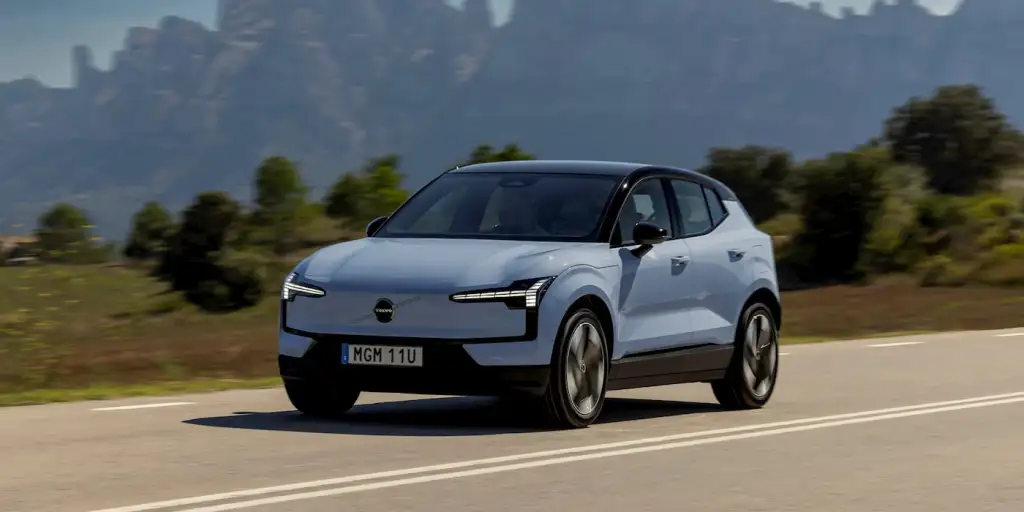
Volvo Cars is recalling 2,501 EX30 electric SUVs in China due to a potential battery defect that could increase the risk of thermal runaway, according to a notice issued by China’s State Administration for Market Regulation (SAMR).
The recall, filed by Zhejiang Haoqing Automobile Manufacturing Co., takes effect immediately and covers vehicles produced between April 12 and December 27, 2024.
Battery Defect May Cause Internal Short Circuit
According to the recall notice, a production deviation may lead to lithium growth inside battery cells, potentially causing an internal short circuit.
Affected vehicles may display warnings indicating that the high-voltage battery is overheating. In some cases, the battery could emit smoke, while severe incidents may result in thermal runaway.
Volvo said authorized dealers will inspect affected vehicles and replace potentially defective battery modules free of charge to eliminate the safety risk.
Owners Advised to Limit Charging
Until repairs are completed, Volvo is advising EX30 owners included in the recall to set the vehicle’s charging limit to no more than 70%.
The recommendation is intended to reduce stress on the battery and lower the likelihood of overheating while corrective measures are implemented.
Recall Follows Earlier Global Action
The latest recall adds to a broader battery-related issue that has affected the Volvo EX30 globally.
In February, Volvo announced a worldwide recall involving more than 40,000 EX30 vehicles due to similar battery concerns. The company later revised the number of affected vehicles to 37,802 units.
The global recall also involved inspections and replacement of battery modules.
At the time, Reuters estimated that the campaign could cost Volvo approximately $195 million.
Battery Supplier Previously Involved in Dispute
The batteries affected by the recalls are believed to have been supplied by Chinese battery manufacturer Sunwoda.
Volvo previously said the underlying issue had been addressed and that replacement battery cells would be supplied by Sunwoda.
The battery supplier was also involved in a legal dispute with Vremt, a Geely-affiliated company, over battery quality issues.
In December 2025, Sunwoda disclosed that its subsidiary, Sunwoda Electric Vehicle Battery Co. Ltd., had been sued by Vremt for 2.31 billion yuan ($342 million) in damages. The companies later reached a settlement in February 2026.
Geely Holding is Volvo Cars’ controlling shareholder.
Additional Scrutiny in Thailand
The EX30 has also faced regulatory scrutiny outside China.
In May, Thailand’s Office of Consumer Protection Board filed a civil lawsuit against Volvo’s local subsidiary following two EX30 fire incidents.
Volvo has previously maintained that such events are rare, affecting well below 0.1% of vehicles. The company also advised Thai EX30 owners to temporarily limit charging to 70% while investigations were ongoing.
Key Model in Volvo’s Electrification Strategy
The EX30 serves as Volvo’s entry-level battery-electric model and plays a central role in the company’s electrification plans.
A refreshed version of the vehicle was introduced in China in March with a limited-time starting price of 159,800 yuan.
The latest recall highlights the challenges automakers continue to face in managing battery quality and safety as electric vehicle adoption expands globally.


