




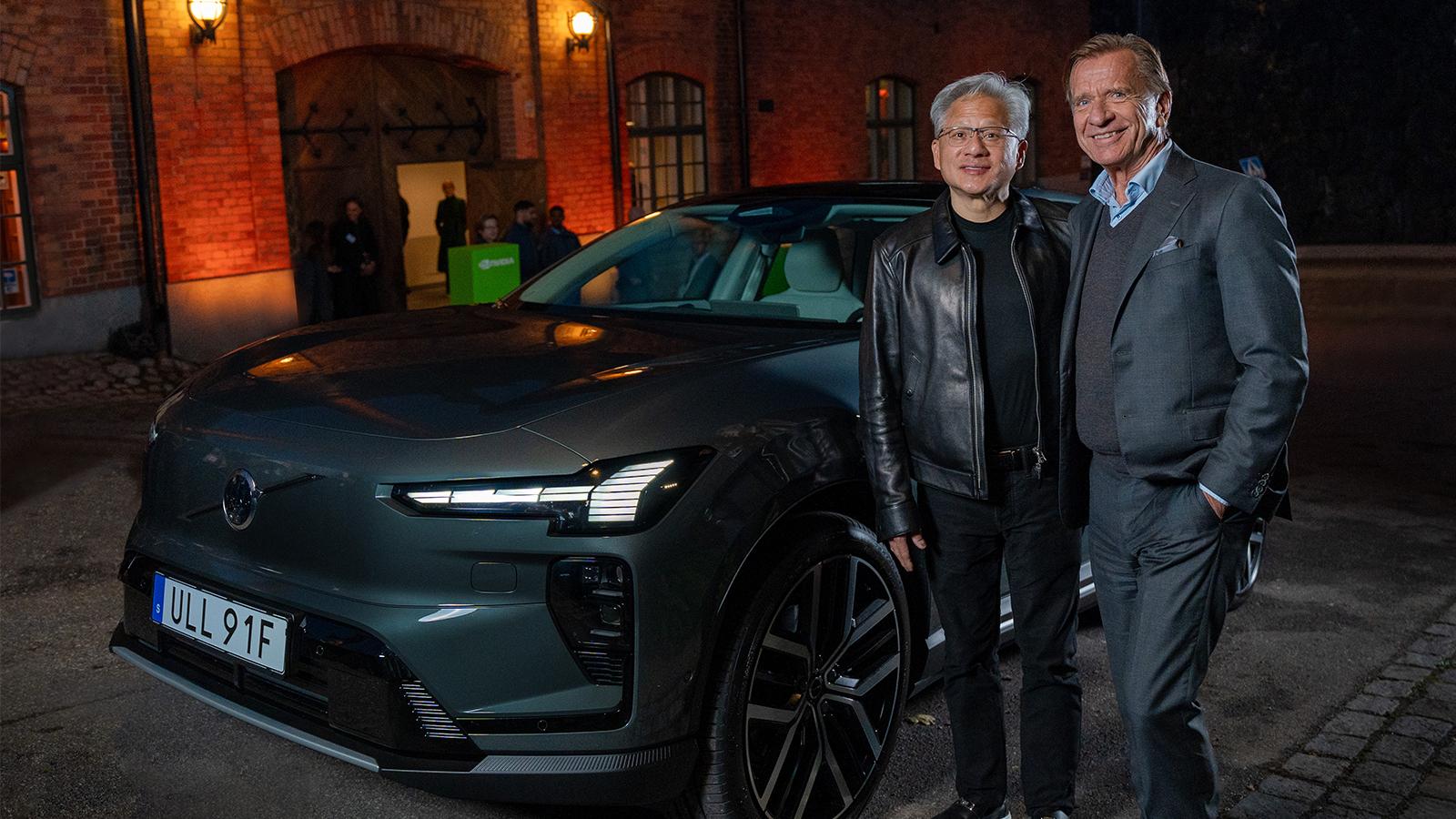
Volvo has expanded its partnership with NVIDIA to develop safety technologies for future automated driving systems, building on a collaboration that began in 2017. The companies plan to combine Volvo’s vehicle engineering and safety expertise with NVIDIA’s artificial intelligence and accelerated computing technologies.
The technology is intended to help future Volvo vehicles navigate complex driving environments, including highways, busy urban streets and parking areas. Volvo said the system will make its debut in a next-generation model as part of the automaker’s previously announced product expansion.
Combining Vehicle Safety and AI Technology
The expanded collaboration brings together Volvo’s safety systems and engineering capabilities with three NVIDIA technologies: Hyperion, Halos OS and Alpamayo Stack.
NVIDIA Hyperion provides a sensor and computing architecture for automated driving. Halos OS contributes to the system’s safety framework, while Alpamayo Stack provides driving software designed to support AI-enabled driving capabilities.
Volvo said the integrated technology is intended to support increasingly advanced driving functions, with a gradual introduction of eyes-off and mind-off driving. The company did not specify when these capabilities will become available or identify the regulatory and operational conditions under which they will be offered.
The automaker said its approach will draw on nearly a century of safety research and a human-centric development philosophy. The stated objective is to develop automated driving technology that prioritises safety while making driving more convenient for customers.
Volvo and NVIDIA Outline Their Shared Approach
Håkan Samuelsson, president and CEO of Volvo Cars, said the expanded partnership combines the companies’ respective expertise.
“Volvo has been synonymous with car safety for almost 100 years,”
Samuelsson said.
“By working with NVIDIA, we bring together two distinct strengths: industry-leading safety knowledge and world-class AI technology. That combination gives us a unique opportunity to create safer and more attractive cars for our customers.”
NVIDIA founder and CEO Jensen Huang said advances in computing are enabling vehicles to interpret their surroundings with greater intelligence.
“Accelerated computing has transformed the car into an intelligent machine that can understand the world around it,”
Huang said.
“Volvo has spent nearly a century protecting people on the road. Together, we’re combining Volvo’s extraordinary vehicle safety systems with NVIDIA Hyperion and Halos to build a new generation of cars that make driving safer and more effortless.”
Partnership Builds on Work Since 2017
The expanded agreement continues a relationship between the companies that began in 2017. Volvo said it is incorporating advanced computing capabilities into its next generation of electric vehicles as part of its broader development of software-defined cars.
The next-generation model planned to introduce the technology is part of Volvo’s largest-ever product push, according to the company. Further details about the vehicle, the system’s specifications and its rollout schedule have not been disclosed.
Volvo Cars said the expanded partnership will support the development of automated driving and AI-based safety features for future vehicles, with implementation details and rollout timing yet to be announced. Separately, Mercedes-Benz and NVIDIA announced on October 16 an expansion of their partnership to develop driver assistance and automated driving systems. That collaboration combines Mercedes-Benz’s automotive engineering and MB.OS operating system with NVIDIA’s computing architecture, driving software and safety technologies.


