





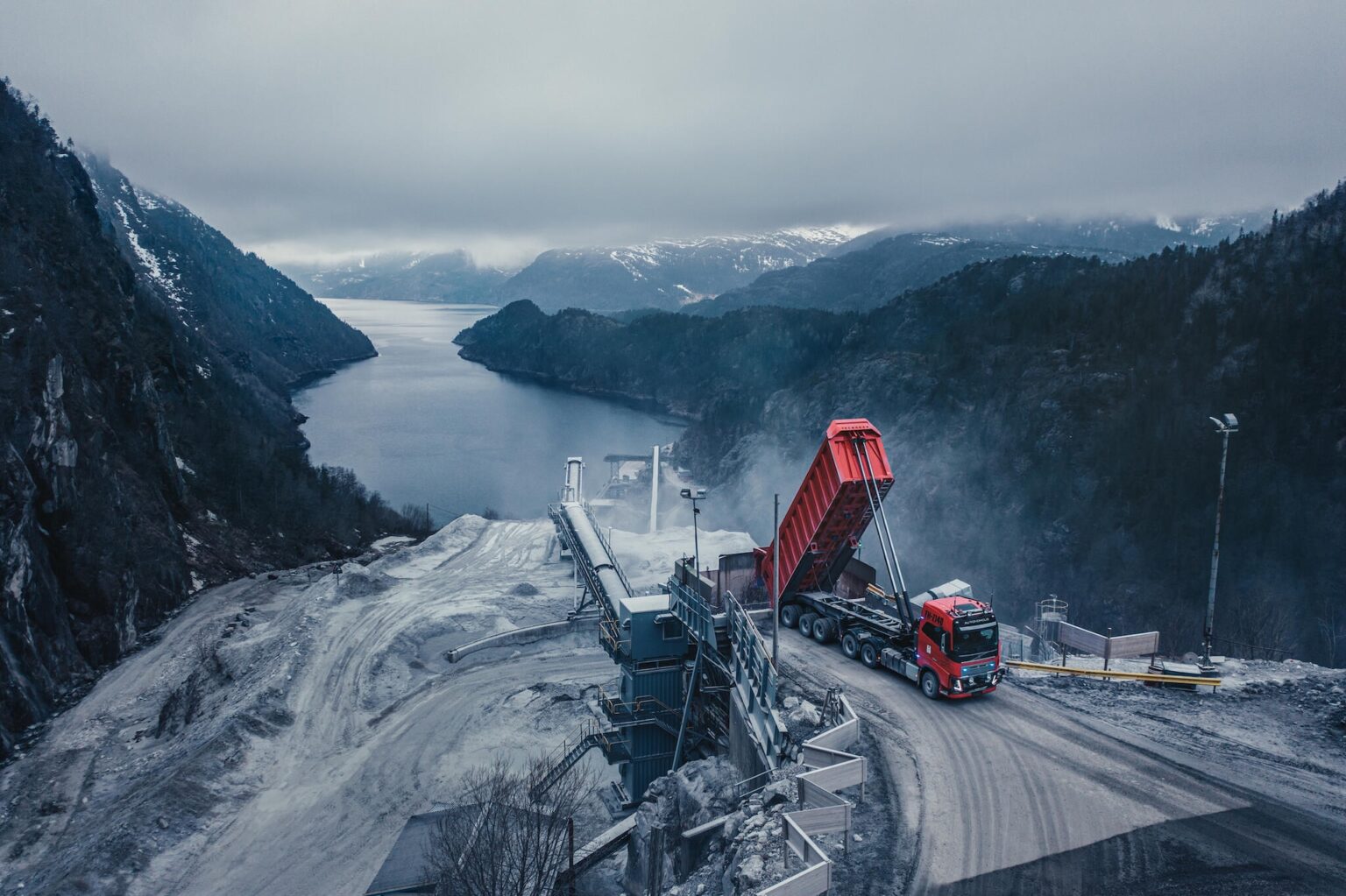
Volvo Autonomous Solutions (V.A.S.) has hauled over one million tonnes of limestone for Norwegian mining company Brønnøy Kalk, highlighting the increasing viability of autonomous vehicle technology in the mining and quarrying industries.
The milestone was reached at Brønnøy Kalk’s Velfjord site, where a fleet of seven Volvo FH trucks equipped with V.A.S.’s proprietary virtual driver technology navigates a demanding five-kilometre route that includes steep gradients and tunnels. The autonomous fleet has covered over 220,000 kilometres in total, equivalent to more than five times around the Earth’s equator.

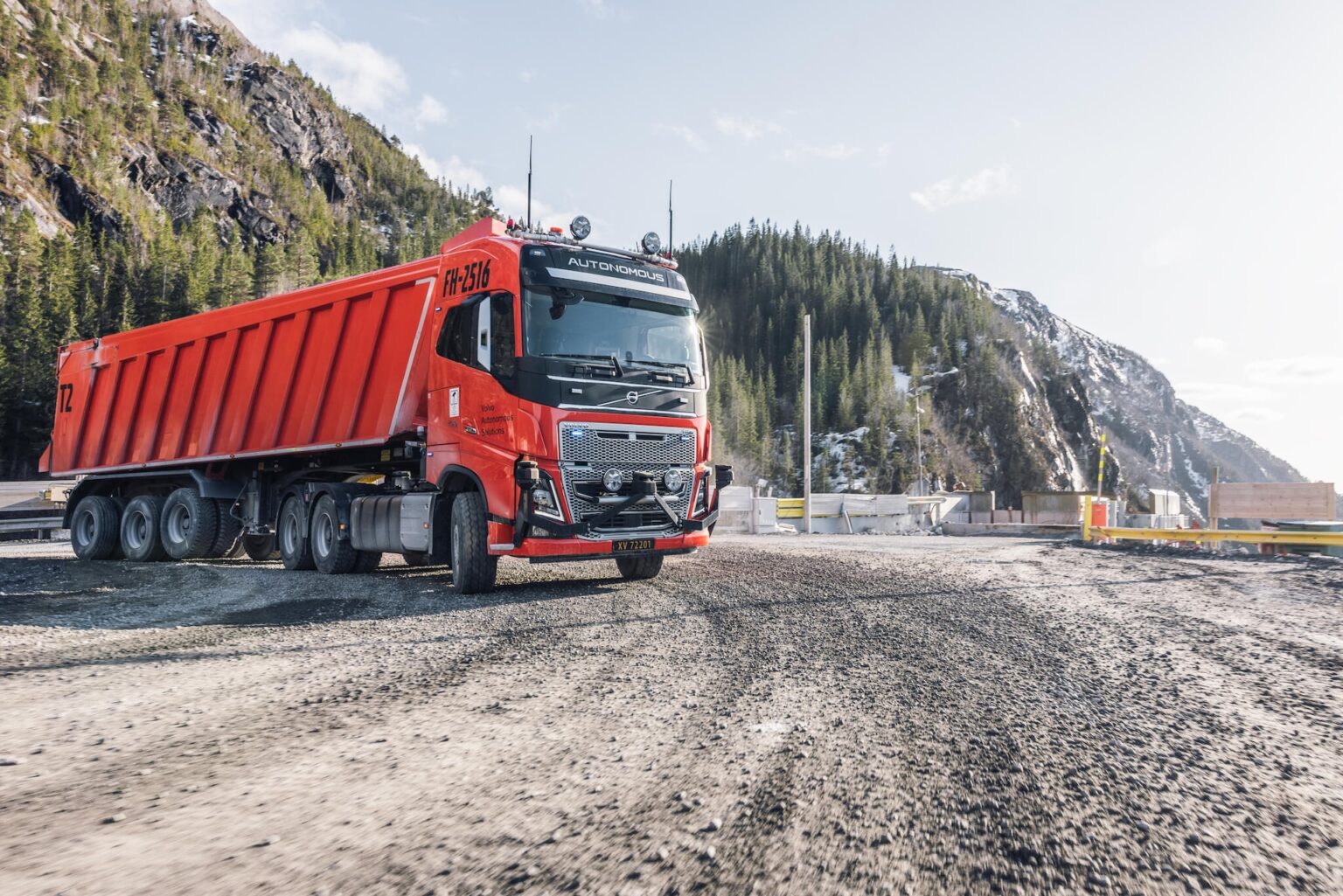
Implemented through Volvo’s Autona/earth platform, the solution is delivered via a Transport as a Service (TaaS) model. It includes not only the autonomous trucks but also associated infrastructure, operations management, training, and maintenance. This comprehensive approach allows Brønnøy Kalk to utilize the technology without integrating a new system into its existing operations.
Volvo removed the safety driver from the autonomous fleet in 2023, marking a significant industry milestone in the deployment of driverless heavy-duty vehicles in a real-world setting. According to Volvo Autonomous Solutions, this removal demonstrates a proven level of reliability and safety.
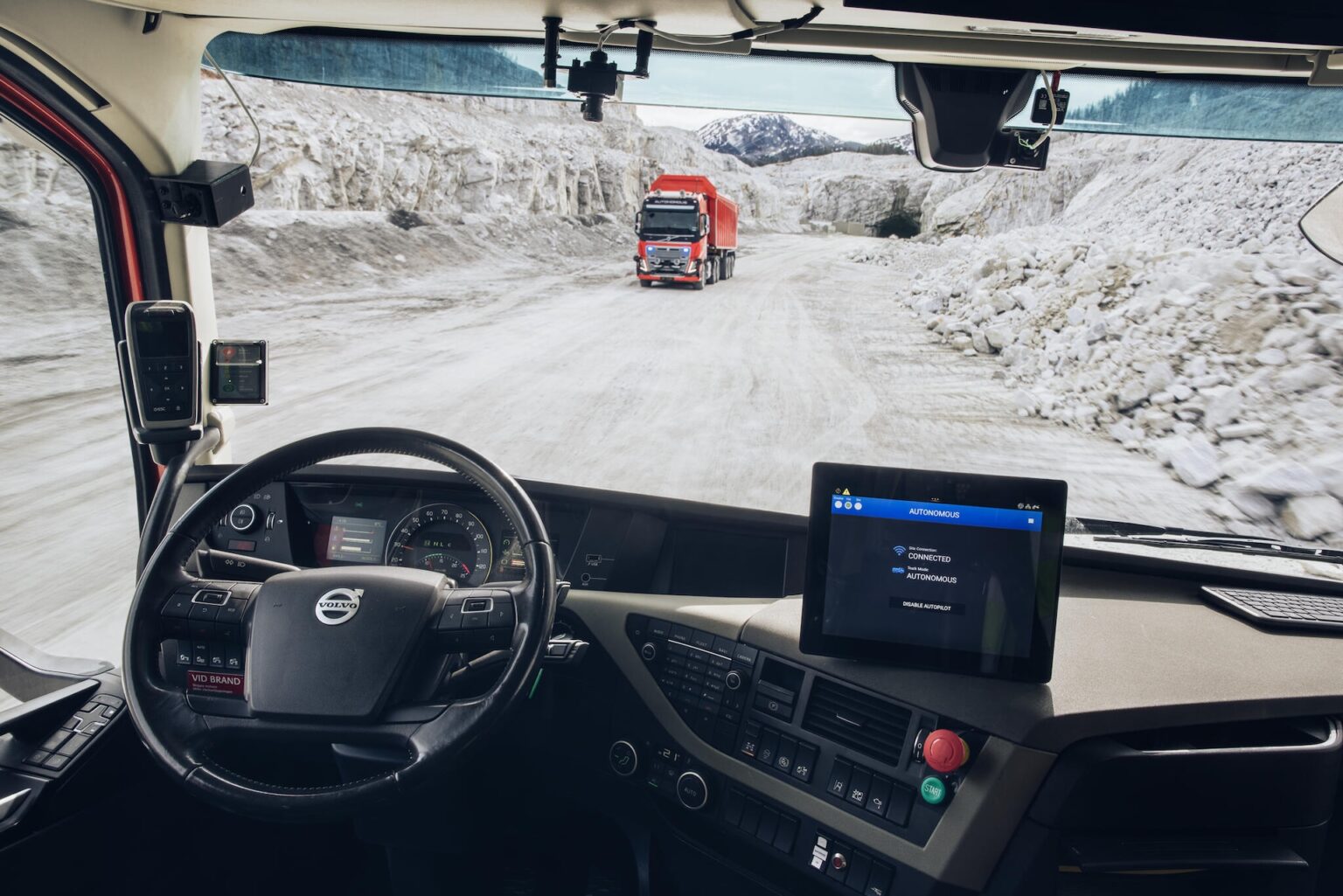
The system is operated via touchscreen by a wheel loader operator, who manages the loading and dispatch of vehicles. Brønnøy Kalk adopted the autonomous fleet to improve safety, efficiency, and overall productivity at the limestone site.
Volvo said that Autona/earth is designed to reduce risk by removing personnel from hazardous locations and to increase operational uptime through 24/7 availability. The company added that advanced data collection and flexible fleet management enable continuous performance optimization.
The success in Norway marks a key development for Volvo Autonomous Solutions as it expands its autonomous offerings in industries that benefit from consistent, repetitive transport tasks under controlled environments.


