
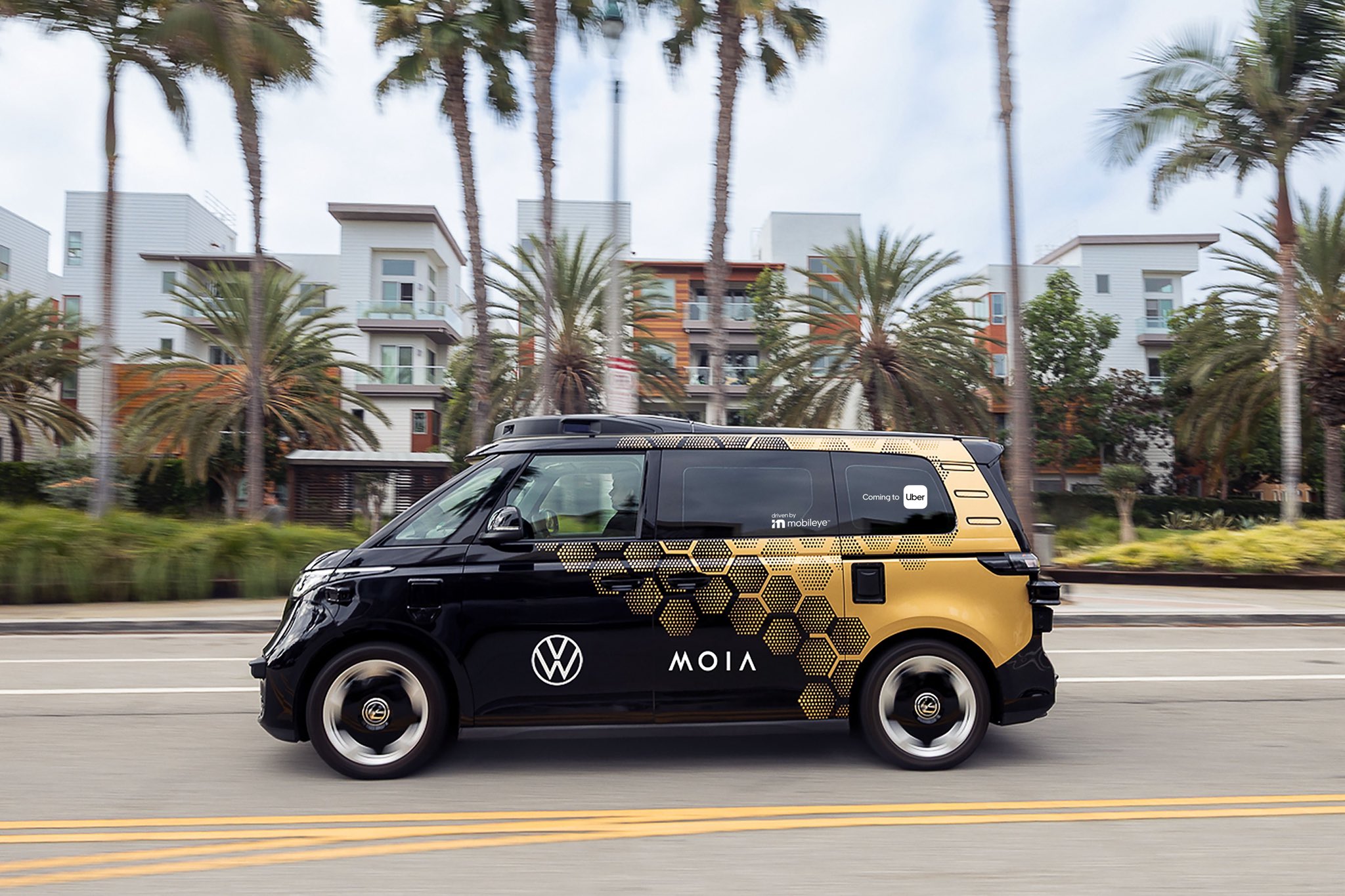
Volkswagen subsidiary MOIA America and Uber have started testing autonomous microbuses in Los Angeles, as part of preparations to launch a commercial robotaxi service by late 2026.
The companies said initial testing will begin in the coming weeks with around 10 autonomous versions of the Volkswagen ID. Buzz. The production-ready vehicle is designed to carry up to four passengers.
The Los Angeles rollout is the first phase of a broader plan announced last year to deploy autonomous ID. Buzz-based robotaxis across multiple U.S. cities over the next decade.
“Los Angeles is a natural market to introduce our autonomous vehicles for ride experiences, given its long history of shaping car culture and embracing new mobility technologies,” said Paul DeLong, President of Commercialization at MOIA America.
Since announcing the partnership, MOIA America and Uber have established a joint operations facility in Los Angeles to manage fleet activities. While the initial deployment is limited in scale, Volkswagen plans to expand the fleet to more than 100 vehicles over time.
The vehicles will initially operate with a human safety driver on board. Fully driverless operations are targeted for 2027, pending regulatory approvals.
“This next step reflects the strong momentum behind the strategy to bring autonomous mobility into real-world operation,” said Sascha Meyer, Chief Commercial Officer at Volkswagen Autonomous Mobility.
MOIA America, recently rebranded from Volkswagen ADMT, represents the company’s U.S. autonomous mobility efforts, while the MOIA brand has been active in Europe since 2018, operating ride-pooling services and testing autonomous technologies in cities including Hamburg, Berlin, Munich and Oslo.
Before launching commercial robotaxi services, the companies must secure approvals from regulators including the California Department of Motor Vehicles and the California Public Utilities Commission.
Uber continues to diversify its autonomous vehicle strategy through partnerships with multiple companies. In addition to its collaboration with Waymo in the U.S., Uber has signed agreements with global partners and recently announced a deal with Rivian to acquire 10,000 autonomous vehicles for future deployments.
The Los Angeles pilot highlights intensifying competition in the autonomous mobility sector, as automakers and technology companies accelerate efforts to commercialise driverless ride-hailing services.