


Volkswagen will become the first commercial customer for Xpeng’s second-generation Vision-Language-Action (VLA 2.0) intelligent driving system, signalling a deepening of the German automaker’s partnership with the Chinese electric vehicle maker into core artificial intelligence software.
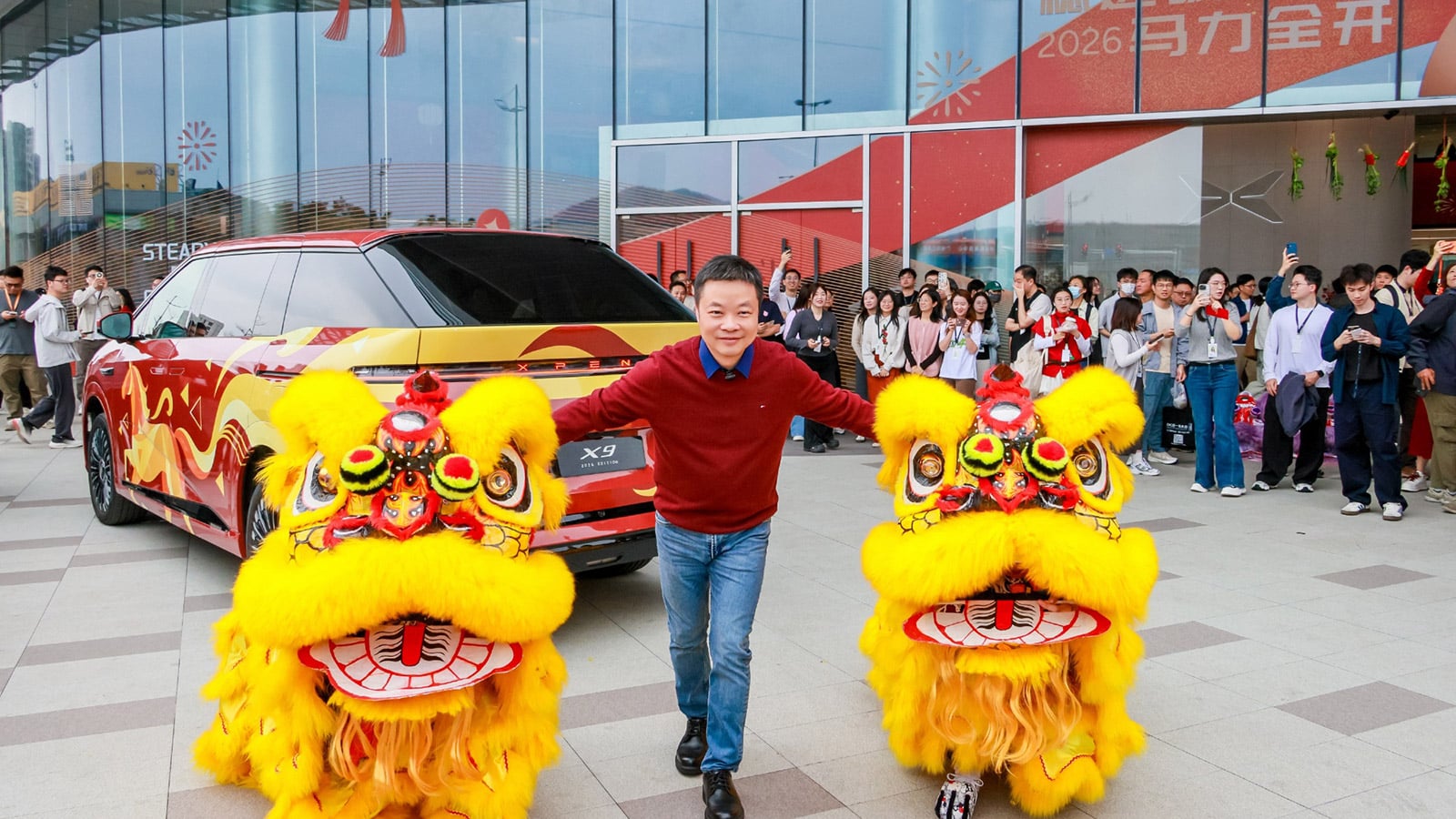
Xpeng Chairman and Chief Executive He Xiaopeng disclosed the arrangement in an internal memo dated Feb. 24, according to Chinese automotive outlet CnEVPost. The companies began cooperating in July 2023, when Volkswagen announced a $700 million investment in Xpeng and plans to jointly develop electric vehicles for the Chinese market.
See also: Xpeng Reveals Interior of GX Flagship SUV Ahead of Market Launch
“For a leading global automaker to choose China’s AI technology carries meaning far beyond the cooperation itself,” He wrote. “It validates one essential point: we are not only leading in products but at the core technology level we now possess globally competitive capabilities that are scalable and generizable.”
VLA 2.0 is an end-to-end AI model designed to interpret real-world environments and support advanced driver-assistance functions approaching Level 4 autonomy. Xpeng says the system can handle complex driving scenarios without relying on high-definition maps and can adapt to varying traffic conditions across regions.
See also: Xpeng Files Flagship GX SUV for Approval, Offering BEV and EREV Variants
The company previously announced that robotaxis equipped with VLA 2.0 had completed closed-course testing and would begin public road trials. Xpeng also plans to deploy the software in production vehicles, allowing consumers to access advanced automated driving features.
He said he tested the system extensively during the Spring Festival holiday and described its performance as stable in complex road situations. He also said the company believes the industry is nearing a turning point for fully autonomous driving.
Earlier this year, Xpeng reorganised its research structure by combining its autonomous driving and intelligent cockpit divisions into a single “General Intelligence Center,” aiming to develop unified AI models for both vehicle control and human-machine interaction.
See also: Xpeng Tests Level 4 Autonomous Driving on Upcoming GX Flagship SUV
Beyond automotive applications, He outlined broader ambitions for new mobility technologies, including robotaxis, humanoid robots and flying vehicles. The company aims to begin mass production of these products by 2026, alongside expansion into international markets.
Xpeng said several new vehicle models will be introduced this year, including extended-range electric vehicles, while at least four models are planned for overseas markets next year. The P7+ sedan has completed trial production in Austria and is expected to be delivered to customers in multiple European countries.


