


Volkswagen Group said its Zwickau plant in eastern Germany will become the automaker’s central competence centre for circular economy activities, expanding the site’s role beyond vehicle production to include recycling and the development of new business models for use across its global manufacturing network.
The Centre of Excellence for Circular Economy, first outlined during 2024 wage negotiations, is intended to assess the economic viability of circular business models, set group-wide standards and transfer expertise to other Volkswagen sites worldwide. The company plans to invest up to €90 million in Zwickau over the coming years, with the Free State of Saxony providing up to €10.7 million in public support.
See also: Volkswagen Group EV Deliveries Jump Nearly One-Third in 2025, Driven by Europe
“Volkswagen Saxony is once again taking on a pioneering role,” said Danny Auerswald, spokesperson for the Volkswagen Saxony management board. “We were the first plant to switch completely to e-mobility. Now we are tapping into the important business area of the circular economy.”
The initiative was initially designed to offset a reduced production footprint at Zwickau, which was set to retain only the Audi Q4 e-tron as other models were scheduled to move to different German plants after facelifts. Since then, Volkswagen has adjusted its production plans, confirming that the Cupra Born will continue to be built exclusively in Zwickau and that the Volkswagen ID.3 will remain in Saxony for longer than previously planned.
See also: Volkswagen Taps Qualcomm for Long-Term Chip Supply as It Builds Software-Defined Vehicles
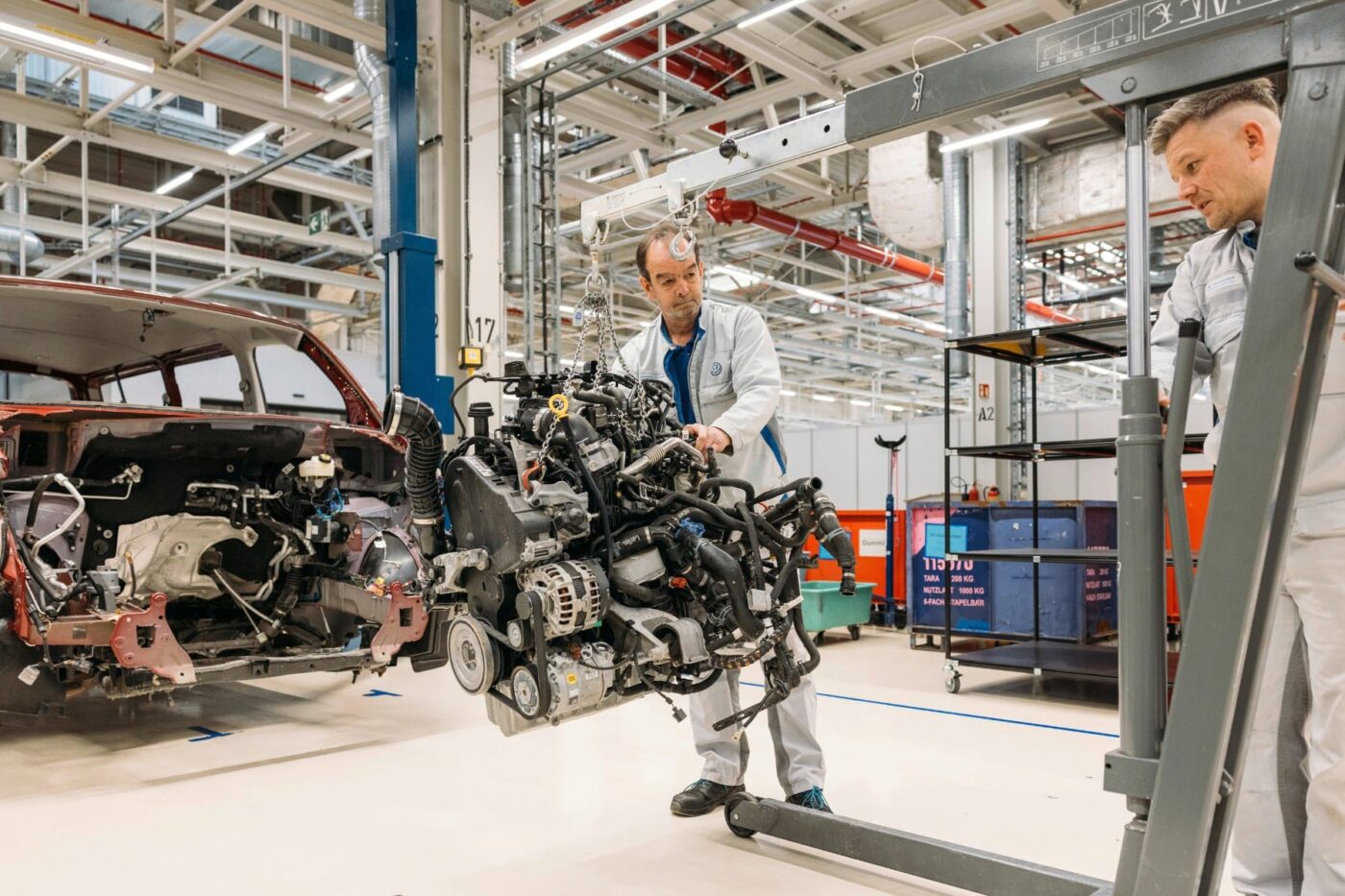
As part of the new mandate, the Zwickau site will also enter the recycling sector, dismantling end-of-life vehicles to recover valuable raw materials and reusable components such as spare parts. Unlike the rest of the plant’s operations, the recycling activities will cover both electric and internal combustion engine vehicles, reflecting the limited number of electric models that have so far reached the end of their lifecycle.
Volkswagen said digital data platforms and artificial intelligence will be used to track and optimise material flows, recycling processes and circular economy business models, with the aim of establishing new industry benchmarks. Initial operations will begin this year with the dismantling of around 500 pre-series and test vehicles.
See also: Volkswagen Battery Unit PowerCo Signs Conductive Materials Supply Deal With Cabot
The company plans to scale up gradually from 2027, targeting the capacity to dismantle up to 15,000 vehicles a year by 2030. Volkswagen said the experience gained in Zwickau will be shared across the group as it seeks to reduce resource use and strengthen closed-loop material systems.


