



The rollout of electric vehicle (EV) fast-charging infrastructure in the United States is accelerating rapidly, with 2025 poised to become a record-breaking year, according to a new report from EV charging data firm Paren.
The “State of the Industry Report: US EV Fast Charging – Q2 2025” forecasts the installation of 16,700 new DC fast charging ports in 2025, marking a 19% increase from the previous year. The report notes this comes on the heels of a record-setting 2024.
In the second quarter alone, 4,242 new fast charging ports were activated across 784 stations, bringing the national total to 59,694—an increase of 23% year-over-year. This surge continues despite uncertainties surrounding federal policy, including partial interruptions to NEVI (National Electric Vehicle Infrastructure) funding. Paren points out that many of the affected projects were already in progress, and NEVI-funded chargers account for only a small share of 2025’s deployments.
“2025 is going to be a record year for deployment of DC fast charging ports – and 2024 was already the highest year on record,” said Loren McDonald, chief analyst at Paren. He described the current trend as a new era in infrastructure development, marked by larger, faster, and more reliable charging hubs.
The industry is consolidating around high-capacity hubs equipped with eight or more chargers, using high-powered hardware for faster throughput. Charger reliability also continues to improve, with Paren’s U.S. Reliability Index rising by 5.3% over the past year.
While the national average utilization of DC fast chargers fell slightly to 16.1% in Q2 from 16.6% in Q1, analysts noted that seasonal factors may be partially responsible. However, Paren observed slower utilization growth in traditionally strong EV markets, suggesting that infrastructure expansion may be outpacing vehicle adoption in some areas.
The report also highlighted pricing shifts. Average fast-charging rates dropped modestly to $0.48 per kilowatt-hour from $0.50 in Q1, as more operators adopt time-of-use pricing. Some markets, including California, experienced localized price increases, even as nationwide costs declined.
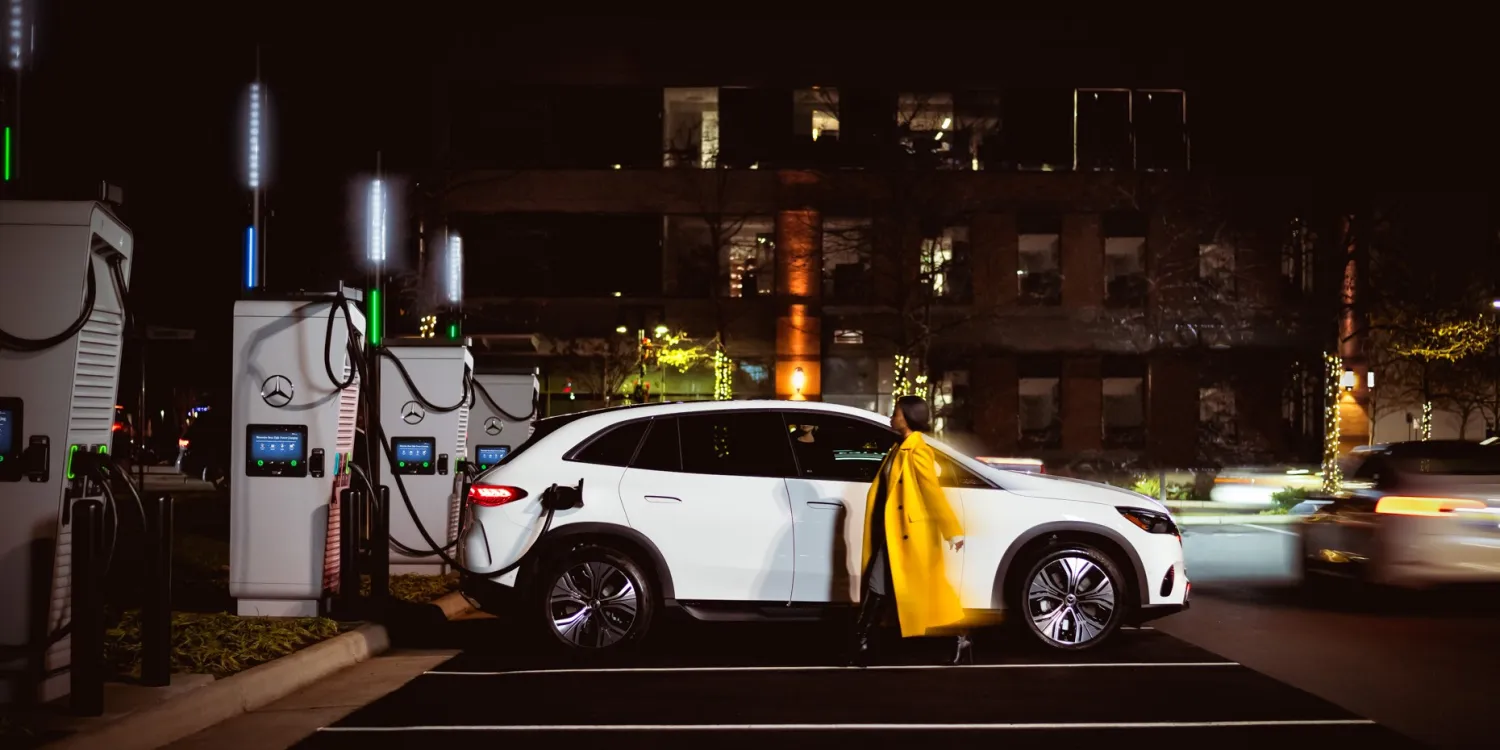
Paren concludes that the U.S. EV charging sector is entering what it calls the “Charging 2.0” phase—defined by large-scale deployment, speed, and an emphasis on customer experience. “Charge point operators who deliver a strong customer experience – prioritizing speed, reliability, seamless payment and pricing transparency, premium amenities, and safe, well-lit locations – will earn long-term loyalty from EV drivers,” said Heiko Schmidt, VP of network strategy and consumer offering at Mercedes-Benz HPC North America.


