


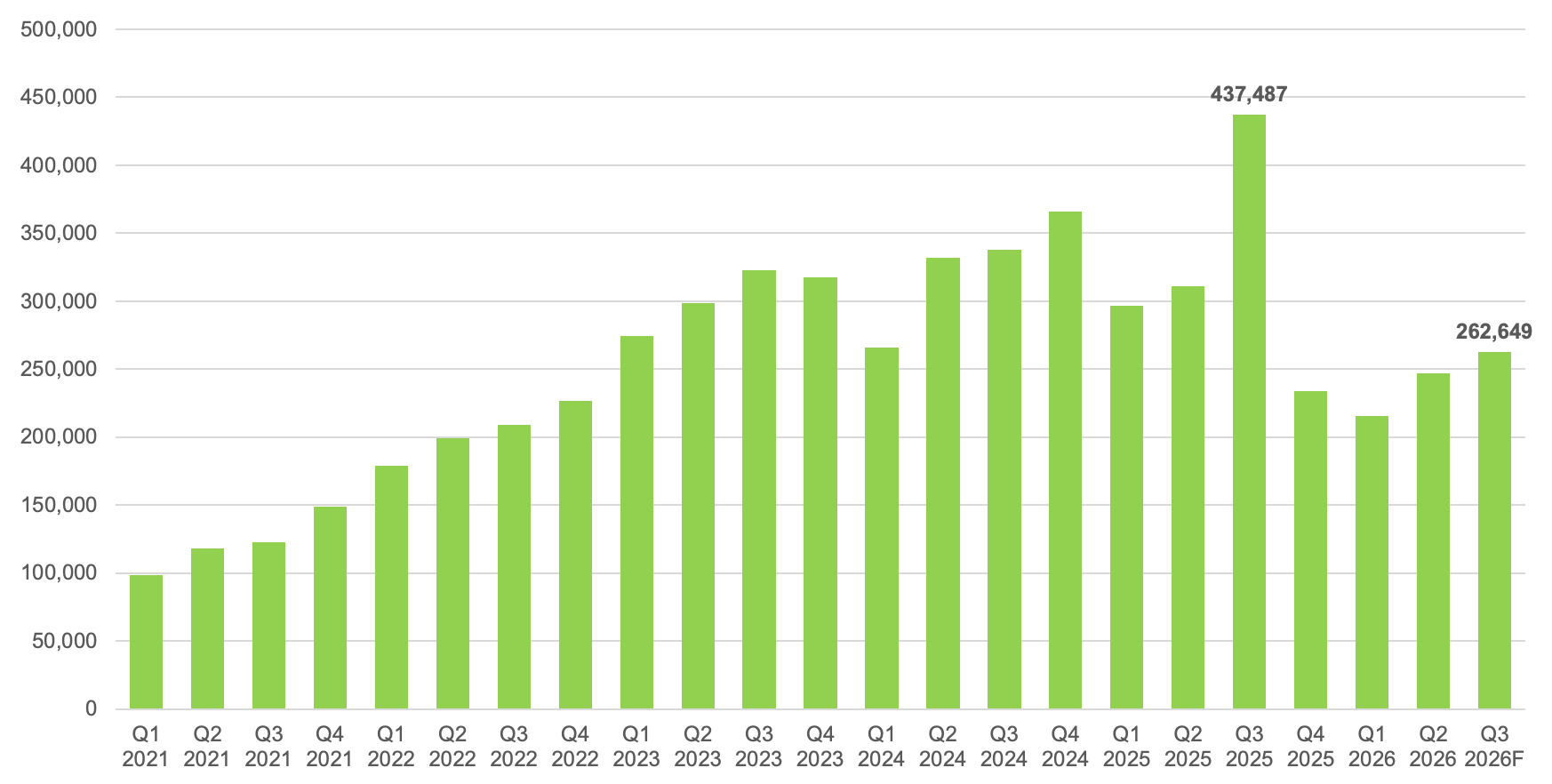
Electric vehicle sales in the United States increased 6.1% in the third quarter of 2026 compared with the previous quarter, reaching their highest quarterly volume in a year, according to Kelley Blue Book estimates.
Automakers sold an estimated 262,649 electric vehicles in the three months through September. However, sales were down 39.5% from the same period in 2025, when buyers accelerated purchases ahead of the expiration of federal incentives, making it the strongest quarter on record for US EV sales.
Despite the year-over-year decline, the latest figures suggest the market has continued to recover from the correction that followed the incentive-driven surge.
EV Market Share Reaches 6.4%
Electric vehicles accounted for approximately 6.4% of all new-vehicle sales in the third quarter, up from 5.8% in the second quarter. The share was the highest since the third quarter of 2025, when EVs exceeded 10% of US vehicle sales for the first time.
Including conventional hybrids and plug-in hybrid vehicles, electrified models represented nearly 25% of all new-vehicle sales during the quarter.

Stephanie Valdez Streaty, director of Industry Insights at Cox Automotive, said the latest results indicated that the market was stabilizing after a period of adjustment.
What we’re seeing now is a market finding its footing again. The third quarter was the highest EV sales volume in a year, and improvement through 2026 suggests the reset phase is largely behind us. The next stage of growth will be driven by great products, competitive pricing, and automakers that continue to give consumers compelling reasons to make the switch. And high pump prices are likely helping as well. With gas prices well above $4 a gallon, electric vehicles look better than ever.
Toyota, Lexus and Rivian Record Gains
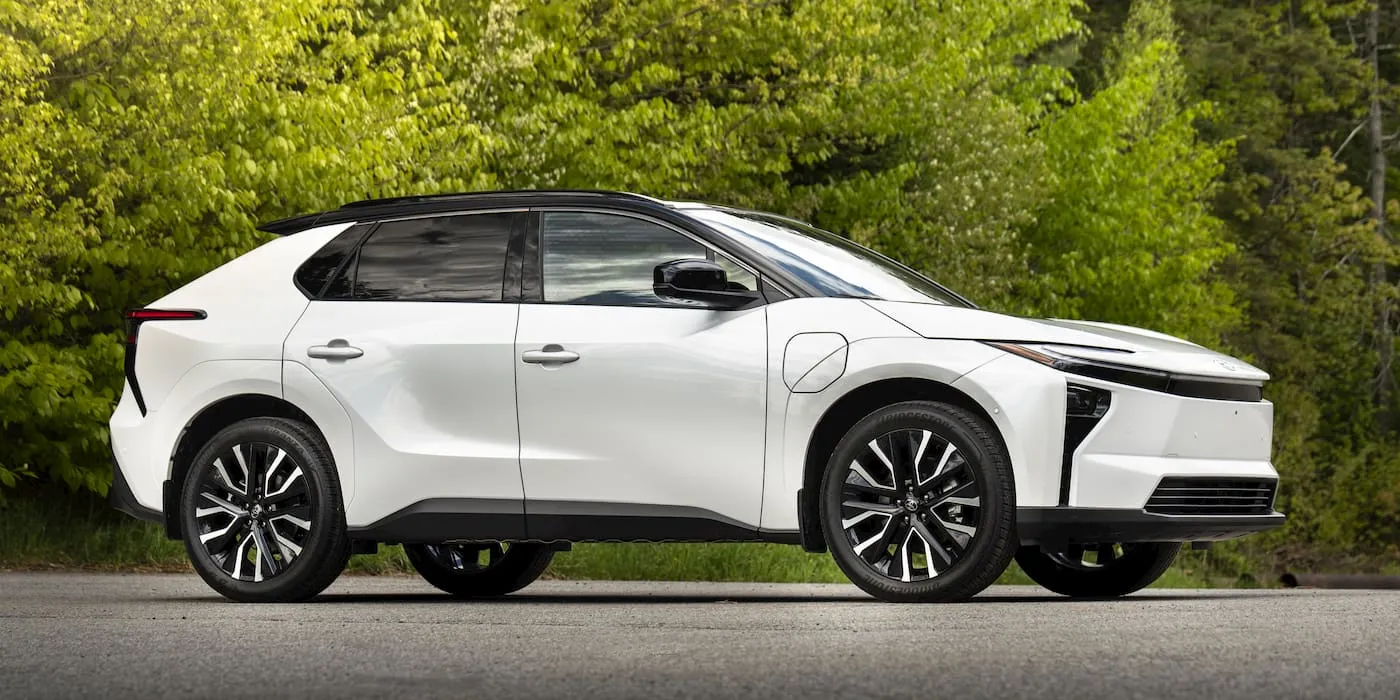
Most automakers recorded lower EV sales in the third quarter compared with a year earlier. Toyota and Lexus were notable exceptions, with their combined EV sales rising nearly fivefold, according to Kelley Blue Book estimates.
Rivian’s sales increased 46% year over year, while Subaru reported 31% growth as its electric vehicle lineup expanded.
The contrasting results highlight differences in automakers’ performance as the market adjusts to changing incentives, pricing and product availability.
Tesla Retains More Than Half of US EV Sales
Tesla remained the largest electric vehicle seller in the United States, accounting for more than half of all EV sales in the third quarter despite a 20% year-over-year decline.
The company’s sales continued to rely heavily on two established models, the Model Y and Model 3. The Model Y accounted for 69% of Tesla’s third-quarter sales, while the Model 3 represented 28%.
The figures show Tesla’s continued influence on the US EV market, even as its sales declined from the previous year.
Market Adjusts After Incentive Changes
The third-quarter results reflect a market operating under different conditions from the same period in 2025, when federal incentives helped drive a surge in purchases before their expiration.
Automakers are now competing through product offerings, pricing and vehicle features as consumers consider a wider range of electric and hybrid options. Higher gasoline prices may also improve the relative appeal of electric vehicles, although the impact will depend on fuel costs, electricity prices and individual driving patterns.
While US EV sales remain below last year’s exceptional levels, the sequential increase in third-quarter volume and the recovery in market share indicate that demand has strengthened from earlier in 2026.


