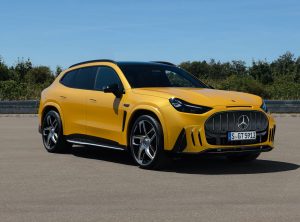





The United States and European Union have sealed a trade agreement that cuts tariffs on EU cars, including electric vehicles, from 27.5% to 15%, retroactive to Aug. 1, after weeks of delay.
Washington confirmed the reduction on Thursday, saying the EU had introduced the necessary legislative proposal to implement the changes. The tariff cut follows the July 27 announcement of a framework deal between then-U.S. President Donald Trump and European Commission President Ursula von der Leyen, though implementation had stalled amid further negotiations.
Under the terms, EU car exports to the U.S. will now face a 15% duty, while U.S. vehicles will enter the EU duty-free, removing the bloc’s previous 10% levy. The U.S. will continue charging 15% on EU car parts, 25% on light commercial vehicles, and 50% on certain steel and aluminium imports. In return, the EU agreed to eliminate tariffs on U.S. industrial goods, ease restrictions on agricultural imports, and commit to large-scale purchases of U.S. energy and chips.
Von der Leyen said the compromise was necessary to prevent tariffs rising to 30% and avoid a trade war. “We continue to engage with the US to agree more tariff reductions, to identify more areas of cooperation, and to create more economic growth potential,” she said in a statement.
The German government welcomed the retroactive cut, saying it offered “planning security and lower costs for companies,” but noted tariffs remain a challenge. The German Association of the Automotive Industry (VDA) called the move significant but insufficient. “Reliable framework conditions are crucial for our companies. The extra burdens had put the industry under severe pressure,” VDA President Hildegard Müller said.
Müller added that the EU should push for further improvements in transatlantic trade, arguing that cooperation on regulation could “form the basis of a positive agenda.” She said the dispute also underlined the need for Europe to accelerate trade and raw materials agreements globally.
Despite the easing, industry analysts said European automakers still face headwinds in the U.S. market, where the expiration of federal tax credits for electric vehicles could dampen demand after a temporary boost in the third quarter.
Source: politico.eu, public-inspection.federalregister.gov, vda.de