





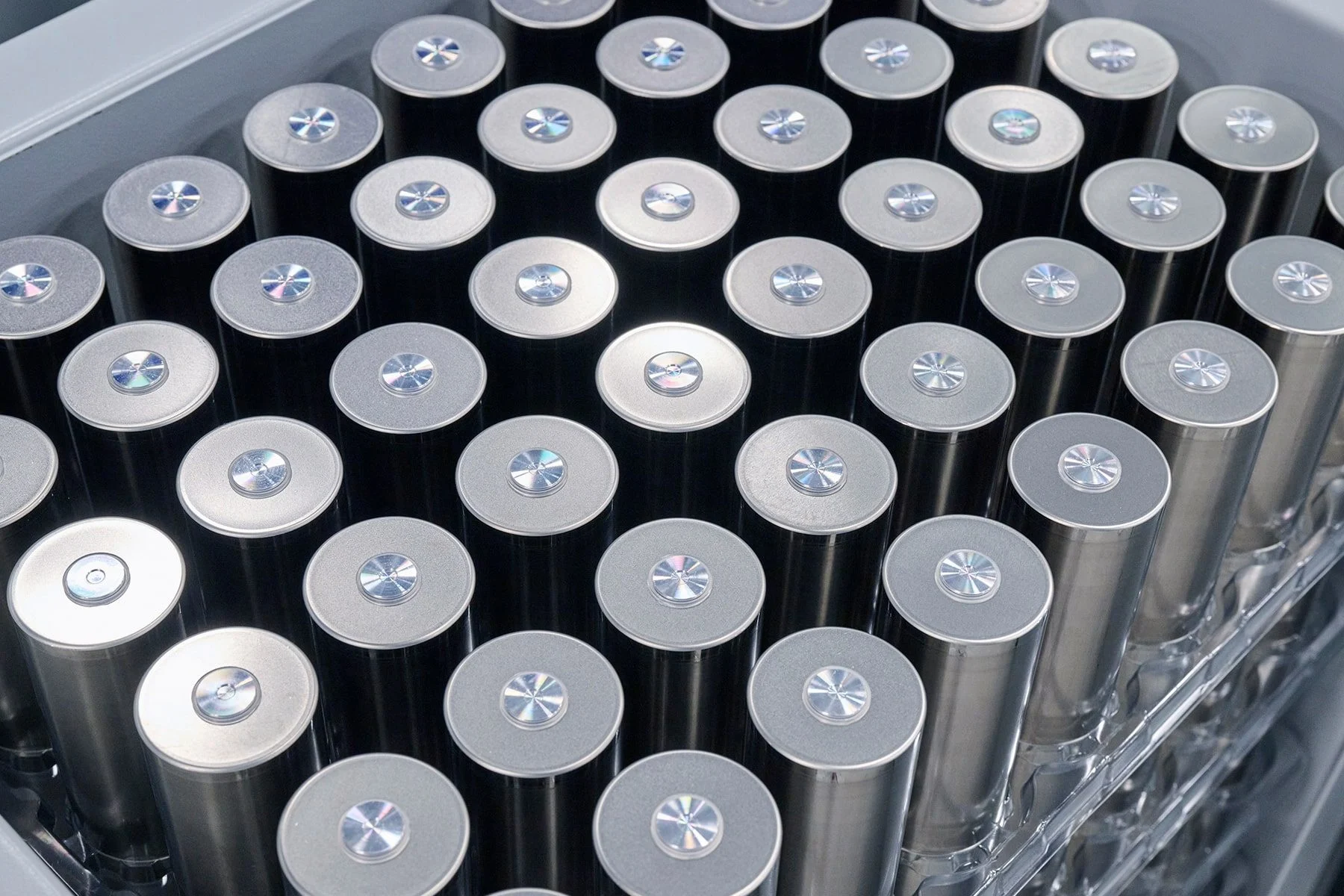
Researchers at the University of Michigan have developed an adaptive battery management approach that could significantly extend the lifespan of electric vehicle batteries by intelligently controlling operating temperatures as batteries age.
The technology uses voltage and charging information already collected by existing battery management systems, eliminating the need for additional sensors while potentially doubling battery service life and reducing replacement costs.
The findings were published in the journal Joule.
Smarter Battery Temperature Control
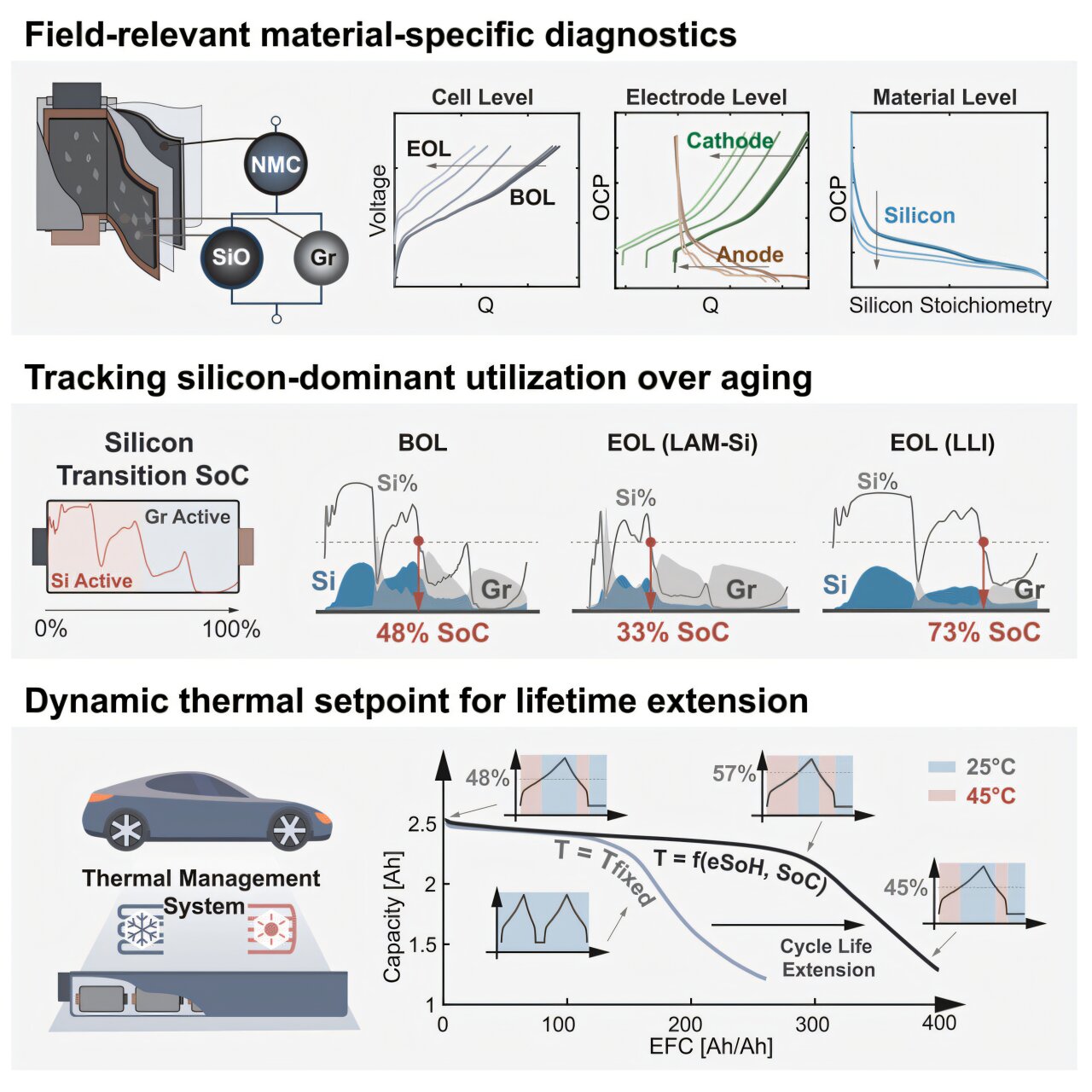
Rather than relying on fixed charging and temperature limits, the new system continuously estimates how battery materials are aging and adjusts heating and cooling strategies accordingly.
The approach is designed primarily for Level 1 and Level 2 charging, which account for most charging sessions at homes, workplaces and public parking facilities.

Lead author Zhiwen Wan said the research bridges the gap between battery chemistry and real-world battery management.
“What excites me most is that this work connects battery materials to battery management in a very direct way, when they are often disconnected. Advanced battery materials will only deliver their full value if we can manage them intelligently after they are placed in real products.”
Tracking Changes Inside Silicon Batteries
Many modern electric vehicles, including models produced by Tesla and Mercedes-Benz, use silicon-graphite battery anodes because silicon can store roughly ten times more lithium than conventional graphite.
However, silicon also expands dramatically during charging and contracts during discharge, creating mechanical stress that gradually damages the material and reduces battery capacity.
The researchers discovered that the battery charge level at which silicon experiences the greatest stress changes over time depending on how the battery has been used.
Current battery management systems generally rely on fixed operating thresholds, which may either unnecessarily limit driving range or accelerate battery degradation as cells age.
Senior author Anna Stefanopoulou said future battery management systems should adapt to changing battery conditions.
“Battery management systems today often use fixed voltage, charge and temperature thresholds. Our work opens a path toward management systems with active diagnostics that can look inside the cell, distinguish how different materials are aging and adapt operation accordingly.”
Heating When It Helps
The research team evaluated battery performance under repeated cycling at temperatures of 32°F (0°C), 77°F (25°C) and 113°F (45°C).
They found that warmer operating temperatures actually helped preserve silicon during charging and discharging, nearly doubling battery cycle life compared with room-temperature operation.
However, when batteries were left idle, elevated temperatures accelerated lithium loss.
Based on these findings, the researchers developed a strategy that selectively heats batteries to approximately 113°F while silicon is actively storing lithium, then cools them to around 77°F during periods dominated by graphite activity or while the battery is at rest.
Study co-author Jason Siegel said temperature management should respond to battery operating conditions rather than follow fixed rules.
“We found higher temperatures are not always harmful. The key is that temperature needs to be applied selectively. It can help when silicon is active, but it should be reduced when the battery is resting or graphite is dominant.”
Compatible With Existing EVs
The proposed management system relies on voltage and charging data already monitored by today’s battery management systems, making it possible to implement the approach without installing additional sensors inside battery packs.
Researchers also developed computational techniques that reduce processing requirements while maintaining high diagnostic accuracy, allowing the system to run efficiently on existing onboard vehicle electronics.
The team believes adaptive, aging-aware battery management could help automakers improve battery durability, reduce long-term ownership costs and maximize the benefits of next-generation silicon-rich lithium-ion batteries.


