


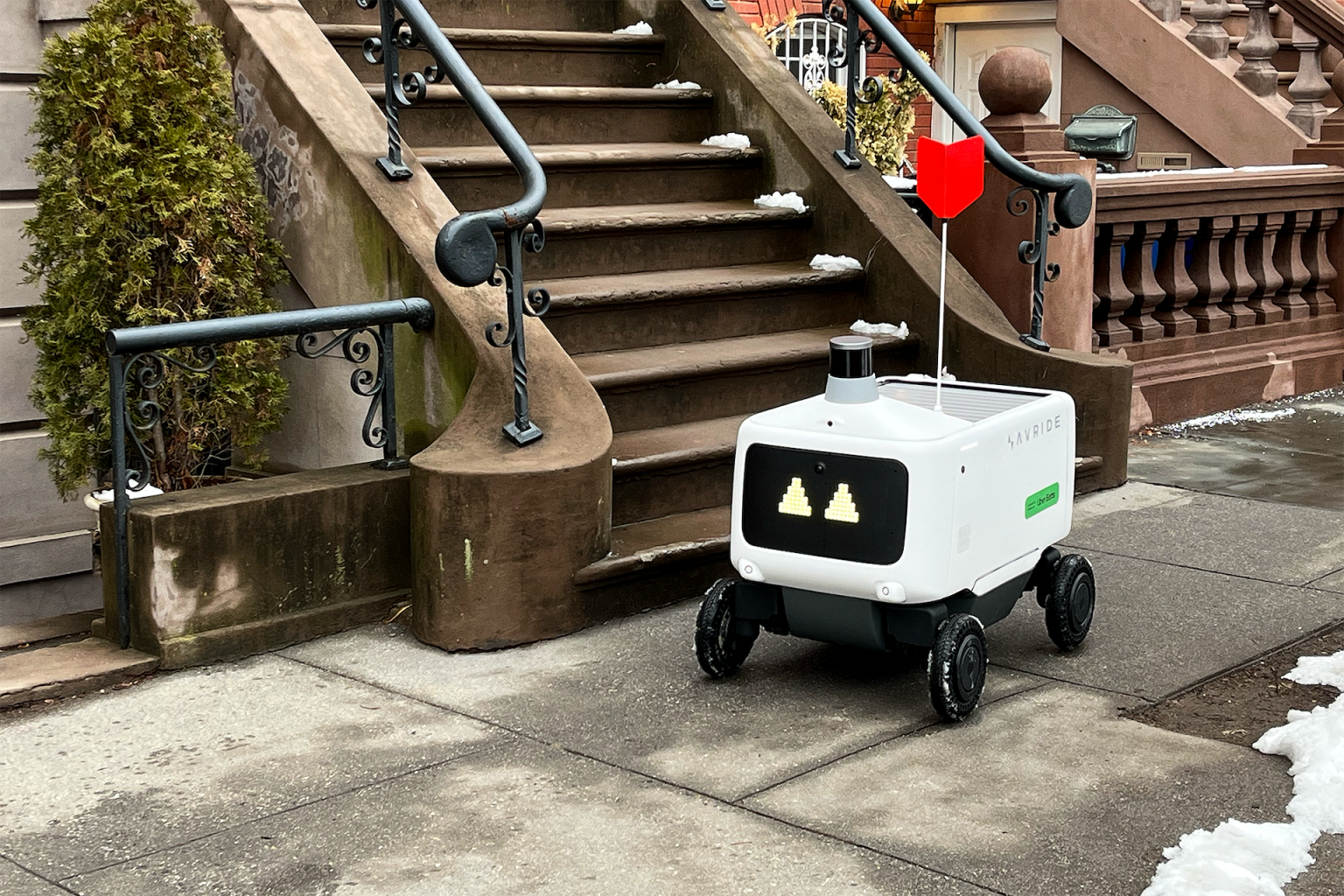
Uber Eats has introduced autonomous sidewalk delivery robots in Jersey City through its partnership with Avride, marking the latest step in the ride-hailing company’s push into autonomous vehicle technology.
The launch, which began this week, follows Uber’s ongoing expansion of AV partnerships, with deployments in 11 cities through collaborations with six companies, including Cartken, Nuro, and Serve Robotics. The company also plans to integrate Waymo’s robotaxis into its platform in Austin and Atlanta in early 2025.
See also: Uber Partners with Avride for Autonomous Food Deliveries and Robotaxi Services
Uber and Avride first announced their partnership in October 2024, launching robotic deliveries in Austin and Dallas. The companies also plan to introduce Avride’s self-driving cars in Dallas later this year, marking Avride’s first U.S. robotaxi deployment. The startup, a spinoff from Russian technology firm Yandex, is also working with Grubhub to roll out delivery robots on U.S. university campuses.
The Jersey City rollout presents both opportunities and challenges, particularly in winter conditions. Avride says its robots can operate in snow and “moderate precipitation.” A company spokesperson noted that the bots have a range of 31 miles on a single charge but are optimized for deliveries within one to two miles.
See also: Avride Partners with Grubhub to Expand Robot Delivery on U.S. College Campuses
Avride’s fleet will initially cover a one-square-mile area downtown, with future expansion planned. The company did not disclose the number of robots deployed. Several restaurants, including Michelin-rated Jiangnan, Rumi Turkish Grill, and Gulp, are participating in the program. Customers using Uber Eats can opt for delivery by an Avride robot and track its location in real time through the app.
Uber CEO Dara Khosrowshahi recently highlighted autonomous vehicles as a major growth area, estimating a trillion-dollar opportunity in the U.S. market. However, he cautioned that widespread commercialization remains a long-term effort due to regulatory hurdles, high costs, and the challenge of achieving “superhuman” levels of safety.