



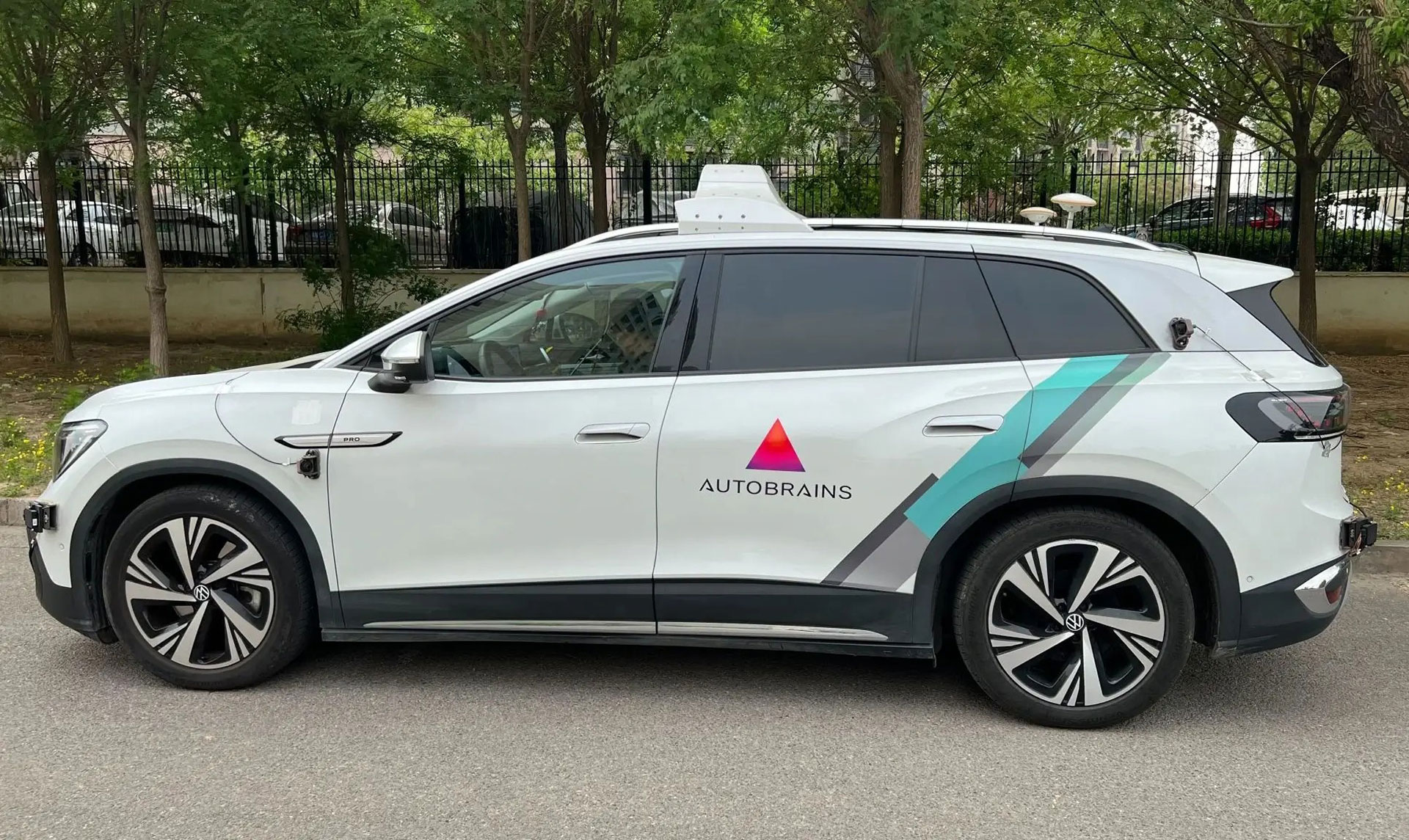
Uber, Autobrains and Nvidia have announced a partnership to develop a robotaxi program in Munich, combining autonomous driving software from Autobrains, Nvidia’s Drive Hyperion computing platform and Uber’s ride-hailing network.
The initiative is designed as an OEM-agnostic model, allowing multiple vehicle manufacturers to participate in the program. The companies said the deployment remains subject to regulatory approval.
Munich has been selected as the first launch location, with the partners citing the city’s complex urban road network and Germany’s established regulatory framework for autonomous vehicle testing and deployment.
Combining Autonomous Software and Ride-Hailing Services
The collaboration will integrate Autobrains’ Agentic AI autonomous driving system with Nvidia’s Drive Hyperion platform, which provides the computing architecture for autonomous vehicle operations.
According to Autobrains, its Agentic AI technology divides the driving task among specialized software agents, each responsible for handling specific driving situations or decision-making functions.
The company said this approach allows the system to operate across standard sensor configurations and multiple vehicle platforms, potentially simplifying deployment for automakers and mobility operators.
For Uber, the partnership provides an additional pathway for integrating autonomous vehicles into its ride-hailing platform without relying on a single vehicle manufacturer or technology provider.
Focus on Scalability
The companies said the OEM-agnostic structure is intended to create a scalable framework for autonomous ride-hailing services across different cities and vehicle platforms.
Under the model, automakers can contribute vehicles to the program while leveraging a shared technology stack for autonomous operations.
Igal Raichelgauz, founder and chief executive of Autobrains, said the company believes autonomous driving systems require flexible decision-making capabilities to handle diverse road conditions.
“Autonomous driving will not scale by relying on a single model to solve every driving scenario. It requires systems that can reason, adapt and make decisions under uncertainty,” Raichelgauz said.
“With Uber and Nvidia, we are bringing this approach into autonomous ride-hailing—combining Agentic AI with the mobility platform and automotive compute needed to support scalable robotaxi operations across cities, vehicles and real-world conditions.”
Munich Chosen as Initial Market
Munich is regarded as one of Europe’s more demanding environments for autonomous vehicle deployment due to its mix of dense urban traffic, high-speed roadways and stringent regulatory requirements.
The partners said the city will serve as the first testing ground for the program before potential expansion into additional markets.
The announcement follows Nvidia’s broader efforts to expand adoption of its Drive Hyperion platform through partnerships with automakers, autonomous driving developers and mobility providers across Asia, Europe and the Middle East.
As competition in the autonomous mobility sector intensifies, companies are increasingly exploring collaborative models that combine vehicle platforms, autonomous driving technology and mobility services to accelerate commercial deployment of robotaxi fleets.


