


Adoption of zero-emission trucks (ZETs) in the United States showed mixed progress through mid-2025, with deployment slowing overall but accelerating in certain vehicle segments and states, according to a report by clean transportation nonprofit CALSTART.
Cumulative deployments surpassed 59,000 vehicles nationwide by June 2025, spanning cargo vans, medium- and heavy-duty trucks, refuse vehicles and yard tractors. However, only about 6,526 new zero-emission trucks were deployed in the first half of the year, a 49.2% decline from a year earlier and roughly 1.32% of all new truck deployments.
See also: Tesla Confirms Semi Truck Specifications, Sets Two Variants Ahead of Production Start
CALSTART attributed much of the slowdown to weaker activity in the cargo van segment, historically the largest contributor to zero-emission commercial vehicle adoption. In contrast, medium- and heavy-duty applications continued to advance, particularly in urban and regional freight roles.
Medium-duty trucks recorded 311 new deployments in the first half of 2025, a 61% increase from 2024 and the strongest half-year performance on record for the segment. These vehicles, typically used for local distribution and municipal services, are seen as well suited to battery-electric technology due to predictable routes and manageable range requirements.
Heavy-duty deployments remain comparatively limited, constrained by higher upfront costs and infrastructure challenges. Nearly all deployed trucks in these weight classes are battery-electric, while hydrogen fuel cell adoption remains minimal. As of June 2025, only 197 fuel cell heavy trucks had been deployed, with high hydrogen prices and limited refuelling networks cited as major barriers.
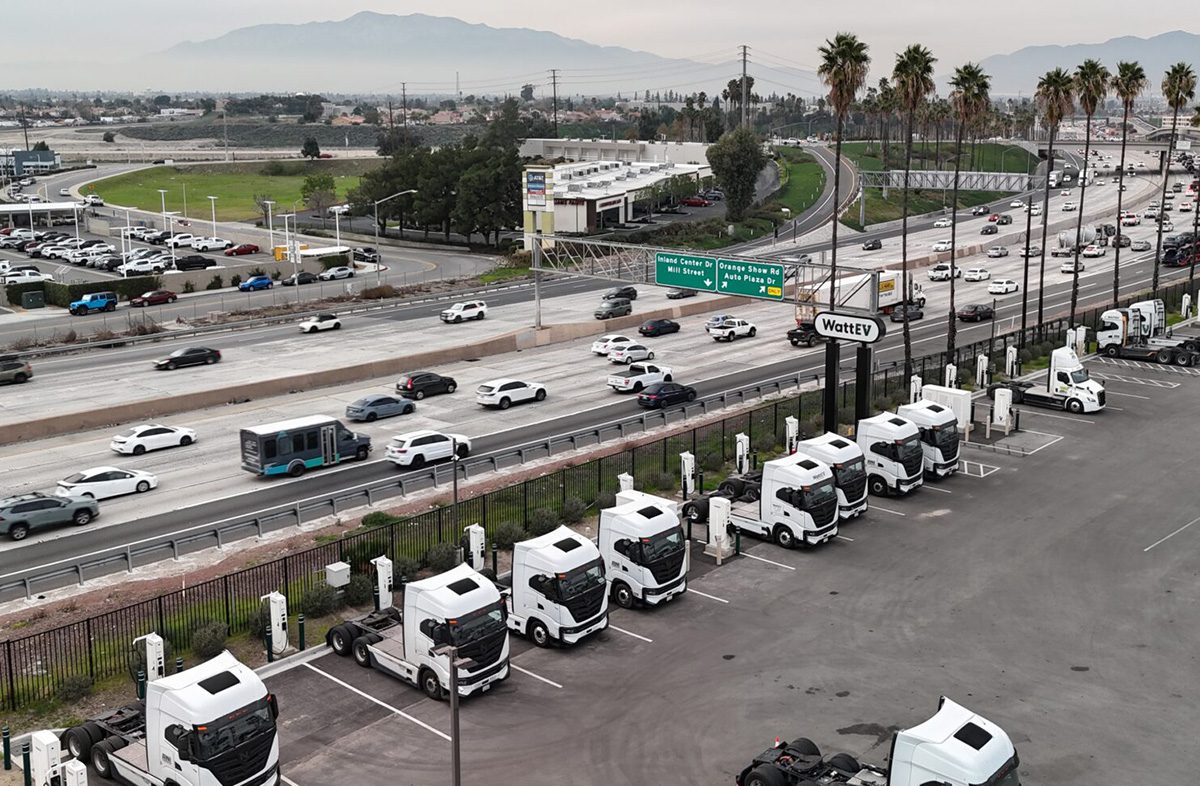
See also: WattEV Expands San Bernardino Electric Truck Depot to Meet Rising Zero-Emission Freight Demand
Geographically, California continues to dominate in absolute numbers with 10,659 zero-emission commercial vehicles, followed by Texas and Florida. However, CALSTART introduced a new “normalised” ZET score that adjusts for market size, revealing different leaders in relative progress.
Using this methodology, California still ranks first with a score of 2.11, but Washington and Wisconsin move into second and third place despite having far fewer vehicles overall. The nonprofit said these states benefit from coordinated policies, incentives, infrastructure development and supportive electricity pricing.
“Normalising ZET deployments by segment offers a fairer way to assess a state’s true progress,” the report said, noting that larger freight markets naturally deploy more vehicles in absolute terms.
See also: U.S. Regulators Review Safety Risks of Electric Trucks Carrying Hazardous Materials
CALSTART Vice President Tor Larson said policy clarity and collaboration across industry stakeholders are driving adoption where progress is strongest. “This update shows that ZETs are no longer a future concept — they are here, scaling and delivering results where states have taken decisive action,” he said.
Operational studies cited in the report indicate battery-electric trucks can achieve at least double the fuel efficiency of diesel equivalents, along with maintenance savings of roughly $0.40 to $0.50 per mile. Drivers also reported lower noise and reduced fatigue, benefits that could help address labor shortages.
Despite these advantages, high purchase prices and the need for heavy-duty charging infrastructure remain significant obstacles, particularly for long-haul applications. Grid upgrades and uncertain utilization rates further complicate investment decisions for fleet operators.
See also: Volvo to Supply Electric Trucks for New York Food Distribution Under Bronx Initiative
CALSTART said accelerating adoption will require expanded incentives, faster deployment of charging infrastructure, innovative financing models and long-term policy certainty. The report also identified ports and regional freight corridors — where routes typically range from 300 to 400 miles round trip — as prime candidates for early large-scale electrification.
“To sustain and accelerate this momentum nationwide, we must continue investing in vehicle and infrastructure solutions that lower upfront costs and give fleets the confidence to transition,” Larson said.