
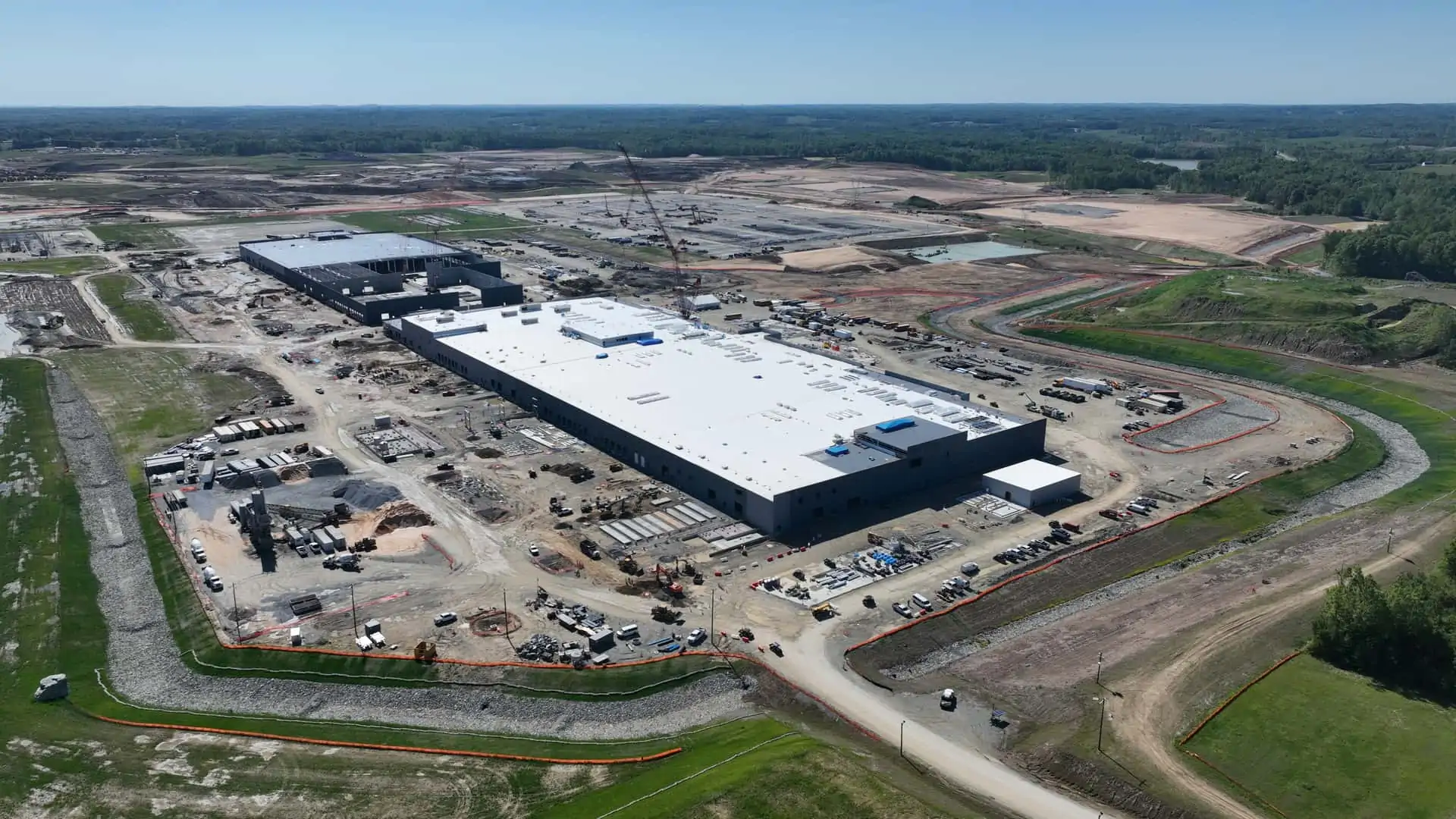
Toyota Battery Manufacturing North Carolina (TBMNC), the automaker’s first in-house battery manufacturing facility outside of Japan, is set to begin production in April.
The nearly $14 billion facility, located in the United States, will produce batteries for a range of electrified vehicles, including hybrid electric vehicles (HEVs), plug-in hybrid electric vehicles (PHEVs), and battery electric vehicles (BEVs). The plant, which is Toyota’s 11th manufacturing site in the U.S., is expected to support approximately 5,000 jobs.
See also: Toyota Considers New EV Battery Plant in Kyushu
This new plant is part of Toyota’s strategy to produce locally and invest in communities while offering products that are tailored to local needs. The company is focusing on a multi-pathway approach to electrification, which includes batteries for different types of vehicles. Toyota’s total investment in the U.S. has now reached $49 billion, a commitment that supports over 280,000 jobs in the industry. The company aims to continue contributing to the region’s growth through job creation and local investments.
In a related announcement, Toyota revealed plans to sign a comprehensive partnership agreement with the Shanghai municipal government in China to support the country’s carbon neutrality goals. The agreement includes the establishment of a new wholly-owned company in Shanghai’s Jinshan District, focused on the development and production of BEVs and batteries. This initiative is aligned with China’s goal of achieving carbon neutrality by 2060 and will involve advancements in hydrogen energy, automated driving technology, and battery recycling.
See also: Toyota to Boost Battery Production with Full Acquisition of PEVE from Panasonic
The new company in Shanghai will develop a BEV under the Lexus brand, with production expected to begin in 2027. The initial production capacity is forecast to be around 100,000 units per year, with approximately 1,000 new jobs to be created during the start-up phase. Toyota has emphasized its ongoing collaboration with local partners such as China FAW Group and Guangzhou Automobile Group, aiming to meet growing demand for new energy vehicles in China.
These strategic moves highlight Toyota’s commitment to both local and global markets, reinforcing the company’s goal of achieving carbon neutrality while continuing to provide solutions that align with regional needs and expectations.