
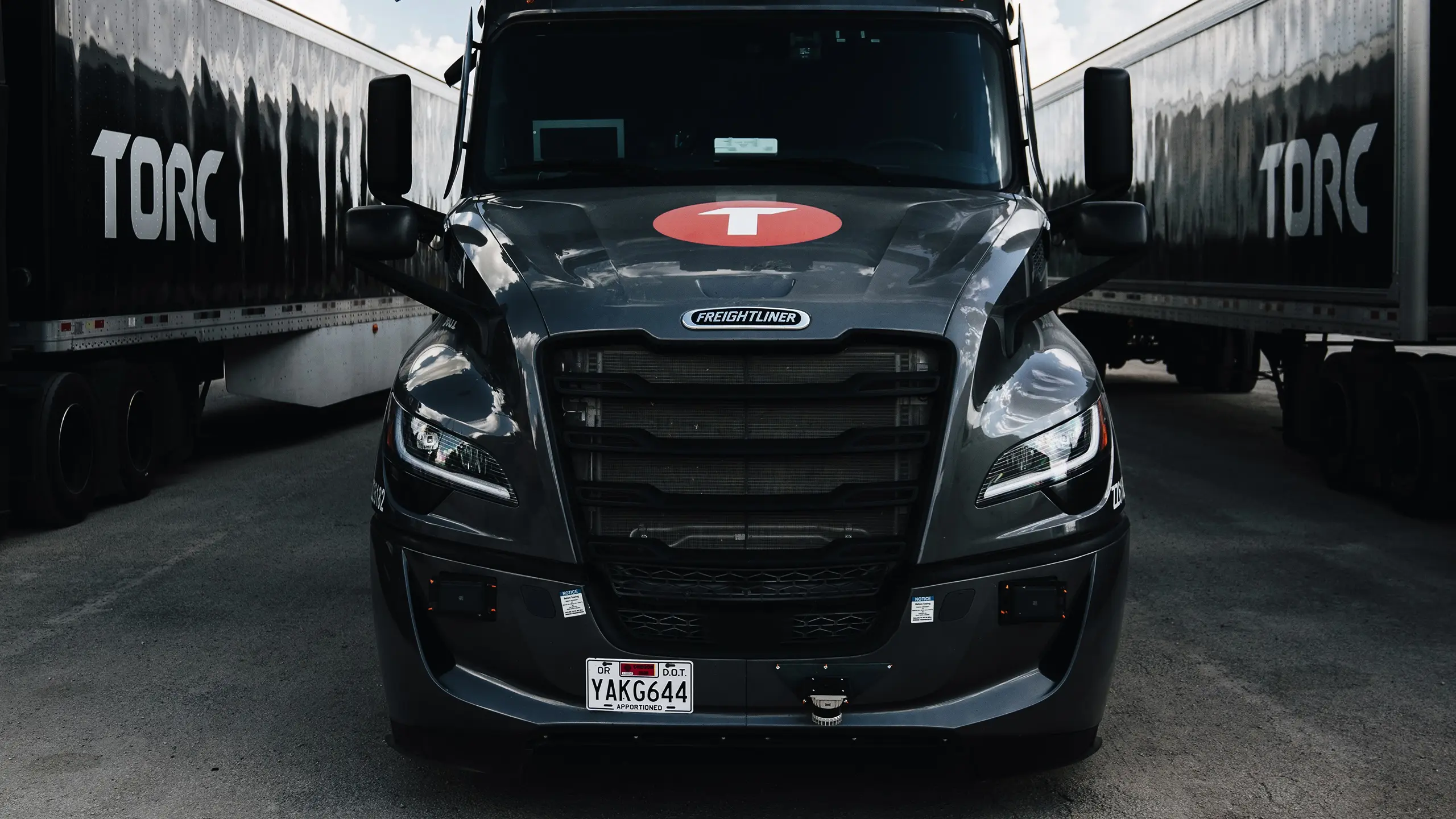
Torc Robotics has entered a strategic research partnership with Mila – Quebec Artificial Intelligence Institute, strengthening its efforts to develop next-generation artificial intelligence technologies for autonomous trucking.
The collaboration makes Torc the only autonomous trucking company with a dedicated presence inside Mila’s research ecosystem, providing the company with on-site research space and direct access to the institute’s network of researchers, faculty members and students.
Mila, founded by renowned AI researcher Yoshua Bengio, is one of the world’s largest academic centers focused on deep learning and artificial intelligence. The organization operates as a non-profit institute through a partnership between Université de Montréal and McGill University and has a research community of more than 1,500 members.
The agreement builds on an existing relationship between the two organizations that dates back to 2020.
Torc, a subsidiary of Daimler Truck, maintains a presence in Montreal alongside engineering operations in Ann Arbor, Michigan, and its headquarters in Blacksburg, Virginia. The company also operates a fleet operations center in the Dallas-Fort Worth area to support the commercialization of autonomous long-haul trucking services in the United States.
Under the partnership, Torc researchers will collaborate with Mila’s academic community on several areas considered critical to the future of autonomous vehicle development.
The research agenda includes generative world models designed to simulate complex driving environments, multi-agent behavior modeling to better predict interactions among vehicles and other road users, reinforcement learning for autonomous decision-making, and foundation models intended to support physical AI systems operating in real-world environments.
The work is aimed at addressing one of the industry’s longstanding challenges: ensuring that autonomous systems trained and tested in simulation environments perform reliably when deployed on public roads.
Felix Heide, Head of Artificial Intelligence at Torc Robotics, said the collaboration is intended to accelerate the development of technologies needed for commercial deployment.
“Torc is focused on building safe, scalable autonomous trucks, and advancing the next generation of physical AI is central to that mission,” said Felix Heide, Head of Artificial Intelligence at Torc Robotics.
“As a long-time Mila collaborator, I can definitively say that partnering enables deeper collaboration at the intersection of research and real-world deployment, collaboration that supports continued progress toward commercializing autonomous trucking at scale,” Heide added.
The partnership expands Torc’s growing network of academic and research collaborations.
The company is already involved with the Stanford Center for AI Safety, where it participates in research related to Level 4 autonomous trucking safety. Torc has also worked with technology companies including NVIDIA and Flex on autonomous vehicle development.
Mila said the partnership will provide opportunities for researchers and students to work on real-world challenges associated with physical AI and autonomous systems.
“We are excited to welcome Torc as an industry partner, as it becomes an even stronger component of Mila’s ecosystem,” said Christopher Pal, Core Academic Member at Mila, Scientific Co-Director of IVADO and Professor at Polytechnique Montréal.
“This partnership brings together academic excellence and real-world deployment, creating opportunities for our students and researchers to work on impactful challenges in physical AI while advancing the state of the art in autonomous systems,” Pal added.
Liam Paull, a Core Academic Member at Mila, Canada CIFAR AI Chair and Associate Professor at Université de Montréal, said closer collaboration between academia and industry is becoming increasingly important as autonomous driving technologies move toward commercialization.
“As autonomous vehicle technology becomes closer to a reality, it is exciting and important to see new collaborations between academic labs and top tier companies that are bringing the technology to market,” said Liam Paull, Core Academic Member at Mila and Associate Professor at Université de Montréal.
The partnership highlights the growing importance of advanced AI research in the autonomous trucking sector, where companies are increasingly investing in machine learning, simulation technologies and physical AI systems to improve vehicle safety, decision-making and scalability.
As competition intensifies in autonomous freight transportation, collaborations between industry and academic institutions are expected to play a larger role in accelerating the development and deployment of self-driving commercial vehicles.