

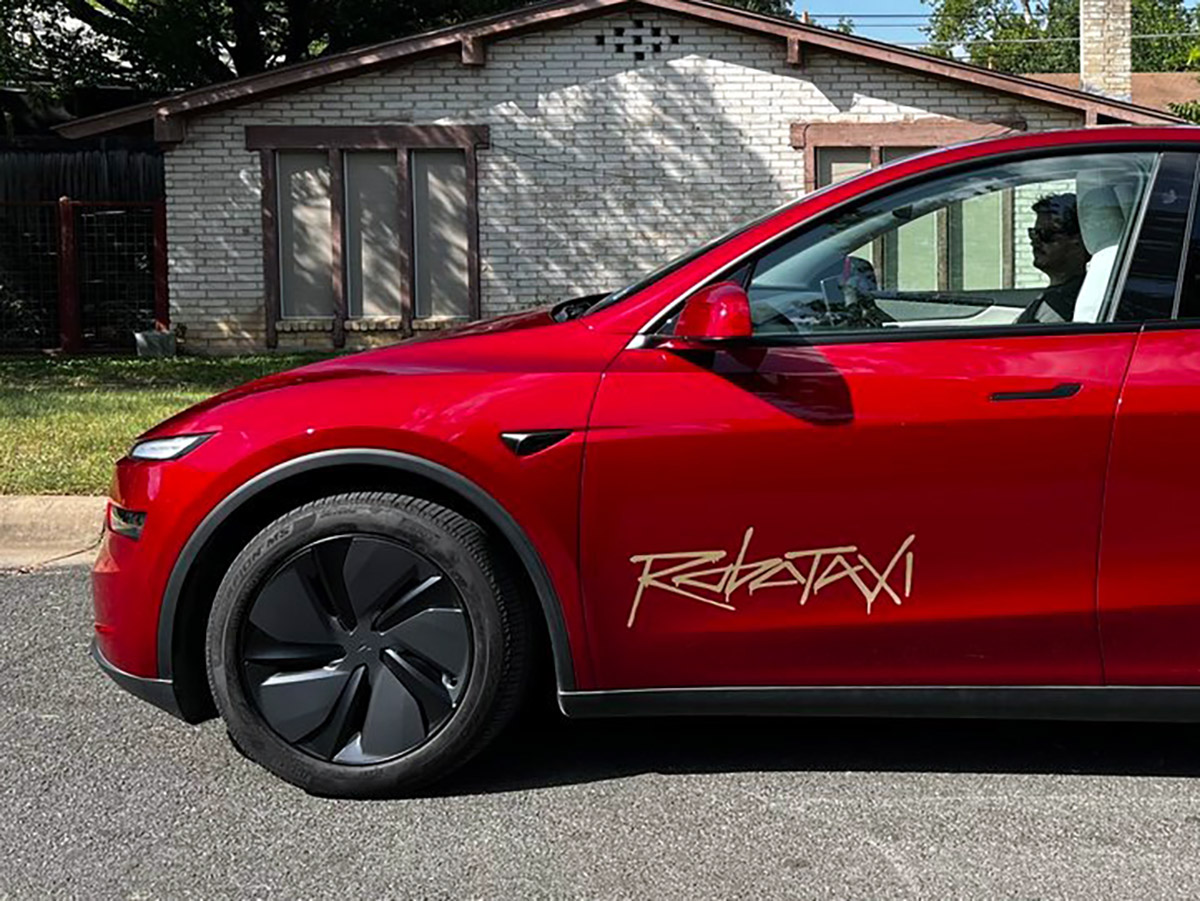
Tesla has removed the in-vehicle safety monitor from its robotaxi service in Austin, marking the start of what the company describes as true unsupervised robotaxi operations after months of incremental testing.
The milestone was not formally announced by Tesla, but emerged after a rider posted on X that there was no safety monitor present during a recent robotaxi trip. The observation was subsequently confirmed by Tesla and its chief executive Elon Musk, who congratulated the company’s artificial intelligence team on achieving the step.
It remains unclear whether all robotaxis currently operating in Austin are now running without human supervision, or whether some vehicles in the fleet still retain safety monitors as Tesla continues to scale the rollout.
Tesla launched its Austin robotaxi service in July 2025, but initially faced criticism for branding the service as a robotaxi operation while still requiring a human safety monitor inside the vehicle. In the early phase, the monitor sat in the passenger seat with access to on-screen controls that allowed intervention if a collision appeared imminent.
As testing progressed, Tesla gradually expanded the geofenced service area, eventually allowing robotaxis to operate on highways. With higher speeds and shorter reaction times, the safety monitor was moved to the driver’s seat, a change that again drew criticism from observers who argued the service still fell short of full autonomy.
Pressure increased after Musk repeatedly said Tesla would remove the safety monitor before the end of 2025 — a deadline the company missed. Tesla later disclosed that it had begun internal testing of fully unsupervised robotaxi rides before year-end, suggesting the technology had reached a level of reliability sufficient for broader deployment.
The move in Austin raises questions about when Tesla may pursue similar operations elsewhere, particularly in California. In the San Francisco Bay Area, Tesla currently operates what it officially describes as a ride-hailing service, in line with state regulations that require a human driver to be present.
Tesla could remove the human requirement in California by applying for additional autonomous vehicle permits, but it has not yet done so. With unsupervised operations now underway in Texas, industry observers say Tesla may soon face renewed pressure to seek regulatory approval in other major markets.
The Austin development represents a notable escalation in Tesla’s long-running push toward full autonomy, as the company increasingly positions self-driving technology and robotaxi services as central pillars of its future growth strategy.