

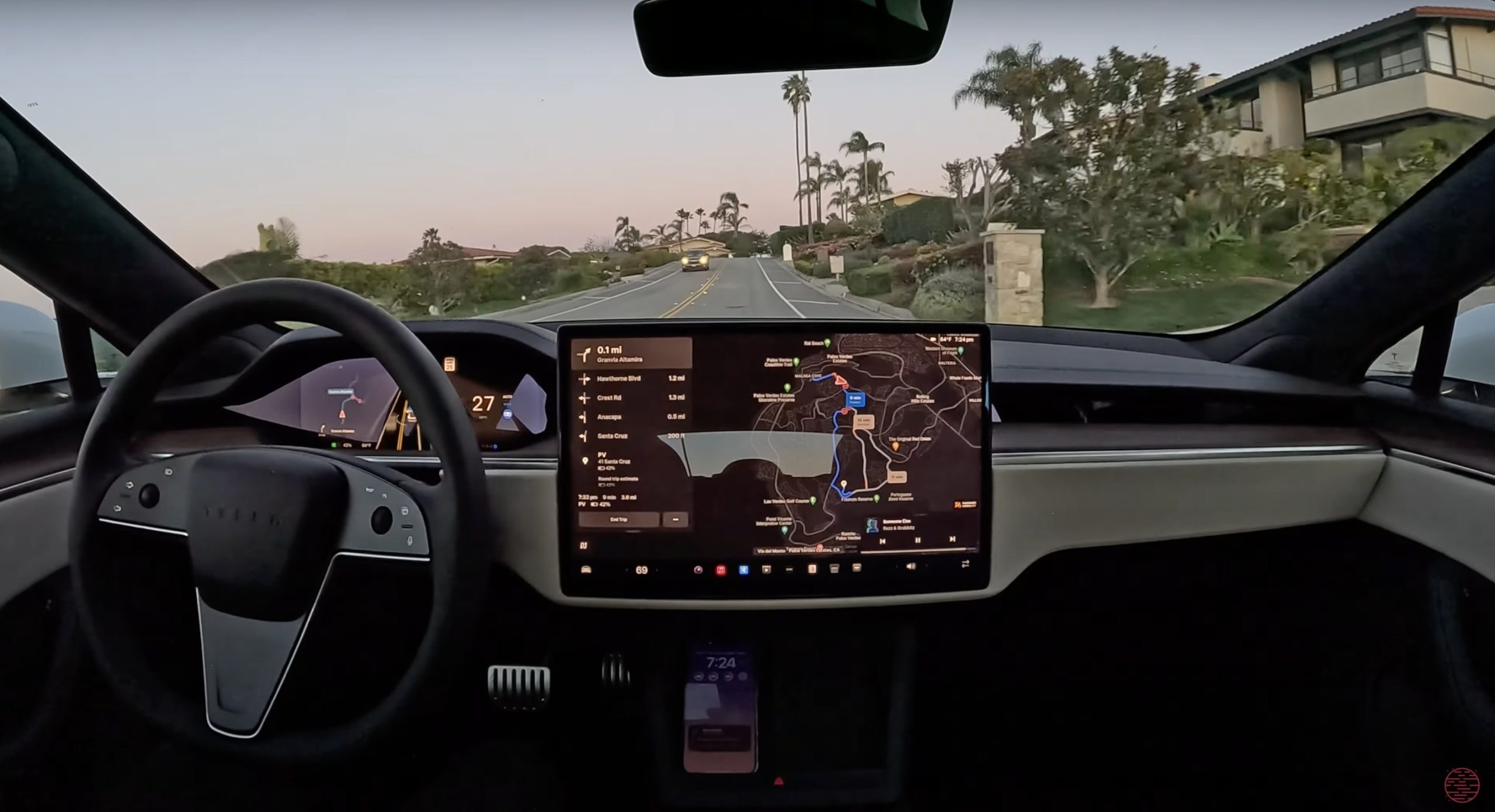
Tesla said on Wednesday it is preparing to broaden the release of its Full Self-Driving (FSD) Supervised software in China and Europe later this year, pending regulatory approval. The announcement came as part of the company’s second-quarter earnings disclosure, which also highlighted growing usage of its autonomous technology and global vehicle sales performance.
“We continue to prepare for broader release of FSD (Supervised) in China this year, pending regulatory approval,” Tesla wrote in its Q2 shareholder deck, referring to the world’s largest market for new energy vehicles. The company added, “We continue to prepare for the launch of FSD (Supervised) in Europe this year, pending regulatory approval.”
Tesla has already introduced FSD in China in a limited form earlier this year. However, tighter safety and data regulations in Europe have restricted the software to controlled trials. In a notable development, Tesla has now begun testing the system in London, marking the British capital as the latest major European city to join ongoing trials, which have also included Amsterdam, Paris, and Rome.
Over the weekend, Tesla CEO Elon Musk commented on the system’s progress, stating that FSD is on the verge of significant improvement. “There will be a step change improvement in FSD,” he said, as the company works toward launching its long-anticipated robotaxi service to the public.
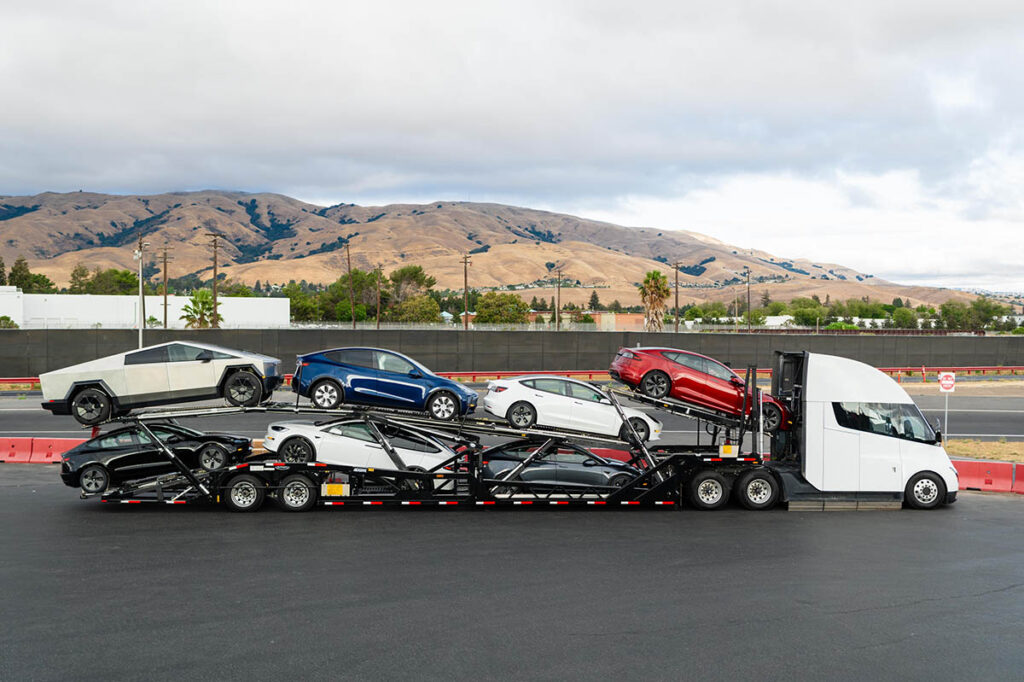
In its earnings report, Tesla said that vehicles using FSD collectively drove over one billion miles between April and June. The company continues to rely on its Shanghai Gigafactory as a central export hub and noted that it recently began sales operations in India, now the world’s third-largest auto market.
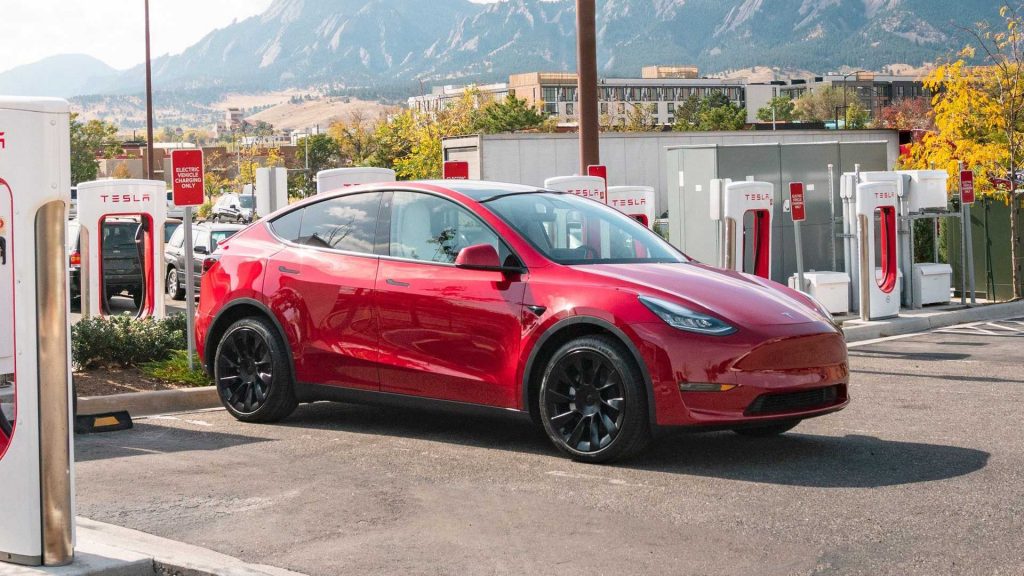
Tesla also reported that the Model Y was the best-selling vehicle in Norway so far this year and topped monthly sales rankings in Türkiye, the Netherlands, Switzerland, and Austria in June.
Despite strong market performance, Tesla cautioned investors about broader economic and policy-related uncertainties. “It is difficult to measure the impacts of shifting global trade and fiscal policies on the automotive and energy supply chains, our cost structure and demand for durable goods and related services,” the company said. It added, “While we are making prudent investments that will set up both our vehicle and energy businesses for growth, the actual results will depend on a variety of factors, including the broader macroeconomic environment, the rate of acceleration of our autonomy efforts and production ramp at our factories.”