



Tesla is preparing to roll out its Full Self-Driving (FSD) feature in Australia, with local validation efforts now in the final stages, according to the company’s Country Director. The move follows months of testing and recent confirmation that there are no regulatory barriers preventing the supervised version of the advanced driver-assistance system from launching in the country.
Thom Drew, Tesla’s Australia Country Director, stated that the company is “running through the final stages of validation prior to public release,” with initial deployment expected to begin on vehicles fitted with Tesla’s latest Hardware 4 platform. The rollout will occur in phases, expanding availability to other hardware versions at a later date.
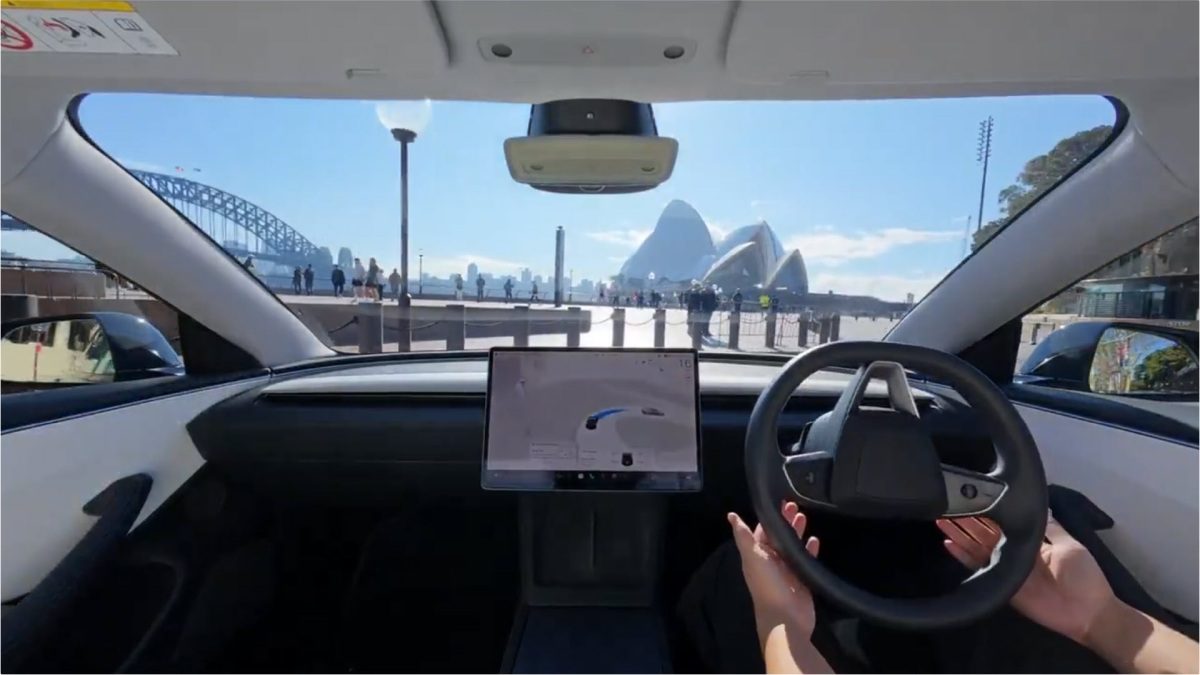
The development builds on two public demonstration events that showcased the system’s performance in complex urban environments. Tesla first tested FSD in Melbourne in May 2025, where a right-hand drive Model 3 navigated city streets and completed a challenging “hook turn” at a tram intersection — a local maneuver that can be difficult even for experienced drivers. The most recent demonstration took place in Sydney and was documented in a newly released video.
The absence of regulatory obstacles is seen as a significant advancement for Tesla’s deployment strategy in right-hand drive markets. In comments made earlier this year, Drew noted there were “no blockers in Australia” for releasing the supervised version of FSD, contrasting with challenges faced in other jurisdictions.
Tesla’s engineering teams continue to tailor FSD to regional driving conditions, including shared roadways with trams and local road-marking patterns. The Australian rollout is expected to serve as a key benchmark for the system’s adaptation to non-U.S. markets.
FSD (Supervised) is currently listed at AU$10,100 in Australia, one of the more competitive prices for the suite globally. While Tesla has not set a specific launch date, industry observers anticipate the software will be available to eligible Australian customers later in 2025.


