


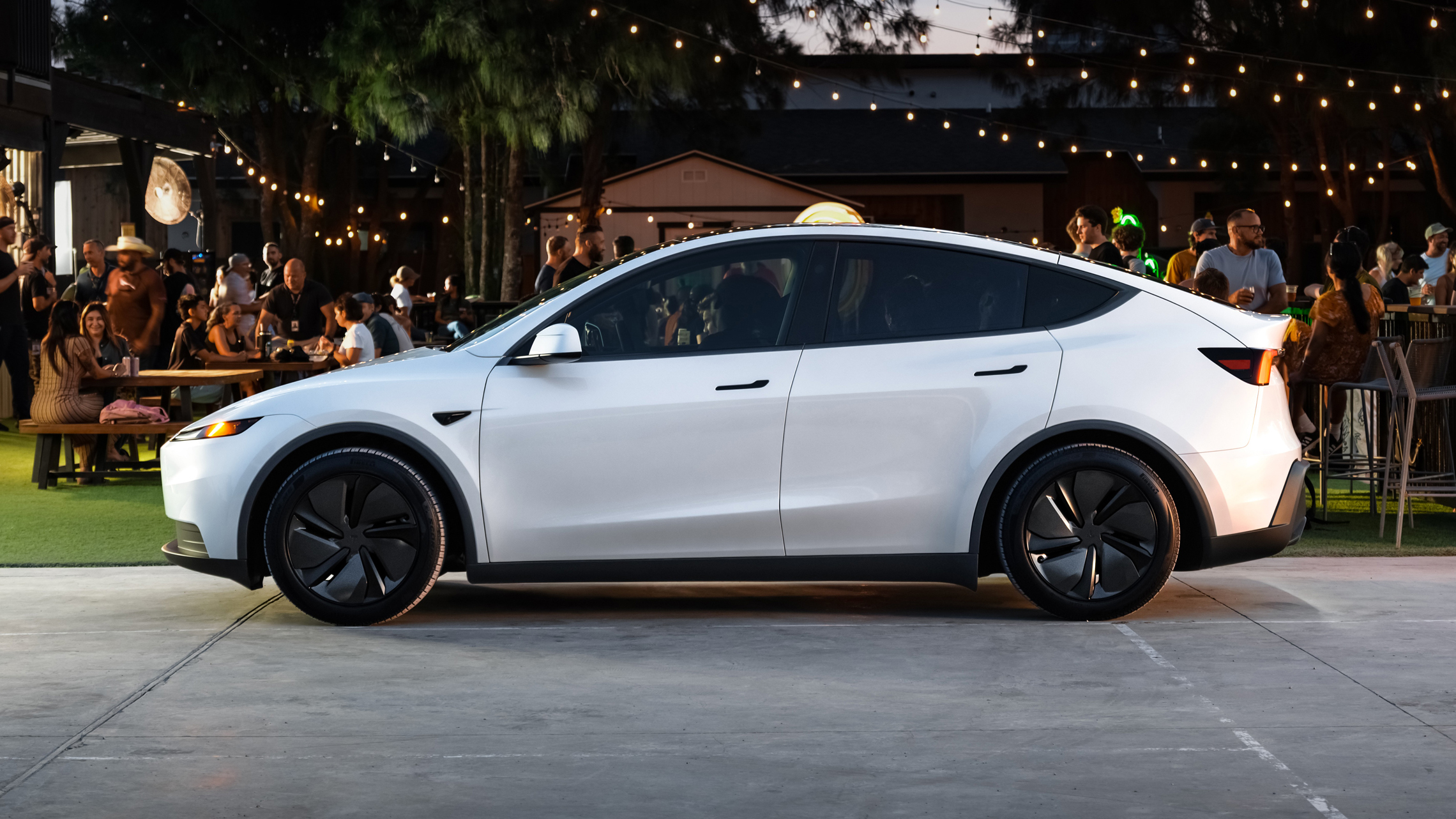
Tesla’s Model Y Standard, the most affordable version of the electric SUV, has exceeded its official driving range estimate in independent real-world testing, outperforming higher-priced variants in distance covered under the same conditions.
According to testing conducted by Edmunds, the 2026 Model Y Standard travelled 337 miles (542 km) in its standardized EV Range Test, surpassing the vehicle’s EPA-rated range of 321 miles (516 km). Edmunds said the result makes it the longest-range Model Y the publication has tested to date.
See also: Tesla Launches Lower-Priced Model Y Standard in UK at £41,990
The finding contrasts with earlier Model Y variants, where higher trims typically carried longer official range ratings. Edmunds noted that a previous-generation Model Y Long Range achieved 310 miles (499 km) in testing, below its EPA estimate, while a more recent Launch Series version closely matched its rated figure at 327 miles (526 km).
Edmunds attributed the Model Y Standard’s performance largely to improved efficiency. Despite using a smaller battery pack than premium versions, the vehicle consumed 22.8 kWh per 100 miles during testing, compared with 26.8 kWh for the Model Y Launch Series. The efficiency gain was partly linked to the Standard model’s 18-inch wheels, as well as drivetrain and software refinements.
See also: Tesla Adds 3.99% Financing for 2026 Model Y Standard, Making Its Cheapest SUV More Accessible
The Standard trim includes fewer interior features and reduced adjustability compared with higher-end versions, and offers lower performance output. However, Edmunds said the vehicle still provides sufficient power for everyday use, along with a compliant suspension and comfortable long-distance ride. The fixed glass roof design was also noted as helping moderate cabin temperatures, potentially reducing energy use from climate control.
The results add to indications that Tesla’s more recent models are delivering real-world ranges closer to — or above — official ratings. Edmunds observed that Teslas produced between 2018 and 2023 often fell short of EPA estimates in testing, a pattern that has shifted with newer vehicles including the latest Model 3, Cybertruck, and now the Model Y.


