

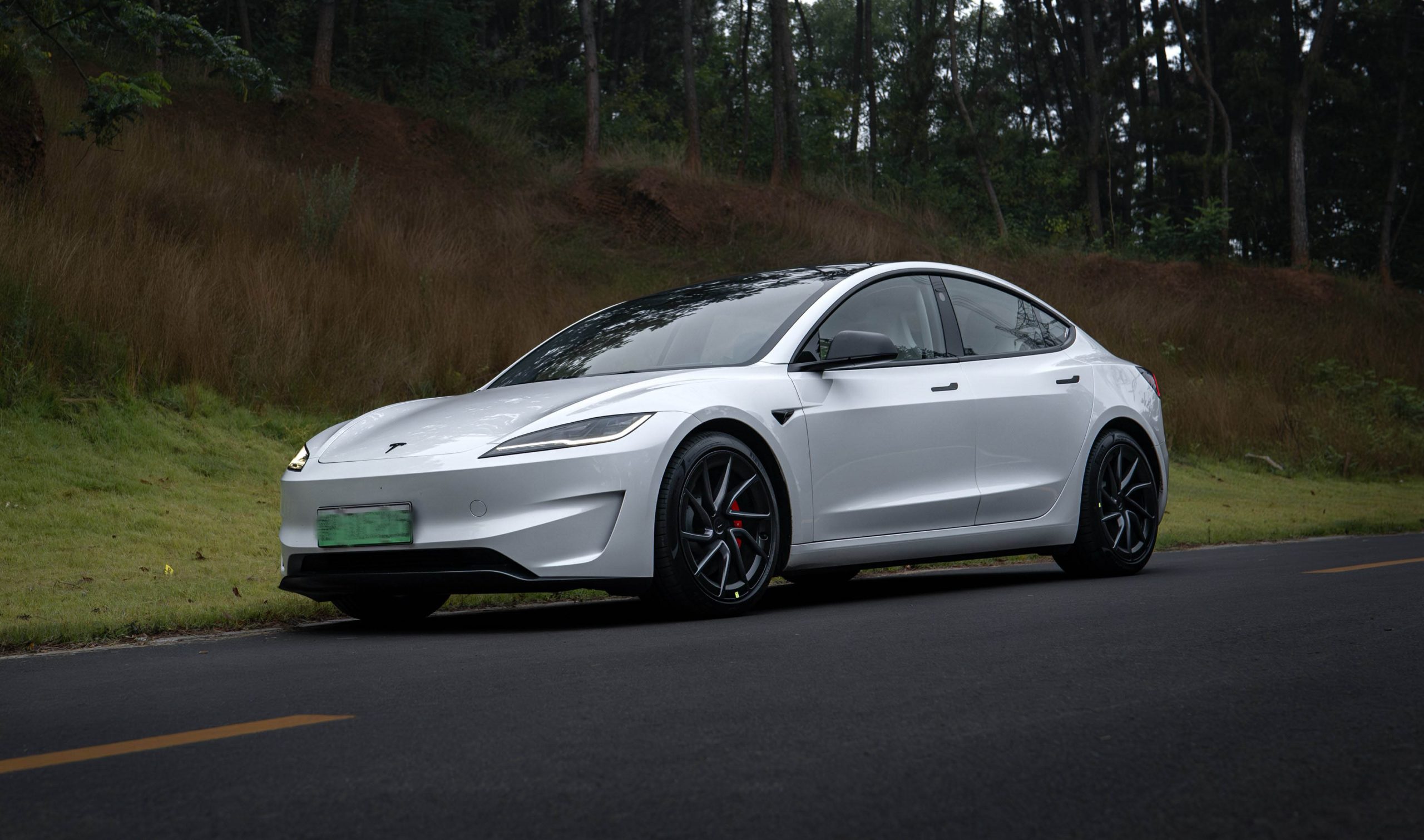
Tesla recorded a strong rebound in China during May, with domestic retail sales rising sharply and exports from its Shanghai Gigafactory remaining robust, helping the electric vehicle maker reverse a two-month streak of year-on-year sales declines.
According to data released by the China Passenger Car Association (CPCA), Tesla’s domestic retail sales in China reached 47,281 vehicles in May, representing a 22.53% increase from the same month last year.
The performance marked a significant recovery from April, with retail deliveries surging 82.16% month-on-month as the company benefited from stronger consumer demand and new financing initiatives.
Domestic Market Share Improves
Tesla’s recovery came as China’s new energy vehicle (NEV) market continued to expand.
China recorded NEV retail sales of 950,000 units in May, an increase of 18.6% compared to a year earlier. Battery electric vehicle (BEV) sales reached 637,000 units, rising 22.0% year-on-year.
Against this backdrop, Tesla’s share of China’s NEV retail market climbed to 4.98% in May, up from 3.78% a year earlier and significantly higher than April’s 3.06%.
In the BEV segment, Tesla captured a 7.42% market share, improving from 6.36% in May 2025 and rebounding sharply from 4.48% in April.
Despite the strong monthly performance, Tesla’s cumulative domestic retail sales for the first five months of 2026 totaled 186,035 vehicles, down 7.87% compared with the same period last year.
Shanghai Factory Maintains Export Momentum
Tesla’s Shanghai Gigafactory continued to play a key role as a global export hub.
The facility exported 38,701 vehicles in May, representing a 67.73% increase year-on-year.
Exports declined 27.69% from April, however, as the company allocated more production capacity to meet stronger domestic demand.
From January through May, Tesla exported 192,823 vehicles from Shanghai, more than doubling exports from the same period in 2025 with a 112.01% year-on-year increase.
Combining domestic sales and exports, Tesla China’s wholesale volume reached 85,982 vehicles in May, up 39.44% from a year earlier and 8.18% higher than April.
Model Y Remains Tesla’s Best-Selling Vehicle
The Model Y continued to be Tesla’s primary growth driver in China.
Wholesale deliveries of the electric SUV reached 54,765 units in May, increasing 38.55% year-on-year and 5.03% from April.
Meanwhile, the Model 3 sedan recorded wholesale sales of 31,217 units, up 41.03% compared with a year ago and 14.20% higher than the previous month.
Tesla has not yet released a detailed domestic retail sales breakdown between the two models for May.
Financing Incentives Support Demand
The sales recovery was partly supported by Tesla’s latest financing initiatives in China.
In May, the company introduced a new financing program called “Easy Loan,” designed to reduce the initial purchase burden for consumers and make vehicle ownership more accessible.
The strategy reflects Tesla’s efforts to remain competitive in China’s increasingly crowded EV market, where domestic automakers continue to launch new models and aggressive promotional campaigns.
FSD Rebranding Signals Future Growth Opportunity
Tesla is also preparing for a broader rollout of its advanced driver-assistance technology in China.
The company recently renamed its Full Self-Driving (FSD) software package to “Tesla Assisted Driving” on its official Chinese website while maintaining the software’s price at 64,000 yuan.
The move follows Tesla’s earlier announcement that FSD Supervised is available in markets including China, fueling expectations that more advanced autonomous driving capabilities could be introduced in the country in the future.
As Tesla strengthens both its sales performance and technology offerings, the company appears to be regaining momentum in the world’s largest electric vehicle market while continuing to leverage its Shanghai facility as a major export base for global deliveries.
Source: CnEVPost