



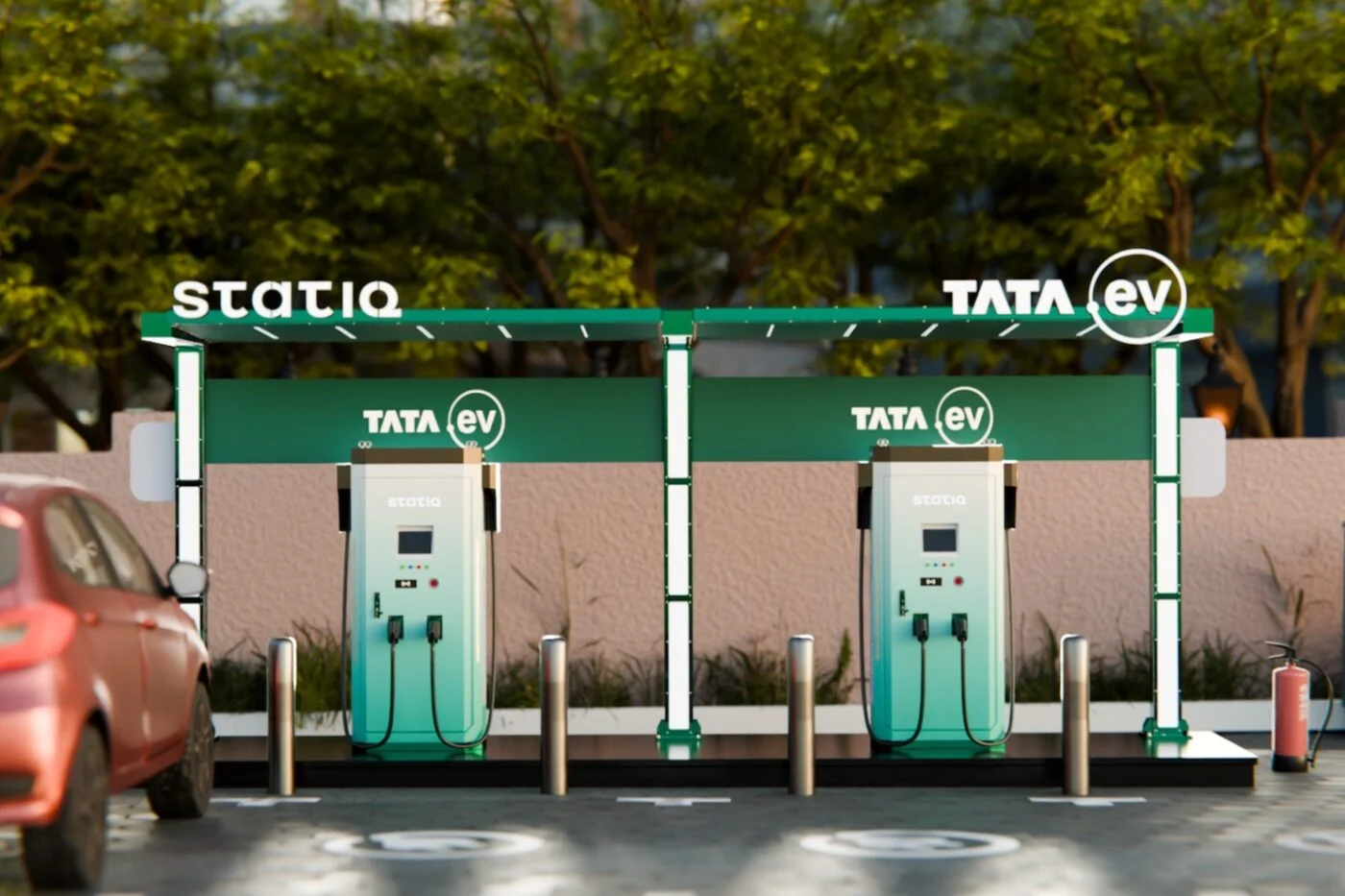
Tata Passenger Electric Mobility (TPEM), a subsidiary of Tata Motors, plans to double India’s EV charging infrastructure to 400,000 charging points by 2027, aiming to accelerate electric vehicle adoption. The company is developing an open charging ecosystem and partnering with leading charge point operators to deploy more than 30,000 new public chargers.
As part of its expansion, TPEM is introducing the ‘Tata.ev Mega Charger’ network across major cities and highways. These chargers, capable of servicing up to four vehicles simultaneously, will predominantly feature 120 kW output and four charging guns.
However, in areas with limited grid capacity, a 60 kW charger with two guns may be installed. “We are focusing on a widespread and accessible charging network to support India’s EV transition,” said Balaje Rajan, Chief Strategy Officer of TPEM, in an interview with CNBC-TV18.
The company has signed agreements with Tata Power, ChargeZone, Statiq, and Zeon to install 500 Tata.ev Mega Chargers, with the first set expected to be operational soon and the remainder by February 2025. While the network will be open to all EV users, Tata customers will receive priority access and discounts of up to 25%.
India currently has around 170,000 chargers, with only 18,000 being public. TPEM’s initiative aims to address this gap and improve EV convenience. The company offers India’s most extensive electric car portfolio, including models such as the Tiago.ev, Punch.ev, and Nexon.ev. It plans to launch the Harrier.ev next month, followed by the Sierra.ev later this year. Additionally, Tata Motors is developing a premium Avinya EV lineup, with reports suggesting a range of five models.


