
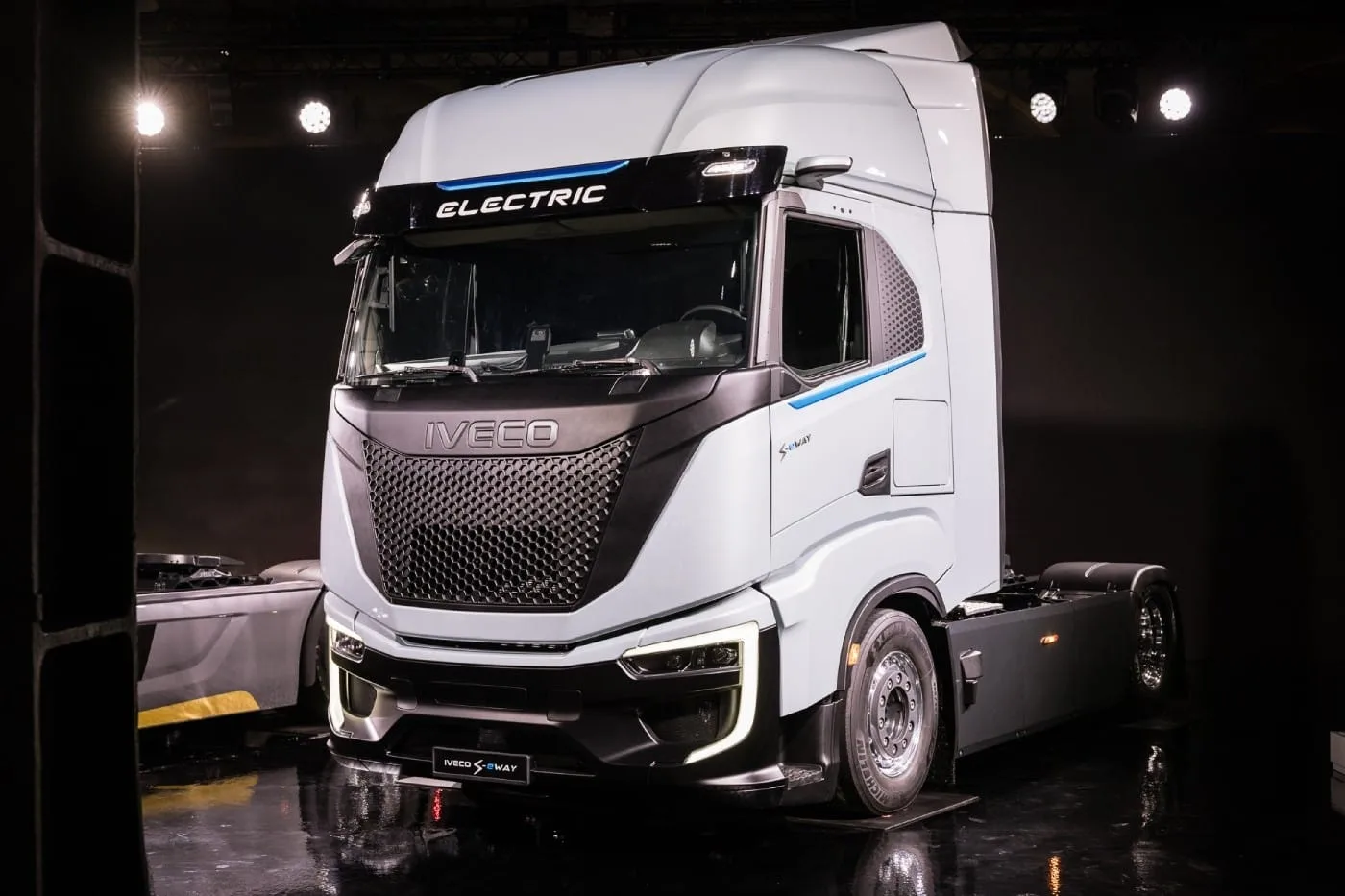
Tata Motors has completed the first settlement stage of its acquisition of Iveco Group, securing approximately 89.42% of the Italian commercial vehicle manufacturer’s share capital through its wholly owned Dutch subsidiary, TML CV Holdings.
The transaction follows a takeover offer that received sufficient shareholder support to exceed the minimum acceptance threshold of 80% of Iveco’s ordinary shares. The acquisition establishes Tata Motors as the controlling shareholder of the European truck and bus manufacturer.
The voluntary offer currently has an acceptance rate of 87.8%. Shareholders who have not yet tendered their shares can still accept the offer during the second acceptance period, which runs from 2 to 6 November, at €14.40 per share.
Acquisition Value Rises to €3.91 Billion
Tata Motors announced its intention to acquire Iveco’s commercial vehicle business in July 2025. The offer was made through TML CV Holdings, a Netherlands-based company fully owned by the Indian automotive group.
The initial proposal valued Iveco shares at €14.10 each. Tata subsequently increased the offer to €14.40 per share in October 2025, raising the overall transaction value from approximately €3.8 billion to around €3.91 billion.
The minimum acceptance threshold was established at Iveco’s general meeting on 16 October. With the first settlement completed and the threshold surpassed, Tata has secured control of the business.
Settlement of the second acceptance period is scheduled for 13 November. The additional tendered shares could further increase Tata’s ownership.
New Board and Financial Leadership at Iveco
The acquisition is accompanied by changes to Iveco Group’s leadership structure. Its board will comprise six members, with Tata Group CEO Natarajan Chandrasekaran appointed as chairman.
Former Iveco CEO Olof Persson will serve as an executive director. The other members will include Tata representatives P. B. Balaji and Girish Wagh, alongside independent directors Günter Butschek and Charles Nichols.
Iveco has also appointed Damiano Cretarola as its new chief financial officer. He assumed the position on 2 November, succeeding Anna Tanganelli, following his appointment on 21 October.
Defence Business Already Sold to Leonardo
The transaction covers Iveco’s commercial vehicle operations and does not include its defence business, which was separated earlier in 2026 and sold to Italian defence and technology group Leonardo for approximately €1.6 billion.
Following the acquisition, the combined Tata-Iveco commercial vehicle group is expected to generate annual sales of more than 540,000 vehicles and revenue of approximately €22 billion.
The companies estimate that revenue will be distributed across three main regions: Europe, accounting for around 50%; India, 35%; and the Americas, 15%.
The combined business expects to strengthen its position in international markets, particularly across Asia and Africa, while benefiting from a broader industrial footprint and greater capabilities in product development, manufacturing and vehicle electrification.
Manufacturing and Electrification at the Centre of Strategy
A central objective of the partnership is to expand the development of lower-emission and zero-emission commercial vehicles. Tata and Iveco intend to combine their supplier networks, manufacturing capabilities and technological expertise to accelerate the development and deployment of electrified transport solutions.
Iveco’s powertrain division, FPT Industrial, is expected to play an important role in the group’s industrial operations.
For Tata Motors, the acquisition provides an established commercial vehicle presence in Europe, including manufacturing facilities and access to established customer markets. The Indian company already controls Jaguar Land Rover in the passenger car segment but previously had a limited footprint in Europe’s commercial vehicle industry.
Iveco, meanwhile, is expected to gain access to Tata’s broader international network and strengthen its presence outside Europe. Before the transaction, the company generated approximately 74% of its revenue in the European market.
Employment and Industrial Commitments
When the acquisition was announced, Iveco management described the combination as an opportunity to expand industrial capabilities and accelerate innovation in sustainable transport.
“By merging with Tata Motors, we unlock new potential to further enhance our industrial capabilities, accelerate innovations in emission-free transport and expand our reach in key global markets,”
said Olof Persson, then CEO of Iveco Group.
Iveco’s board unanimously recommended the Tata offer, stating that it represented the best long-term interests of the company and its stakeholders.
Tata Motors committed to maintaining Iveco’s factories and jobs and retaining the company’s headquarters in Turin. The two parties also agreed to a series of non-financial commitments covering areas such as working conditions and investment plans, which will remain in force for two years after completion of the transaction.
Iveco employed approximately 33,325 people at the end of 2025, including nearly 14,000 in Italy.
Girish Wagh, Executive Director of Tata Motors, also highlighted the expected operational and technological benefits of the combination when the acquisition plans were announced.
“By integrating the strengths of both organisations, we are unlocking new avenues for operational excellence, product innovation and customer-centric solutions. This partnership not only enhances our ability to serve diverse mobility needs across markets, but also reinforces our commitment to delivering sustainable transport solutions that are aligned with global megatrends.”
Tata’s Commercial Vehicle Expansion
The acquisition follows Tata Motors’ 2024 restructuring, which separated its passenger vehicle and commercial vehicle businesses to give each greater strategic flexibility and room for growth.
Tata Group Chairman Natarajan Chandrasekaran described the Iveco acquisition as a logical next step, saying it would enable the combined group to compete globally with two strategic home markets in India and Europe.
Iveco and Toyota Develop 900-Km-Plus Hydrogen Fuel Cell Truck
With Iveco’s European manufacturing network, established commercial vehicle brands and international distribution operations, Tata Motors is positioned to expand its global reach in trucks, buses and related technologies. The combination also creates a larger industrial platform for developing electric and other lower-emission commercial transport solutions.