





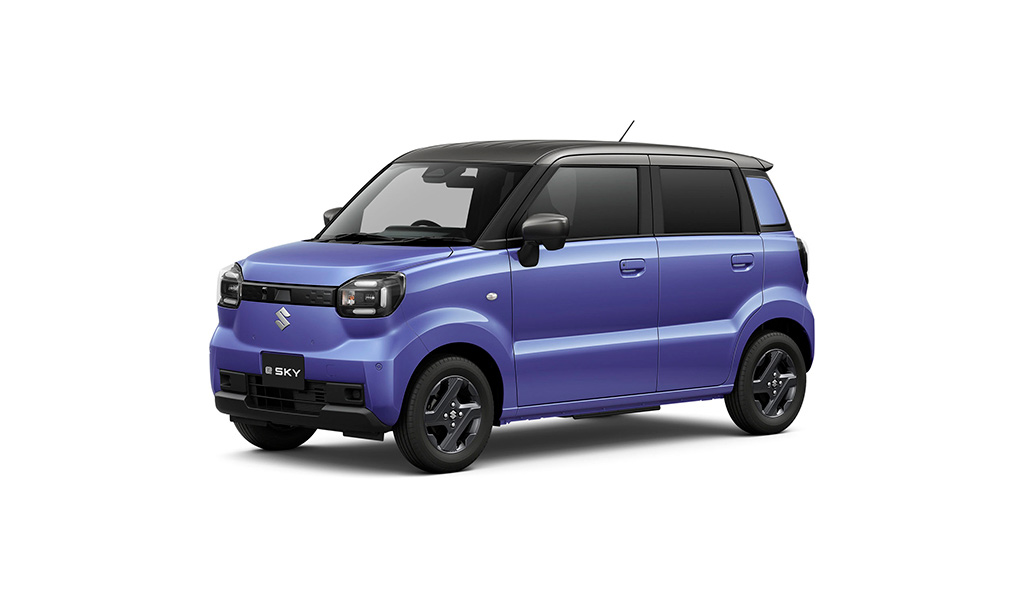
Suzuki will begin selling the e Sky, its first passenger mini electric vehicle (EV) in Japan, on 16 November 2026. Built on the dedicated Heartect-e platform, the model has a claimed driving range of 310 km and is aimed at motorists considering a switch from gasoline-powered mini-cars.
The e Sky was developed under Suzuki’s “Easy to Switch” concept, with features intended to make the transition to electric driving more accessible. The company is emphasising energy efficiency, alongside the quiet operation and smooth acceleration associated with electric powertrains. Suzuki has not yet announced pricing or sales targets.
Energy Efficiency Takes Centre Stage
Suzuki is positioning energy consumption as a key selling point for the e Sky. Japan’s Ministry of Land, Infrastructure, Transport and Tourism has certified the vehicle’s AC energy consumption at 97 Wh/km under the Worldwide Harmonised Light Vehicles Test Cycle (WLTC).
Suzuki says this is the lowest energy consumption in its class, based on an internal survey conducted in October 2026. The certified figure provides a measured efficiency benchmark, while the company has not disclosed the test basis for its 310 km range claim.
Battery capacity and other detailed performance specifications have also not been announced, leaving the certified energy-consumption figure as the model’s principal independently verified performance measure in the available information.
Dedicated Electric Platform and Lightweight Design
The e Sky is built on Suzuki’s Heartect-e platform, developed specifically for electric vehicles. Its powertrain incorporates an eAxle and regenerative braking, which recovers energy during deceleration and returns it to the battery.
The vehicle’s engineering follows Suzuki’s “Sho-Sho-Kei-Tan-Bi” principle, which emphasises making products smaller, fewer in components, lighter, shorter and aesthetically refined. Weight reduction is central to the company’s efficiency approach, although Suzuki has not provided a vehicle weight or battery specification for the e Sky.
The model also has a minimum turning radius of 4.4 metres, a characteristic that could be relevant for driving and parking in Japan’s urban areas, where compact dimensions are often important.
Targeting Drivers of Gasoline Mini-Cars
Japan’s mini-car segment, known as kei cars, is a significant part of the domestic automotive market. By introducing a dedicated passenger EV in this category, Suzuki is targeting drivers who may want to retain the practical benefits of a small car while moving away from gasoline propulsion.
The “Easy to Switch” concept reflects this focus on the transition between powertrains rather than presenting electrification solely as a technology upgrade. Suzuki has not yet detailed all the features intended to support that transition.
Sales Start in November 2026
The Suzuki e Sky is scheduled to go on sale in Japan on 16 November 2026. Pricing, battery capacity and sales targets remain undisclosed.
With the launch, Suzuki will enter Japan’s passenger mini-EV segment with a model built around compact packaging and certified energy efficiency. Its market reception will provide an indication of demand for the company’s approach to electrifying a vehicle category traditionally dominated by gasoline-powered models.


